Crock Pot Cheesecake: Creamy and Dense
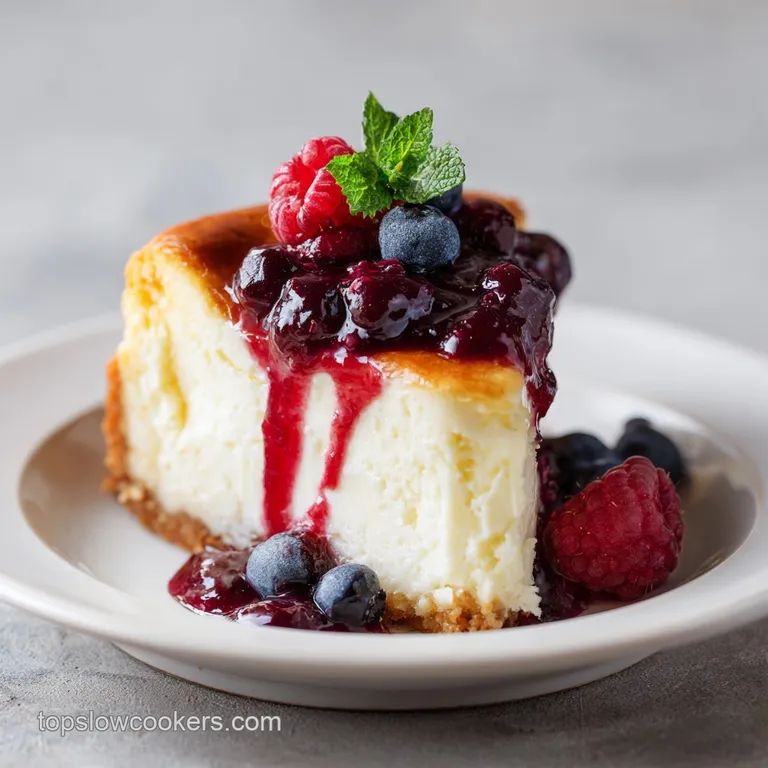
- Time: Active 20 minutes, Passive 8 hours 30 mins, Total 8 hours 50 mins
- Flavor/Texture Hook: A velvety, dense filling paired with a buttery, shatter prone graham crust.
- Perfect for: Weeknights when you want a fancy treat without tending to a temperamental oven.
- Achieving the Perfect Creamy Crock Pot Cheesecake
- Understanding the Secret of the Steam Bath
- Understanding Your Recipe Specs and Time Targets
- Component Analysis of Key Ingredients
- Breaking Down Your Shopping List for Success
- The Essential Tools for This Dessert Method
- Detailed Instructions for the Ultimate Creamy Filling
- Avoiding Mistakes with This Troubleshooting Guide
- Customizing Your Slow Cooker Dessert Creations
- Preservation Secrets for Keeping Leftovers Fresh
- Debunking Slow Cooker Myths
- Serving Suggestions for Your Beautiful Dessert
- Recipe FAQs
- 📝 Recipe Card
Achieving the Perfect Creamy Crock Pot Cheesecake
Imagine lifting the heavy ceramic lid of your slow cooker and being greeted not by a savory roast, but by the sweet, heady aroma of vanilla bean and tangy cream. There is a specific kind of magic that happens when you cook a custard based dessert in a humid environment.
The air inside the pot becomes thick with moisture, acting like a natural steam bath that gently hugs the springform pan. You don't see the usual parched, browned edges or those heartbreaking canyon like cracks that plague oven baked versions.
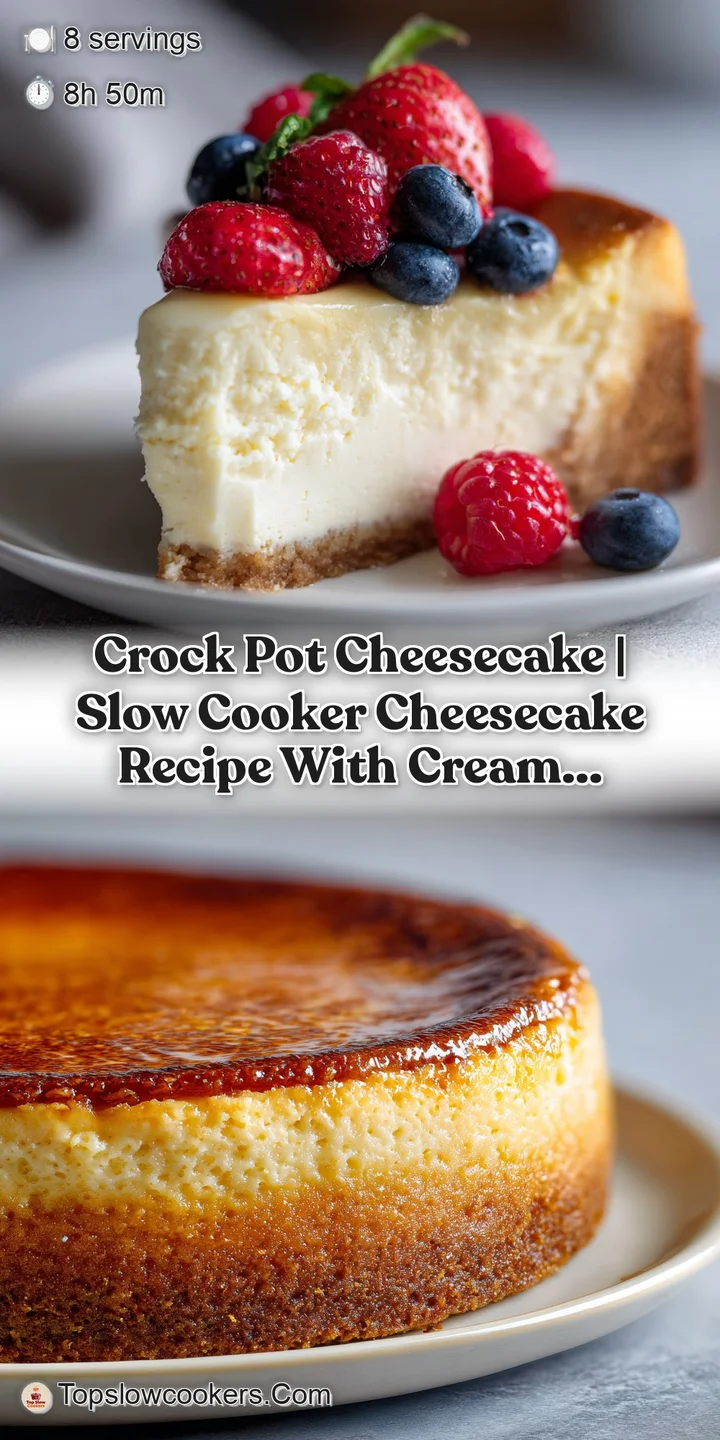
Instead, the surface is pale, smooth, and perfectly level, shimmering slightly under the kitchen lights.
The first time I tried making a crock pot cheesecake, I was skeptical. I grew up thinking that real baking required the dry, intense heat of an oven and a lot of nervous hovering. But after that first bite of a slice that felt like silk on my tongue, I was a total convert. This method is incredibly forgiving.
It takes the stress out of the "water bath" situation because the slow cooker handles the humidity for you. You don't have to worry about splashing boiling water into your delicate batter or the oven temperature spiking and curdling the eggs. It's the ultimate set it and forget it luxury.
We've all been there, peering through the oven glass, praying the middle doesn't sink. With this slow cooker cheesecake, we are trading that anxiety for consistency. It’s the kind of recipe that makes you feel like a pro even on a busy Tuesday.
Since we are using the slow cooker, the heat is indirect and steady, which is exactly what a high fat dairy mixture needs to set without breaking. Let’s get into why this works so well and how you can pull this off in your own kitchen with zero fuss.
Understanding the Secret of the Steam Bath
The reason this method is so superior for cheesecakes comes down to how we manage heat. In a standard oven, the air is dry and the heat comes from the bottom or top in waves, which can cause the outside of the cake to cook much faster than the center.
This temperature gap is what causes the cake to expand too quickly and then "shatter" as it cools.
- Constant Humidity: The sealed environment traps every drop of moisture, creating a tropical climate that keeps the proteins in the eggs from tightening up too quickly.
- Gentle Heat Transfer: Using a trivet ensures the pan doesn't touch the direct heating element of the pot, allowing the water at the bottom to distribute heat evenly.
- No Crack Finish: Because the surface never dries out, it remains flexible as it rises and falls, resulting in a perfectly flat, velvety top every single time.
- Energy Efficiency: You aren't heating up the whole house for one small cake, which is a win for those hot summer months when you still crave a decadent dessert.
| Method | Texture | Effort Level | Risk of Cracking |
|---|---|---|---|
| Traditional Oven | Light/Airy | High (Water bath required) | High |
| Slow Cooker | Dense/Velvety | Low (Set and forget) | Near Zero |
| No Bake | Mousse like | Very Low | None (but no egg richness) |
This comparison highlights that the slow cooker sits in the "sweet spot" of dessert making. It offers the rich, cooked egg flavor of a classic New York style cake but with the ease of a modern shortcut. If you’ve ever struggled with a Pudding with Bourbon Sauce recipe and loved the texture, you will find this cheesecake even more impressive.
Understanding Your Recipe Specs and Time Targets
Precision is your best friend when it comes to any crock pot dessert recipes. While we love the "fix it and forget it" nature of the slow cooker, cheesecakes do have a specific window where they transform from liquid batter into a set, custard like masterpiece.
Following the timing exactly is the difference between a silky slice and one that feels a bit rubbery.
| Component | Target Value | Visual Cue |
|---|---|---|
| Cream Cheese | 24 oz (3 blocks) | Matte finish, no lumps |
| Cook Time | 2.5 hours (High) | Edges set, center slightly jiggles |
| Rest Time | 1 hour (Power off) | Surface loses its sheen |
| Chilling Time | 6 hours (Minimum) | Firm enough to slice cleanly |
The total time of 8 hours 50 mins might seem long, but remember that the vast majority of this is completely passive. You are simply waiting for the science of cooling to take place. The cooling phase is just as important as the heating phase.
As the temperature drops slowly, the fats in the cream cheese and sour cream realign, creating that signature "snap" when you pull your fork through a slice.
Component Analysis of Key Ingredients
When we talk about an easy crock pot cheesecake, the quality of your ingredients does a lot of the heavy lifting. Since there are so few components, each one needs to be selected with care.
For example, using "spreadable" cream cheese from a tub will result in a soupy mess because it contains more air and water than the blocks.
| Ingredient | Science Role | Pro Secret |
|---|---|---|
| Cream Cheese | Structural base and fat source | Always use full fat blocks; low-fat versions lack the emulsifiers needed for a smooth set. |
| Cornstarch | Protein stabilizer | This prevents the egg proteins from over coagulating, which stops the cake from becoming grainy. |
| Sour Cream | Acidic tenderizer | The lactic acid softens the "bite" of the cheese and adds a subtle tang that balances the sugar. |
| Vanilla Bean Paste | Flavor depth | Unlike extract, the paste contains the tiny seeds which provide a gourmet look and more intense aroma. |
Beyond the science, the temperature of these ingredients is the number one factor in success. If you try to beat cold cream cheese, you'll end up with tiny "beads" of cheese that never fully incorporate. These beads will melt during the cooking process, leaving little oily pockets in your cake.
I always leave my ingredients on the counter for at least two hours before I even think about starting.
Breaking Down Your Shopping List for Success
Right then, let's get our shopping list sorted. Don't try to take shortcuts with the dairy here; we want the good stuff. If you are looking for a savory companion for a big meal, you might be prepping a Cheese for 10 Servings recipe, but for this dessert, we are focusing on pure decadence.
For the Shattering Graham Crust
- 1.5 cups Graham cracker crumbs: Why this? Provides a sturdy, crunchy base that contrasts the soft filling. (Substitute: Crushed digestive biscuits)
- 0.25 cup Granulated sugar: Why this? Helps caramelize the crust and bind the crumbs. (Substitute: Brown sugar for a deeper molasses flavor)
- 6 tbsp Unsalted butter, melted: Why this? The "glue" that holds the crumbs together. (Substitute: Salted butter, but skip the extra pinch of salt)
- 1 pinch Kosher salt: Why this? Sharpens the sweetness of the graham crackers. (Substitute: Table salt, but use half the amount)
For the Velvety Filling
- 24 oz Full fat cream cheese, room temperature: Why this? Provides the essential body and rich mouthfeel. (Substitute: Neufchâtel cheese for a slightly lighter texture)
- 0.75 cup Granulated sugar: Why this? Sweetens without adding extra moisture or changing the color. (Substitute: Caster sugar for even faster dissolving)
- 2 tbsp Cornstarch: Why this? Acts as a safety net against cracks and helps the cake slice cleanly. (Substitute: All purpose flour, but use 3 tbsp)
- 0.75 cup Full fat sour cream, room temperature: Why this? Adds the necessary moisture and a pleasant tang. (Substitute: Full fat Greek yogurt)
- 1 tbsp Pure vanilla bean paste: Why this? Offers the most concentrated, authentic vanilla flavor. (Substitute: 1 tbsp pure vanilla extract)
- 3 Large eggs, room temperature: Why this? The primary binding agent that creates the custard set. (Substitute: 0.75 cup liquid egg substitute)
The Essential Tools for This Dessert Method
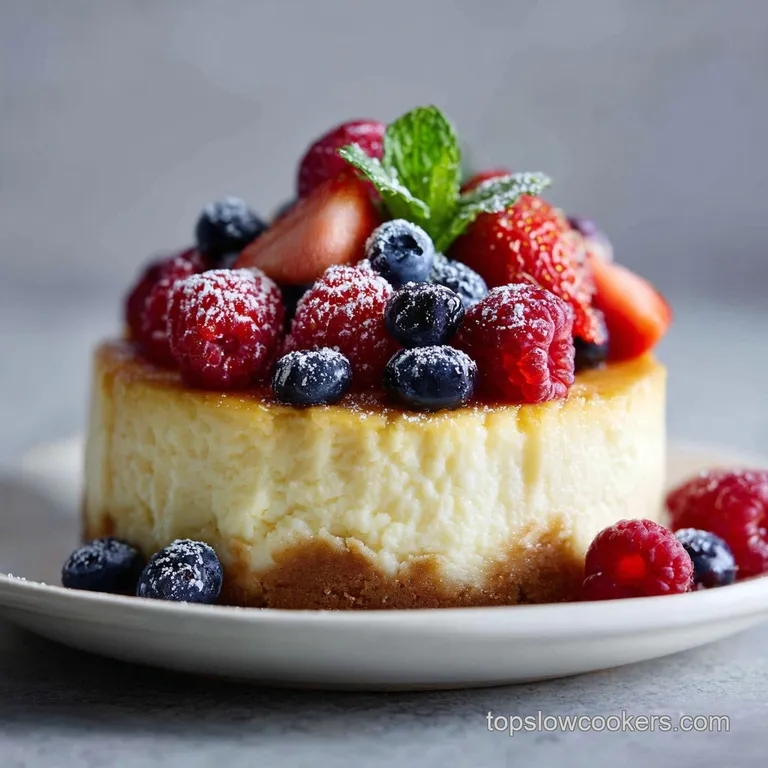
You don't need a kitchen full of gadgets, but a few specific items are non negotiable for a slow cooker cheesecake recipe. First and foremost is the pan. You need a 6 inch or 7 inch springform pan. Anything larger won't fit inside a standard 6 quart slow cooker.
I prefer a 6 inch pan because it gives the cheesecake that impressive tall, thick look that you see in fancy bakeries.
Chef's Tip: If you don't have a trivet, you can crumble up a long piece of aluminum foil into a thick "rope" and coil it at the bottom of the pot. This lifts the pan off the bottom and allows the water to circulate underneath.
You'll also need heavy duty aluminum foil. Regular foil is often too thin and can tear when you're lowering the pan into the pot. We are creating a "waterproof shield" here, so one tiny hole can lead to a soggy crust. Finally,, a simple roll of paper towels is your best friend.
We use this to catch the condensation that forms on the underside of the slow cooker lid, preventing it from dripping onto the surface of your beautiful cake.
Detailed Instructions for the Ultimate Creamy Filling
1. Construct the Foundation
Combine the 1.5 cups graham crumbs, 0.25 cup sugar, salt, and 6 tbsp melted butter in a medium bowl. Press the mixture firmly into the bottom and 1 inch up the sides of a 6 inch or 7 inch springform pan. Freeze the crust for 10 minutes until it feels solid to the touch.
Note: Freezing the crust prevents it from crumbling when you pour the heavy batter on top.
2. Create the Gentle Emulsion
In a large bowl, beat the 24 oz room temperature cream cheese and 0.75 cup sugar on low speed until the mixture is smooth and glossy. Do not overmix to avoid incorporating excess air. Note: Excess air leads to bubbles that will pop and cause cracks during the cooking process.
3. Add the Stabilizers
Incorporate the 2 tbsp cornstarch, 0.75 cup sour cream, and 1 tbsp vanilla bean paste into the cream cheese mixture. Whisk gently by hand or on the lowest mixer setting until no white streaks of sour cream remain.
4. Fold the Eggs
Gently fold in the 3 lightly whisked eggs by hand using a spatula until just combined and the batter looks like thick, glossy ribbons. Stop the moment the yellow of the eggs disappears.
5. The Waterproof Shield
Wrap the exterior of the springform pan in two layers of heavy duty aluminum foil, ensuring the foil reaches the top rim. This creates a barrier against the steam. Note: Make sure the foil is pressed tight against the sides so it doesn't interfere with the slow cooker lid.
6. The Steam Bath Setup
Place a trivet in the bottom of the slow cooker and add 1-2 inches of water. Lower the pan onto the trivet. Place a large paper towel under the lid to catch condensation and cook on high for 2.5 hours until the edges are firm but the center still wobbles like Jell O.
7. The Gentle Cool Down
Turn off the slow cooker and let the cake sit undisturbed for 1 hour until the carryover heat finishes setting the center. Do not open the lid during this time!
8. The Final Firming
Remove the pan from the pot and let it cool on a wire rack to room temperature. Refrigerate for at least 6 hours until the cake is completely chilled and firm.
Avoiding Mistakes with This Troubleshooting Guide
Even with the best instructions, things can go a little sideways. One of the most common issues people face when learning how to make cheesecake in a slow cooker is the "soggy bottom." This usually happens because the foil wasn't high enough or there was a tiny puncture.
If you see water inside the foil when you lift the pan out, don't panic. Carefully remove the foil and let the pan sit on a stack of paper towels to wick away the moisture.
Fix a Wet Surface
If you notice a few drops of water on top of the cake after cooking, don't try to wipe them off with a cloth, as this will mar the surface. Instead, take a corner of a clean paper towel and lightly touch it to the droplet. The paper will drink up the water without touching the delicate surface of the cake.
This usually happens if the paper towel under the lid became too saturated.
The Danger of Over Cooking
A cheesecake is technically a custard. If you cook it too long, the proteins in the eggs will contract and squeeze out the moisture, leading to a rubbery texture or a "weeping" cake. The "jiggle test" is your best indicator.
You want the outer 2 inches to be stable, but the very center should still have a slight "shudder" when you gently shake the slow cooker.
| Problem | Root Cause | Solution |
|---|---|---|
| Cracked Top | Temperature shock or over mixing | Ensure ingredients are room temp; never open the lid during the 1 hour rest. |
| Soggy Crust | Foil leak | Use two layers of heavy duty foil and ensure it reaches the top rim of the pan. |
| Lumpy Batter | Cold cream cheese | Let cheese sit at room temperature for 2 hours before mixing. |
Common Mistakes Checklist
- ✓ Using "whipped" or tub cream cheese (too much air/water).
- ✓ Opening the lid to "check" - this releases the essential steam.
- ✓ Forgetting the paper towel under the lid (leads to "rain" on your cake).
- ✓ Over beating the eggs, which introduces air that causes the cake to puff and then collapse.
- ✓ Skipping the 6 hour chill - the cake needs this time to develop its final texture.
Customizing Your Slow Cooker Dessert Creations
Once you have the base recipe down, you can start experimenting with flavors. The beauty of this "blank canvas" is that it takes well to almost any addition. For a crock pot strawberry cheesecake, I like to swirl in a few tablespoons of high-quality strawberry preserves right before cooking.
Don't mix it in completely; you want those beautiful red ribbons showing through the white batter.
Seasonal Pumpkin Cheesecake
When autumn rolls around, you can transform this into a crock pot pumpkin cheesecake by swapping the sour cream for 0.5 cup of canned pumpkin purée and adding 1 teaspoon of pumpkin pie spice.
You might need to add an extra tablespoon of cornstarch to account for the extra moisture in the pumpkin, but the result is a wonderfully spiced, creamy treat that feels much more sophisticated than a standard pumpkin pie.
Smart Dietary Substitutions
If you're catering to different needs, you can easily swap the graham crackers for gluten-free versions. For a lower sugar option, you can use a monk fruit sweetener replacement in a 1:1 ratio for the granulated sugar.
However, avoid using liquid sweeteners like honey or maple syrup in the batter, as they can prevent the eggs from setting properly and lead to a soft, gooey center.
| Original Ingredient | Substitute | Why It Works |
|---|---|---|
| Graham Crackers | gluten-free Gingersnaps | Provides a spicy kick and keeps the recipe gluten-free. |
| Sour Cream | Greek Yogurt (Full fat) | Similar acidity and thickness; slightly higher protein content. |
| Vanilla Bean Paste | Almond Extract (1 tsp) | Creates a completely different flavor profile very "wedding cake" style. |
Preservation Secrets for Keeping Leftovers Fresh
Cheesecake is one of the few desserts that actually tastes better on the second or third day. The flavors have more time to meld, and the texture becomes even more cohesive. You should keep the cake in the springform pan (with the ring removed) and wrap the whole thing tightly in plastic wrap.
It will stay fresh in the fridge for up to 5 days.
If you find yourself with too much cake (is that even possible?), this recipe freezes beautifully. I recommend slicing the cake first and placing individual slices on a baking sheet to freeze for an hour. Once they are firm, wrap each slice in parchment paper and then a layer of foil.
They will stay perfect in the freezer for up to 3 months. To enjoy, just let a slice thaw in the fridge overnight.
For a zero waste tip, if your crust crumbles a bit when slicing, don't toss those buttery shards! Collect them in a small jar and use them as a topping for morning yogurt or even over a scoop of vanilla ice cream. Those little bits of "cheesecake rubble" are pure gold.
Debunking Slow Cooker Myths
One common misconception is that you can't get a "crispy" crust in a slow cooker. While it's true the environment is humid, freezing the crust before adding the batter and using plenty of butter ensures that the base stays structural and doesn't turn into mush.
It won't be "toasted" like an oven baked version, but it will have a satisfying snap.
Another myth is that you can cook this on the "Low" setting for twice as long. With cheesecakes, the "High" setting is actually preferred because we need the water to reach a certain temperature to create the necessary steam quickly.
Cooking on low for a long period can actually lead to a rubbery texture because the eggs are held at a lukewarm temperature for too long before they finally set.
Serving Suggestions for Your Beautiful Dessert
When you're ready to serve, the presentation can be as simple or as elaborate as you like. A classic move is to top it with a mountain of fresh berries. If you've made a crock pot cherry cheesecake, a warm cherry compote drizzled over the top just before serving is heaven.
The contrast between the cold, creamy cake and the warm, tart fruit is a classic for a reason.
For a more modern look, try a drizzle of salted caramel and a sprinkle of flaky sea salt. Because this cake is so rich, you only need a small slice to feel satisfied. Use a sharp knife dipped in hot water (and wiped dry between every single cut) to get those professional, clean edges that make people wonder if you actually bought the cake from a high end bakery.
Trust me, when they find out you made it in a slow cooker, they won't believe you until you show them the pot!
Recipe FAQs
Is it true I must use a high speed mixer to ensure a smooth batter?
No, this is a common misconception. You should only use low speed to beat the cream cheese and sugar to avoid incorporating excess air, which can cause the cake to puff and collapse during cooking.
How to prevent condensation from making the cheesecake soggy?
Place a large paper towel under the lid before closing the slow cooker. This acts as a barrier to absorb moisture so it does not drip back onto the cake as condensation.
Can I use light or reduced fat cream cheese for a healthier version?
No, stick with full fat cream cheese. Lower fat varieties contain too much water and will prevent your cheesecake from setting into the correct dense, creamy texture.
How to ensure the springform pan is truly waterproof?
Wrap the exterior in two layers of heavy duty aluminum foil. Ensure the foil reaches the top rim of the pan to create a completely sealed shield against the water bath.
Why is my cheesecake still jiggly after the cooking time?
This is normal, as the cake requires a long cooling process to set. You must allow it to sit undisturbed in the slow cooker for one hour, followed by at least six hours in the refrigerator to develop its final structure.
How to achieve the perfect glossy ribbon consistency when mixing eggs?
Fold the eggs in gently by hand until just combined. If you enjoyed mastering this delicate folding technique, see how we apply similar gentle motion to create a silky cake crumb without overworking the batter.
How to know if the cream cheese is at the right temperature?
The cream cheese should be at room temperature before you start. Using cold cream cheese prevents a smooth emulsion, leading to unwanted lumps in your final batter.
Creamy Crock Pot Cheesecake
Ingredients:
Instructions:
Nutrition Facts:
| Calories | 608 kcal |
|---|---|
| Protein | 9 g |
| Fat | 46 g |
| Carbs | 43 g |
| Fiber | 1 g |
| Sugar | 31 g |
| Sodium | 412 mg |
