Crock Pot Beef Ragu Recipe
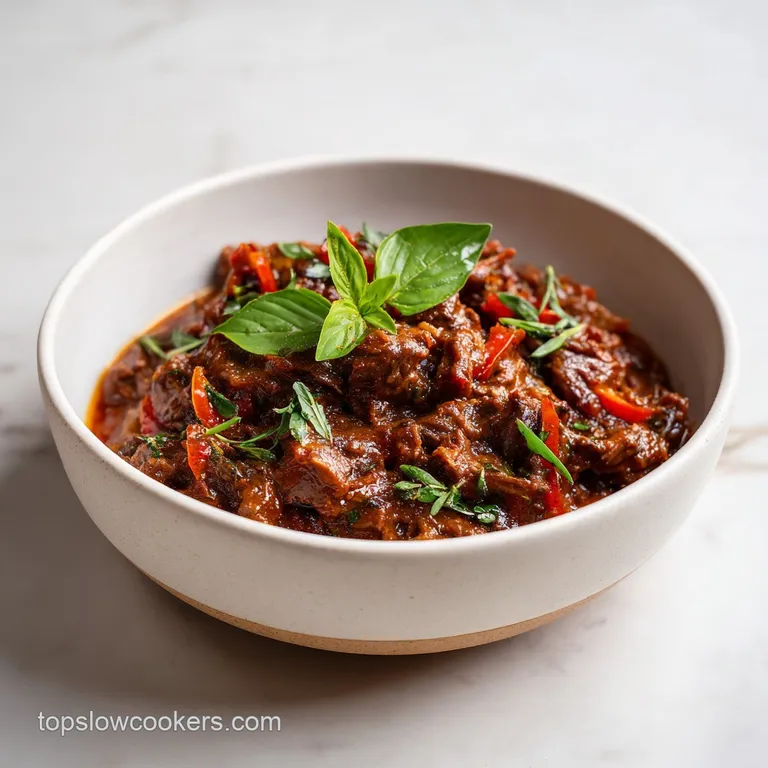
- Time: Active 20 mins, Passive 8 hours, Total 8 hours 20 mins
- Flavor/Texture Hook: Savory, tender, and thick
- Perfect for: Traditional Sunday dinners or meal prep
- Why This Braise Truly Succeeds
- Critical Recipe Specs and Timing
- Essential Ingredients and Smart Substitutes
- Required Tools for This Cook
- Step by Step Cooking Guide
- Fixing Common Ragu Texture Issues
- Variations and Diet Specific Tweaks
- Storage and Zero Waste Methods
- Ideal Sides for Savory Sauces
- High in Sodium
- Recipe FAQs
- 📝 Recipe Card
Why This Braise Truly Succeeds
The Alchemy of Collagen Breakdown: Tough connective tissues in the beef chuck roast dissolve into gelatin over eight hours of steady, low heat. This process naturally thickens the sauce and provides a silky mouthfeel that lean cuts simply cannot replicate.
- Maillard Reaction: Searing the meat until it develops a dark, mahogany crust creates complex flavor compounds that raw boiling never achieves.
- Concentrated Umami: Caramelizing the tomato paste before adding liquid removes the metallic tin taste and deepens the savory base.
- Emulsification: The slow rendered fat from the chuck roast marries with the tomato acidity, creating a stable, velvety coating for your pasta.
| Beef Thickness | Cook Time | Visual Cue | Texture Goal |
|---|---|---|---|
| 1 inch cubes | 6 hours | Meat separates easily | Shredded and soft |
| Whole 3 lb roast | 8 hours | Bone (if any) slides out | Complete fall apart tender |
| 2 inch chunks | 7 hours | Fork twists through grain | Chunks that melt away |
This slow cooked beef recipe is the backbone of my winter rotation because it handles the heavy lifting while I go about my day. You want to look for a roast with heavy white marbling; those fat streaks are your insurance policy against dry meat.
If you see a "Choice" or "Prime" grade chuck roast at the butcher, grab it the extra intramuscular fat makes a noticeable difference in the final shred.
Critical Recipe Specs and Timing
Success with a long braise like this Beef Ragu comes down to managing the moisture levels. If you peek too often, you lose the steam that keeps the environment humid enough to soften the fibers. Trust the process and keep that lid on. If you're using a crock pot beef ragu method, the "Low" setting is your best friend.
High heat can sometimes tighten the protein fibers too quickly, leading to meat that is technically cooked but still feels "stringy" or tough to chew.
| Component | Science Role | Pro Secret |
|---|---|---|
| Beef Chuck | Collagen source | Pat it bone dry before searing to avoid steaming |
| Red Wine | Acidic tenderizer | Use a dry variety like Chianti to cut through the fat |
| Tomato Paste | Umami anchor | Fry it until it turns brick red for a mellow sweetness |
| Bone Broth | Body and minerals | Use salt free broth to control the final seasoning levels |
Getting the sear right is the most labor intensive part of the whole day. Don't crowd the pan. If you put all the meat in at once, the temperature drops, the juices leak out, and you end up graying the meat instead of browning it.
I usually do it in two or three batches, letting the skillet get smoking hot again between each round. That dark crust is where the deep, savory "soul" of the ragu lives.
Essential Ingredients and Smart Substitutes
- 3 lbs Beef Chuck Roast: The gold standard for braising. Why this? High collagen content melts into gelatin for a silky sauce.
- Substitute: Beef short ribs (bone in) for an even richer, fattier result.
- 2 tbsp Extra Virgin Olive Oil: For the initial sear. Why this? High smoke point and classic flavor base.
- Substitute: Avocado oil or even beef tallow for a deeper flavor.
- 1 large Yellow Onion: Finely diced. Why this? Provides a sweet, aromatic foundation.
- Substitute: White onion or three large shallots.
- 2 medium Carrots & 2 stalks Celery: The "Sofritto." Why this? Adds earthy sweetness and structural complexity.
- Substitute: Finely minced parsnip can replace carrots for an earthier vibe.
- 4 cloves Garlic: Smashed and minced. Why this? Essential pungent aromatic.
- Substitute: 1 tsp garlic powder (though fresh is vastly superior here).
- 1/2 cup Tomato Paste: Concentrated flavor. Why this? Thickens the sauce and adds deep color.
- Substitute: 1 cup tomato puree reduced by half in a separate pan.
- 1 cup Dry Red Wine: To deglaze. Why this? Acidity balances the heavy fats of the beef.
- Substitute: 1 cup beef broth plus 1 tbsp balsamic vinegar.
- 1 can (28 oz) Crushed Tomatoes: The sauce body. Why this? Perfect texture between chunky and smooth.
- Substitute: Whole peeled tomatoes crushed by hand for a more rustic feel.
- 1 cup Beef Bone Broth: Liquid base. Why this? More protein and flavor than standard broth.
- Substitute: Chicken stock or even water in a pinch.
- 2 tbsp Worcestershire Sauce: The secret punch. Why this? Adds fermented depth and saltiness.
- Substitute: Soy sauce or liquid aminos.
- Fresh Rosemary & Thyme: Woody herbs. Why this? Rosemary pairs perfectly with beef; thyme adds floral notes.
- Substitute: 1 tsp each of dried rosemary and dried thyme.
- 2 Dried Bay Leaves: Subtle background note. Why this? Cuts through the heaviness of the meat.
- Substitute: One fresh bay leaf if available.
- 1 tsp Kosher Salt & 1/2 tsp Black Pepper: To taste.
Chef Tip: Freeze your tomato paste in one tablespoon dollops on a baking sheet. Once frozen, toss them in a bag. It's much easier than opening a whole can every time you need just a bit for a pot beef ragu.
Required Tools for This Cook
You don't need a professional kitchen to make world class Beef Ragu, but a heavy bottomed pot is non negotiable. A Dutch oven (like a Le Creuset or Lodge) is ideal because it retains heat so evenly.
If you're using a slow cooker, ensure it's at least a 6 quart model to allow the 3 lbs of beef and all that liquid to fit comfortably without boiling over.
- Cast Iron Skillet: For the most aggressive sear.
- 6 Quart Slow Cooker: Or a large heavy bottomed Dutch oven.
- Sharp Chef's Knife: For finely dicing the soffritto (onion, carrot, celery).
- Wooden Spoon: To scrape those brown bits (fond) off the bottom of the pan.
If you love this style of cooking but want something with a bit more mushroom flair, you should definitely check out this Beef Stroganoff for recipe. It uses similar slow cooking principles but pivots toward a tangier, mushroom heavy profile.
step-by-step Cooking Guide
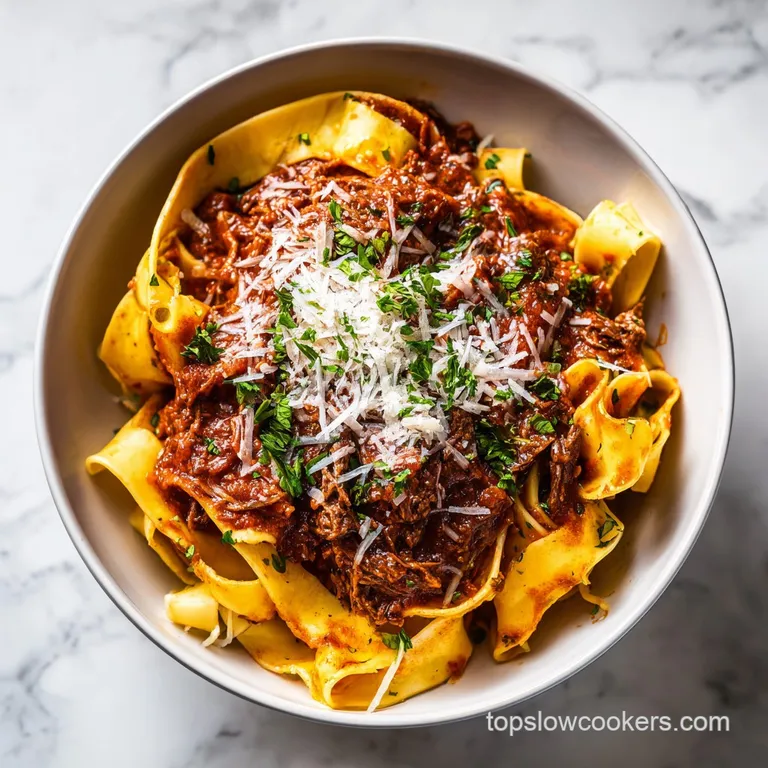
1. The Aggressive Sear
Dry the 3 lbs Beef Chuck Roast with paper towels. Season heavily with Kosher Salt and Black Pepper. Heat the 2 tbsp Extra Virgin Olive Oil in a skillet over medium high heat. Sear the beef until a dark, crusty mahogany shell forms on all sides (about 5 mins per side).
Note: This creates the "fond" that flavors the entire sauce.
2. Sauté the Sofritto
Remove the beef and set aside. In the same pan, add the Yellow Onion, Carrots, and Celery. Cook until the onions are translucent and slightly golden. Add the Garlic and cook for 1 minute more until the aroma fills the kitchen.
3. Caramelize the Paste
Push the vegetables to the side and add the 1/2 cup Tomato Paste to the center of the pan. Fry it for 3 mins, stirring constantly, until it turns a deep brick red and starts to stick.
4. Deglazing the Flavor
Pour in the 1 cup Dry Red Wine. Use a wooden spoon to scrape the bottom of the pan until all the brown bits have dissolved into the liquid.
5. Combine and Braise
Transfer the vegetable and wine mixture to your slow cooker. Add the 28 oz Crushed Tomatoes, 1 cup Beef Bone Broth, and 2 tbsp Worcestershire Sauce. Submerge the seared beef into the liquid.
6. Infuse with Aromatics
Tuck the 2 sprigs Rosemary, 4 sprigs Thyme, and 2 Dried Bay Leaves into the liquid. Ensure the beef is mostly covered.
7. The Low and Slow Cook
Cover and cook on Low for 8 hours. Note: You'll know it's done when the meat offers zero resistance to a fork.
8. The Final Shred
Remove the beef to a bowl. Discard the herb stems and bay leaves. Shred the meat using two forks, then stir it back into the sauce.
9. Season and Rest
Taste the sauce. Add more salt or pepper if needed. Let it sit for 10 mins until the sauce thickens and clings to the meat.
Fixing Common Ragu Texture Issues
Fixing Tough Meat Texture
If your beef is still rubbery after the allotted time, it simply hasn't reached the temperature where collagen melts. This usually happens if the slow cooker was set to "Warm" by mistake or if the roast was exceptionally lean. Just give it another hour.
It's almost impossible to "overcook" chuck roast in a braising liquid; it will only get more tender.
Managing Excess Surface Oil
Beef chuck is fatty, and while that fat equals flavor, a half inch layer of oil on top isn't ideal. You can skim this off with a wide spoon while it's hot. Alternatively, if you make this a day ahead, the fat will solidify in the fridge, making it easy to lift off in one solid piece.
| Problem | Root Cause | Solution |
|---|---|---|
| Thin, watery sauce | Too much broth or lid didn't seal | Simmer uncovered for 30 mins to reduce |
| Bitter aftertaste | Burned garlic or cheap wine | Stir in 1 tsp sugar or a splash of heavy cream |
| Meat is stringy | Cut across the grain or cooked too fast | Shred finer and fold back into the sauce |
Common Mistakes Checklist
- ✓ Never skip the sear; gray meat has no depth of flavor.
- ✓ Don't use "Cooking Wine" which is loaded with salt; use something you'd actually drink.
- ✓ Always remove the woody herb stems before serving to avoid "twigs" in your pasta.
- ✓ Let the shredded meat rest in the sauce for at least 15 minutes to reabsorb the juices.
- ✓ Resist the urge to add more liquid; the beef will release its own juices as it cooks.
Variations and Diet Specific Tweaks
Scaling for Larger Crowds
If you're doubling this recipe for a party, don't just double everything. Use 1.5x the salt and spices first, then adjust at the end. For liquids, you only need about 10% more because there is less evaporation in a larger batch. Work in batches for the searing phase to ensure you still get that vital crust on the meat.
Alcohol Free Liquid Options
If you want to skip the wine, replace the 1 cup of red wine with 1 cup of beef broth mixed with 2 tablespoons of balsamic vinegar and 1 tablespoon of soy sauce. This provides the necessary acidity and depth without the alcohol content. It won't be exactly the same, but it will still be a very hearty beef ragu.
Keto and Low Carb Adaptations
This recipe is naturally quite low in carbs, but you can make it strictly Keto by serving it over roasted spaghetti squash or zoodles. Avoid adding any sugar to the sauce and ensure your tomato paste has no added fillers.
The high fat content of the chuck roast makes this an excellent meal for those on a ketogenic diet.
| Serving Size | Beef Amount | Sauce Volume | Yield |
|---|---|---|---|
| 2 People | 1 lb | 1.5 cups | 2 massive portions |
| 6 People | 3 lbs | 4.5 cups | Standard batch |
| 12 People | 6 lbs | 9 cups | Party size (needs 2 pots) |
Storage and Zero Waste Methods
Leftover ragu is a gift. Keep it in an airtight container in the fridge for up to 4 days. The flavors actually meld and deepen over time, making day two even better than day one. If you want to freeze it, this sauce is a champion. It stays fresh in the freezer for up to 3 months.
I like to freeze it in muffin tins, then pop the frozen "pucks" into a freezer bag for perfect single serving portions later.
To reheat, thaw in the fridge overnight and warm gently on the stovetop. If the sauce has thickened too much in the fridge (due to the gelatin), just add a splash of water or beef broth to loosen it up. For a zero waste tip, don't toss the celery leaves or carrot tops!
Finely mince the celery leaves and use them as a fresh garnish instead of parsley. It adds a bright, herbal pop that cuts through the rich beef perfectly.
Ideal Sides for Savory Sauces
The Best Pasta Pairings
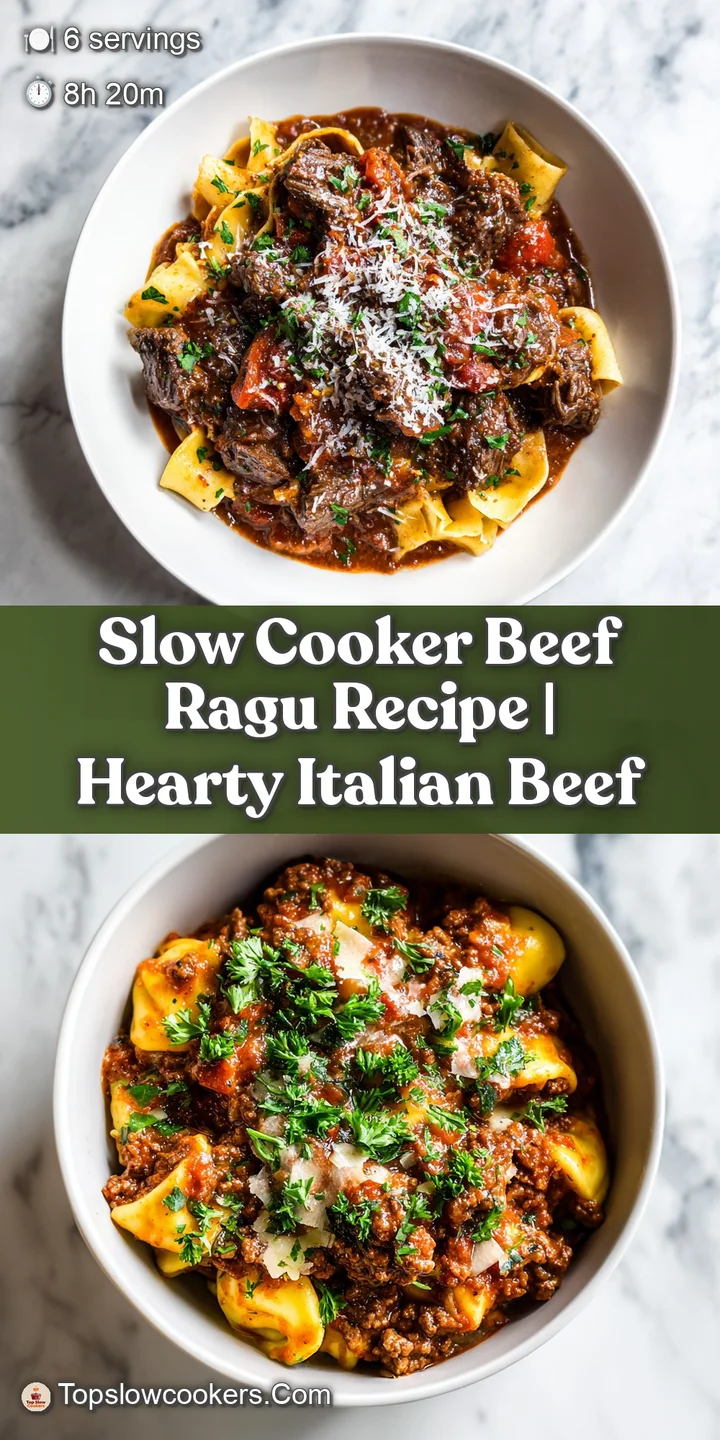
You need a pasta that can stand up to a heavy, chunky sauce. Pappardelle those wide, flat ribbons is the traditional choice because the surface area is perfect for grabbing onto the shredded beef. Rigatoni or shells also work well because the sauce gets trapped inside the tubes or pockets.
Avoid thin pastas like angel hair; they will simply vanish under the weight of the meat.
Side Dish Inspiration
A bright, acidic side is the best way to balance this meal. I usually go with a simple arugula salad with plenty of lemon vinaigrette. If you want something more substantial, creamy polenta is a fantastic base for the ragu. The cornmeal soaks up the braising liquid like a sponge. For another take on slow cooked comfort, you might enjoy this Mongolian Beef recipe which offers a sweeter, soy based profile that pairs beautifully with steamed greens.
Decision Shortcut: If you want X, do Y If you want a richer finish, stir in 2 tbsp of cold butter right before serving. If you want more heat, add 1/2 tsp of red pepper flakes with the garlic.
If you want a smokier flavor, add a piece of parmesan rind to the pot while it braises.
Common Braising Myths
One huge misconception is that searing "seals in the juices." Science shows that's not true meat still loses moisture during the sear. However, we sear for the Maillard Reaction, which creates hundreds of flavor compounds that give the sauce its savory depth.
Another myth is that you need expensive wine. Since you're simmering it for 8 hours, the subtle nuances of a $50 bottle will be lost. Use a decent $10-15 dry red that you enjoy drinking, and you'll get great results every time.
High in Sodium
965 mg mg of sodium per serving (42% % of daily value)
The American Heart Association recommends limiting sodium intake to about 2,300mg per day for optimal heart health.
Tips to Reduce Sodium in Your Beef Chuck Roast
-
Low-Sodium Broth-30%
Replace regular beef bone broth with a low-sodium or no-salt added version. This single swap can significantly cut down the sodium content.
-
Reduce Added Salt-25%
Cut the kosher salt in half or eliminate it entirely. Taste the dish before adding any salt. You can always add more, but you can't take it away!
-
No-Salt Added Tomatoes-20%
Use no-salt added crushed tomatoes. This will substantially lower the sodium from canned ingredients.
-
Limit Worcestershire Sauce-20%
Worcestershire sauce is a concentrated source of sodium. Reduce the amount used by half, or experiment with using smoked paprika and a splash of balsamic vinegar for a similar flavor profile but with much less sodium.
-
Fresh Herbs & Spices
Boost flavor with fresh herbs like rosemary and thyme, and spices like black pepper, garlic powder (instead of garlic salt), onion powder, or smoked paprika. These additions enhance taste without adding any sodium.
-
Rinse Canned Goods-5%
Rinse the crushed tomatoes before adding them to the recipe. This can help remove some of the excess sodium from the canning process.
Recipe FAQs
Can you make beef ragù in a slow cooker?
Yes, absolutely. The slow cooker is ideal for beef ragù as it maintains the low, consistent temperature needed to dissolve tough collagen over many hours.
What is the secret to a great beef ragù?
Searing the beef aggressively before braising. This Maillard reaction creates the deep, savory flavor compounds that define ragù, which you cannot achieve by simply boiling the meat.
How long should I slow cook ragù for?
Aim for 8 hours on the Low setting. This duration ensures the connective tissue melts fully into gelatin, providing the silky texture and natural thickening characteristic of great ragù.
What is the difference between a Bolognese and a ragù?
Ragù is the broad category, Bolognese is a specific regional type. Ragù simply means a meat based sauce, while Bolognese (Ragù alla Bolognese) traditionally uses a mix of meats, includes milk or cream, and is often served with wider pasta.
Is it true I must use a fatty cut like chuck roast?
No, this is a common misconception if you are only aiming for tenderness. However, using a high collagen, fatty cut like chuck ensures you get that necessary gelatin melt, which thickens the sauce naturally.
How do I avoid a watery sauce when using the slow cooker?
Ensure you reduce the sauce uncovered at the end. If the sauce remains thin after shredding the meat, simmer it on the stovetop without the lid for about 30 minutes to allow excess moisture to evaporate.
What is the best way to serve beef ragù?
Serve over a wide, porous pasta like pappardelle or rigatoni. These shapes hold the chunky meat and thick sauce best; creamy polenta is also an excellent, traditional base.
Crock Pot Beef Ragu
Ingredients:
Instructions:
Nutrition Facts:
| Calories | 732 kcal |
|---|---|
| Protein | 48.1 g |
| Fat | 47.2 g |
| Carbs | 18.6 g |
| Fiber | 4.1 g |
| Sugar | 9.4 g |
| Sodium | 965 mg |
