Slow Cooker Beef Barley Soup
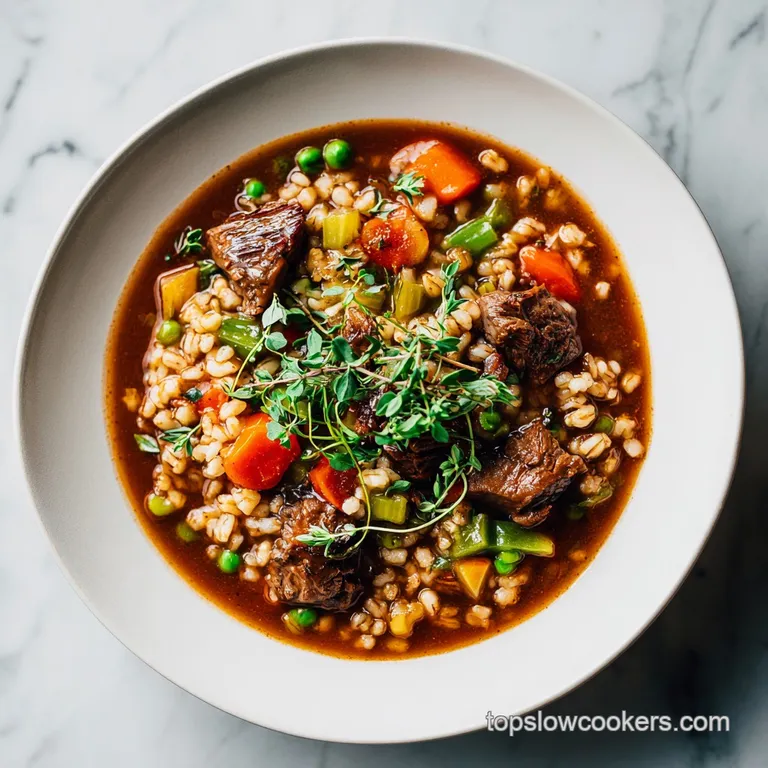
- Time: Active 20 mins, Passive 8 hours, Total 8 hours 20 mins
- Flavor/Texture Hook: Savory beef broth with chewy, nutty pearl barley
- Perfect for: Cold weekend afternoons or busy weeknight meal prep
- The Best Slow Cooker Beef Barley Soup
- Science Behind Hearty Results
- Key Recipe Specs
- Ingredient Deep Dive Analysis
- Essential Equipment Needs
- Simple Slow Cooker Success Steps
- Solving Common Cooking Hurdles
- Customize Your Savory Bowl
- Storage and Reheating Rules
- Serving and Enjoying Tips
- High in Sodium
- Recipe FAQs
- 📝 Recipe Card
The Best Slow Cooker Beef Barley Soup
I remember the first time I really nailed this recipe. It was one of those miserable, sleety Tuesdays where the wind just cuts right through your coat. I had tossed a marbled chuck roast into the pot that morning, and when I walked through the front door at 5:00 PM, the aroma didn't just meet me - it hugged me.
The scent of seared beef and earthy thyme had filled every corner of the house, making it feel instantly warmer.
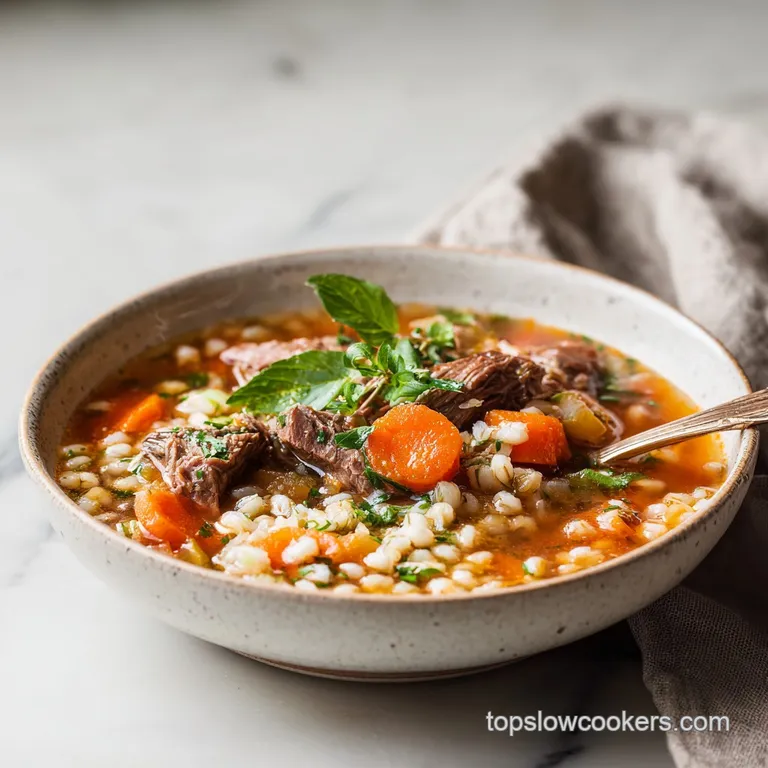
We sat down with big, heavy bowls and thick slices of buttered sourdough, and it was the first time my kids didn't ask "what's for dinner" with a skeptical look. The beef just fell apart under the weight of a spoon, and the barley had that perfect, bouncy chew that makes this dish so much more satisfying than a standard vegetable soup.
It is a traditional, hearty meal that reminds me why we bother cooking from scratch in the first place.
This isn't a watery, thin broth experience. We are talking about a thick, substantial stew like consistency that sticks to your ribs. I've made plenty of mistakes with barley in the past, usually ending up with a pot of mush or a "disappearing broth" act where the grain soaks up every drop of liquid.
I've learned the tricks to keep the textures distinct and the flavors deep, and I'm honestly so excited to share how it all comes together in your own kitchen.
Science Behind Hearty Results
The Physics of the Grain
Pearl barley contains a high concentration of amylopectin starch, which slowly leaches into the broth to create a velvety, naturally thickened body without needing a flour roux. The grains act like tiny sponges, absorbing the seasoned bone broth until they reach their maximum hydration point, which is why we use a specific 8:1 liquid to grain ratio.
Converting Collagen to Gelatin
Beef chuck is packed with tough connective tissue called collagen that only breaks down at sustained temperatures between 160°F and 180°F.
Over eight hours, this collagen melts into gelatin, providing a silky mouthfeel and making the meat so tender it loses its structural integrity against a spoon.
| Beef Cut Thickness | Target Internal Temp | Total Rest Time | Finished Visual Cue |
|---|---|---|---|
| 1 inch Cubes | 195°F - 205°F | 10 mins in pot | Meat shreds with light pressure |
| 1.5 inch Cubes | 195°F - 205°F | 15 mins in pot | Fibers separate easily |
| Whole Roast | 200°F | 20 mins on board | Complete fall apart texture |
Getting the timing right is the difference between a chewy disappointment and a savory success. If you find yourself in a rush, you might be tempted to use a higher heat, but the slow breakdown of those beef fibers is what creates the traditional depth we are after. This method is quite similar to the patient simmering found in a classic Slow Cooker Vegetable recipe which relies on time to marry the flavors.
Key Recipe Specs
When you start prepping your ingredients, focus on the quality of the beef and the broth. Since this recipe has a long cook time, we need components that can stand up to the heat without disintegrating into a generic pile of mush.
I always look for a chuck roast with heavy white marbling - that fat is where the flavor lives, and it will eventually render down to season the entire pot.
For the liquid base, I highly recommend a bone broth over a standard "beef flavored" stock. Bone broth has a higher protein and gelatin content, which helps support the weight of the barley. If you want a different flavor profile for another night, you could even look into a Slow Cooker Minestrone recipe for a more tomato forward experience, but for today, we are keeping it deep, dark, and meaty.
Chef Tip: Freeze your tomato paste in one tablespoon dollops on a parchment lined tray. Once they are solid, toss them into a freezer bag. You’ll always have exactly 2 tablespoons ready for this recipe without wasting a whole can.
Ingredient Deep Dive Analysis
| Ingredient | Science Role | Pro Secret |
|---|---|---|
| Beef Chuck Roast | Primary fat/protein source | Sear it until a dark crust forms for maximum flavor. |
| Pearl Barley | Starch thickener/texture | Rinse thoroughly to remove excess dust that can make broth cloudy. |
| Beef Bone Broth | Liquid hydration base | Use low sodium versions so you can control the final salt levels. |
| Dry Red Wine | Acid for fiber breakdown | A Cabernet or Merlot helps dissolve tough proteins during the simmer. |
Essential Equipment Needs
You don't need a pantry full of gadgets, but a 6 quart slow cooker is the sweet spot for this volume of food. If your crock is too large, the liquid might evaporate too quickly; if it's too small, the barley won't have room to expand.
I also suggest a heavy bottomed stainless steel or cast iron skillet for the initial sear. Don't try to sear the meat in the slow cooker itself, even if it has a "brown" setting - it rarely gets hot enough to create that crucial crust.
A sharp chef's knife is your best friend here for dicing the 2 cups of carrots and 1.5 cups of celery. Consistency in size means every bite cooks at the same rate. You will also need a fine mesh strainer to rinse the 3/4 cup of pearl barley.
This step is non negotiable because it washes away the outer starch dust that can lead to a gummy, unpleasant texture in the final bowl.
Simple Slow Cooker Success Steps
1. Mastering the Sear
Pat your 2 lbs of beef chuck roast completely dry with paper towels. Heat 2 tbsp of avocado oil in your skillet over medium high heat until it shimmers. Add the beef in batches - don't overcrowd the pan or they will steam instead of brown. Look for a deep, mahogany crust on at least two sides of every cube.
2. Deglazing the Fond
Once the meat is browned and moved to the slow cooker, pour the 1 cup of dry red wine into the hot skillet. Use a wooden spoon to scrape up all those brown bits (the fond) stuck to the bottom. This is liquid gold and contains all the concentrated savory notes we need for the broth.
3. Layering the Aromatics
In the same skillet (or directly in the crock), add your finely diced large yellow onion and 3 cloves of minced garlic. Sauté them for just 2 minutes until they become fragrant and translucent. This takes the raw edge off the garlic before it begins its 8 hour soak.
4. Slow Simmer Execution
Add the 2 cups of carrots and 1.5 cups of celery to the slow cooker. Pour in the 6 cups of high-quality beef bone broth and add the 2 tbsp of tomato paste. Give it a good stir to ensure the paste is fully dissolved into the liquid.
5. Timing the Grain
Add your 3/4 cup of rinsed pearl barley. Stir it in so the grains are submerged. Since barley takes a long time to fully hydrate, it goes in at the very beginning of the 8 hour cycle. This allows it to absorb the wine and beef juices as it expands.
6. Seasoning and Herbs
Tuck the 2 sprigs of fresh thyme and the large bay leaf into the liquid. Add the 2 tsp of kosher salt, 1 tsp of cracked black pepper, and 1 tsp of Worcestershire sauce. The Worcestershire provides an extra hit of acidity and salt that rounds out the beefy profile.
7. Finishing and Brightening
Set the slow cooker to LOW and cook for 8 hours. At the end, the beef should be tender and the barley plump. Taste the broth. If it feels too heavy, add a tiny splash of red wine vinegar or a squeeze of lemon to brighten the flavors before serving.
Solving Common Cooking Hurdles
Preventing Disappearing Broth
Barley is incredibly thirsty. If you notice after 6 hours that the soup looks more like a thick porridge, don't panic. This happens if the barley was particularly dry or if your slow cooker runs a bit hot. Simply stir in an extra cup of warm beef broth to loosen it back up to your desired consistency.
Fixing Tough Beef
If your 8 hours are up and the beef still feels "rubbery" or bouncy, it actually needs more time, not less. This is a common point of confusion. Tough beef in a slow cooker usually means the collagen hasn't finished melting.
Give it another 45 minutes on low and it will eventually yield.
| Problem | Root Cause | Solution |
|---|---|---|
| Mushy Vegetables | Sliced too thin | Cut carrots into 1/2 inch thick rounds to survive 8 hours. |
| Bland Broth | Under seared meat | Add a teaspoon of soy sauce or more Worcestershire at the end. |
| Gummy Texture | Unrinsed barley | Always rinse barley in a fine mesh sieve until water runs clear. |
Common Mistakes Checklist
- ✓ Don't skip the sear - that brown crust provides 80% of the flavor depth.
- ✓ Avoid "Quick Barley" - this recipe is designed for pearl barley; quick barley will turn to paste.
- ✓ Keep the lid on - every time you peek, you lose 15-20 minutes of heat.
- ✓ Trim the large fat caps - while fat is flavor, too much will leave an oily film on the soup.
Customize Your Savory Bowl
If you find yourself with different ingredients in the fridge, this recipe is quite forgiving. You can swap the beef chuck for short ribs if you want a more luxurious, fatty finish. Just be sure to remove the bones before serving. If you are looking for something with a bit more of a kick, you could use a base similar to a Slow Cooker Chicken recipe by adding diced green chilies, though that moves away from the traditional vibe.
| Original Ingredient | Substitute | Why It Works |
|---|---|---|
| Beef Chuck (2 lbs) | Venison Roast (2 lbs) | Leaner but handles slow cooking well. Note: May need 1 tbsp extra oil. |
| Pearl Barley (3/4 cup) | Farro (3/4 cup) | Similar nutty chew and holds shape perfectly over long cook times. |
| Red Wine (1 cup) | Beef Broth + 1 tbsp Balsamic | Provides the necessary acidity without the alcohol content. |
Storage and Reheating Rules
One of the best things about this soup is that it actually tastes better the next day. The starches in the barley continue to settle, and the flavors of the thyme and garlic permeate the beef even further. You can store this in an airtight container in the fridge for up to 4 days.
For zero waste cooking, don't toss the celery leaves! Chop them up and use them as a fresh garnish on top of the reheated soup. If you have leftover carrots that didn't make it into the pot, shave them into ribbons and toss them with a little vinegar for a quick side salad.
To reheat, put the soup in a small pot over medium heat and add a splash of water or broth, as the barley will likely have thickened the mixture significantly while sitting in the fridge.
Serving and Enjoying Tips
When it comes to serving, I'm a traditionalist. This soup belongs in a wide, shallow bowl with plenty of black pepper cracked over the top. A side of crusty bread is mandatory for swiping up the last of the thickened broth.
If you want to add a bit of freshness, a handful of chopped flat leaf parsley stirred in right at the table adds a nice pop of color and a clean finish.
For a larger crowd, you can easily double the recipe, but keep an eye on your liquid levels. If you double the beef and vegetables, you only need to increase the broth and wine by about 1.5 times to maintain the right balance.
This is the kind of meal that makes people slow down and actually enjoy the process of eating. It’s simple, it’s honest, and it’s exactly what a home cooked meal should be.

High in Sodium
1045 mg mg of sodium per serving (45% % of daily value)
The American Heart Association recommends limiting sodium intake to no more than 2,300mg per day for most adults.
Tips to Reduce Sodium in Your Beef Stew
-
Low Sodium Broth-30%
Replace the regular beef bone broth with a low-sodium or no-sodium added version. This single swap can significantly reduce the sodium content of the stew.
-
Reduce Added Salt-25%
Cut back on the kosher salt. Start by using only 1 teaspoon instead of 2, and then taste and adjust if needed. Remember, you can always add more, but you can't take it away!
-
No-Salt Added Paste-10%
Ensure your tomato paste is a no-salt added variety. Many brands contain hidden sodium, so checking the label is crucial.
-
Skip Worcestershire-10%
Omit the Worcestershire sauce completely. This sauce is surprisingly high in sodium and the stew will still be flavorful without it.
-
Spice it Up!
Enhance the flavor of the stew with fresh herbs and spices like rosemary, bay leaf, smoked paprika, garlic powder or onion powder instead of relying on salt. These add depth without increasing sodium.
Recipe FAQs
How do you cook beef barley soup in a slow cooker?
Sear the beef, then combine all ingredients in the pot. Brown the beef chuck cubes in a separate skillet first to build deep flavor, then add the meat, rinsed barley, broth, vegetables, and herbs to the slow cooker. Cook on LOW for 8 hours until the beef is fork tender.
How to make beef barley soup more flavorful?
Always sear the beef deeply before adding it to the cooker. Searing creates concentrated browned bits (fond) on the pan which you must deglaze with wine or broth; this step locks in the savory base flavor. If you enjoy savory depth, try the technique used in our Pepperoncini Beef Slow recipe which also relies on a hard sear.
Do you have to soak barley before slow cooking?
No, soaking is unnecessary and generally discouraged for this recipe. Pearl barley is designed to hydrate fully during the long, low simmer, absorbing the broth nicely. However, you must rinse it thoroughly under cold water to remove surface starch, which prevents a gummy soup texture.
Can I put raw beef straight into a slow cooker?
No, browning the beef first is crucial for the best flavor profile. Adding raw beef results in a paler broth lacking the deep, rich notes developed during the Maillard reaction. Mastering that searing technique transfers well across many slow cooker dishes; see how we utilize it for texture in our Beef and Broccoli recipe.
What is the best cut of beef for this soup?
Use beef chuck roast or stew meat cut into 1 inch cubes. Chuck has the right amount of connective tissue (collagen) which slowly melts into gelatin over the 8-hour cook time, tenderizing the meat and enriching the broth.
Why is my soup broth too thin after 8 hours?
Your liquid-to-barley ratio was likely too high, or the heat was too low. The barley is the main thickener here; if it hasn't absorbed enough liquid, the soup will be thin.
Next time, ensure you are using the correct amount of barley or, as a quick fix, simmer the liquid down uncovered on the stove for 15 minutes.
Can I use quick cooking barley instead of pearl barley?
No, I strongly advise against substituting quick cooking barley in this recipe. Quick barley releases its starch too rapidly and breaks down completely, turning your hearty soup into a thick paste rather than retaining the desirable chewy grain texture.
Slow Cooker Beef Barley Soup
Ingredients:
Instructions:
Nutrition Facts:
| Calories | 568 kcal |
|---|---|
| Protein | 42.6g |
| Fat | 26.4g |
| Carbs | 34.2g |
| Fiber | 7.1g |
| Sugar | 4.8g |
| Sodium | 1045mg |
