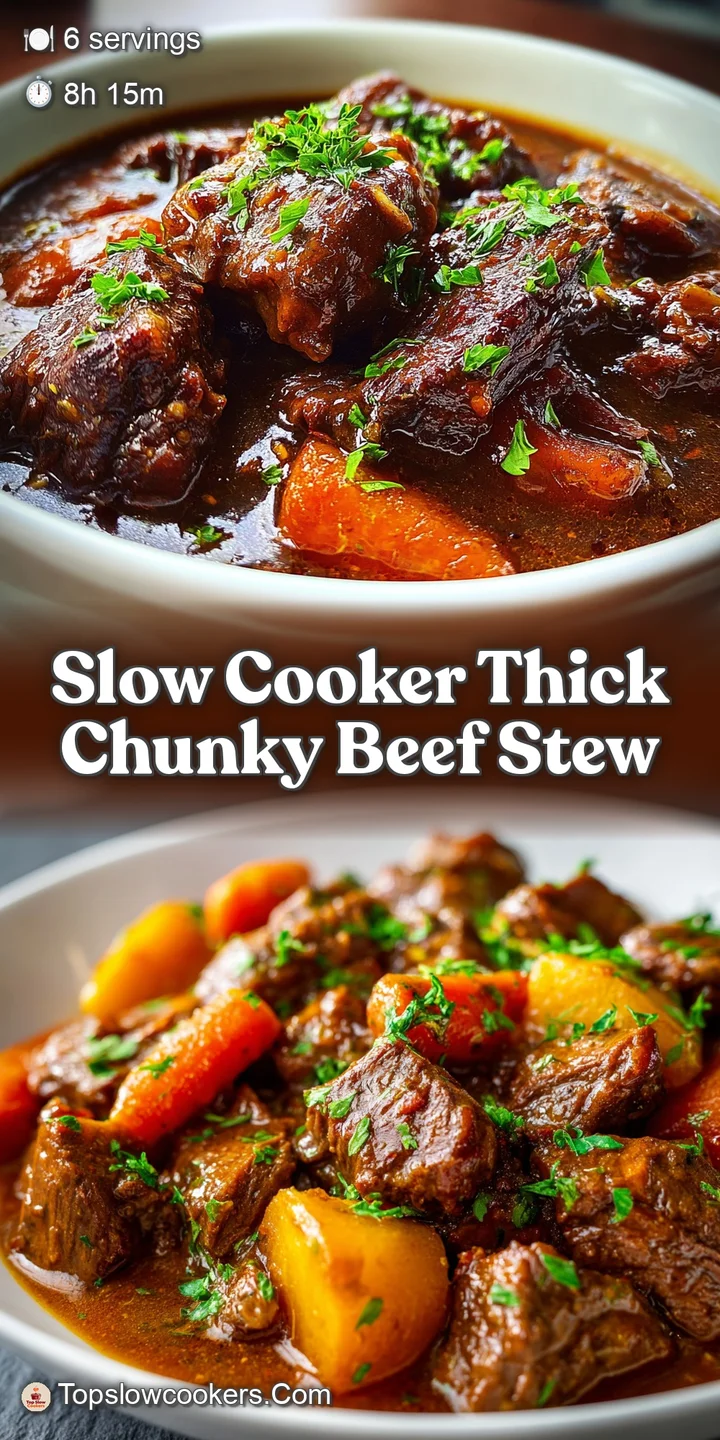
Slow Cooker Thick Chunky Beef Stew
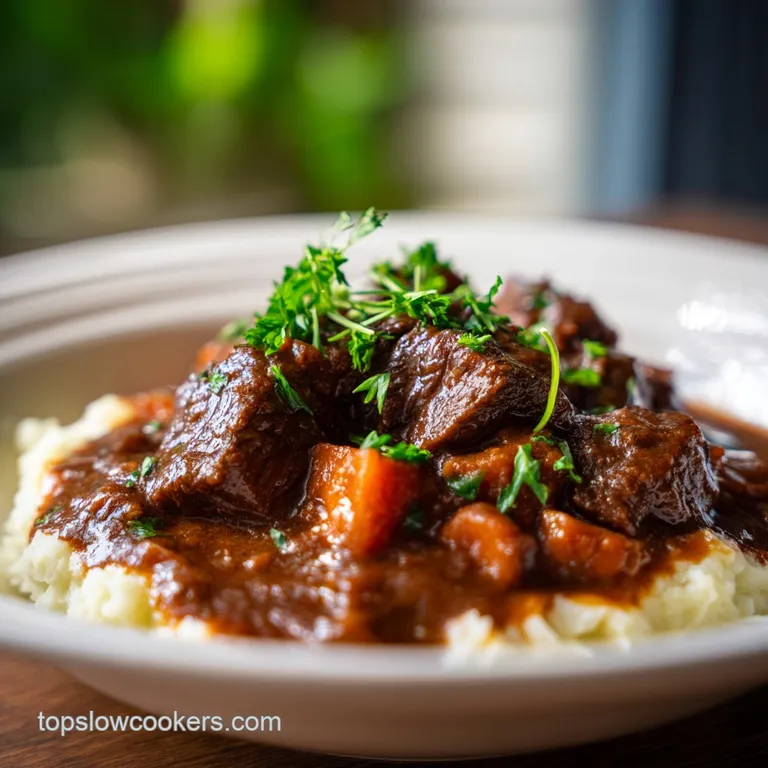
- Time: Active 15 minutes, Passive 8 hours, Total 8 hours 15 mins
- Flavor/Texture Hook: Hearty chunks of beef in a velvety, onion infused savory gravy.
- Perfect for: Cold weather Sunday dinners or hands off meal prep for busy families.
- Slow Cooker Thick Chunky Beef Stew Success
- Vital Recipe Specs
- The Savory Ingredient Deep Dive
- Practical Pantry Ingredients
- Simple Equipment Requirements
- Proven Step-By-Step Method
- Troubleshooting Texture and Flavor
- Smart Recipe Variations
- Scaling This Stew Up or Down
- Preservation and Reheating Guidelines
- Serving This Hearty Stew
- Traditional Cooking Myths
- Recipe FAQs
- 📝 Recipe Card
Slow Cooker Thick Chunky Beef Stew Success
I remember the first time I tried making a hearty stew in my old Crock Pot. I tossed everything in, turned it on, and walked away. Eight hours later, I didn't have a thick, savory masterpiece; I had a watery, grey soup with mushy carrots.
It was a massive letdown for a Tuesday night when all I wanted was something to stick to my ribs.
That failure taught me that you can't just "dump and go" if you want a specific texture. The secret lies in the size of your cuts and how you treat the meat before it ever touches the ceramic pot.
Since that soggy disaster, I've stuck to a traditional method that ensures the beef stays intact while the sauce becomes rich enough to coat the back of a spoon.
We are going for a meal that feels intentional and traditional. You want to see the individual coins of carrots and the jagged edges of the Yukon Gold potatoes, not a blended mash.
This recipe is the result of years of trial and error, focusing on what actually creates that sought after thickness without using weird additives.
Vital Recipe Specs
To get this right every single time, you need to pay attention to the physical breakdown of the ingredients. Slow cooking is a game of patience, but it is also a game of thermodynamics.
When we cook beef for 8 hours, we are waiting for the connective tissue to melt into gelatin, which provides that velvety mouthfeel we crave in a savory stew.
Amylose and Collagen Synergy
Starch Gelatinization: Flour particles on the beef hydrate and swell during the long cook, creating a stable suspension that thickens the broth naturally. Collagen Melt: At exactly 8 hours on low, the tough fibers in the beef chuck reach a state of total breakdown, releasing natural gelatin into the sauce.
| Cook Method | Time | Texture Result | Best For |
|---|---|---|---|
| Slow Cooker | 8 hours | Fork tender beef, deeply infused veggies | Maximum flavor depth with zero effort |
| Stovetop | 3 hours | Firm tender meat, brighter vegetable colors | Faster results if you can stay home |
| Oven (Dutch Oven) | 3 hours 30 mins | Caramelized edges, very thick sauce | Getting a bit of a "crust" on the top |
This comparison shows why we choose the slow cooker for this specific dish. The long, gentle heat allows the flavors to marry in a way that high heat simply cannot replicate. If you're looking for another comforting beef option, you might also enjoy a Slow Cooker Beef recipe which uses a similar low temperature approach for a different flavor profile.
The Savory Ingredient Deep Dive
The choice of beef is the most critical decision you'll make at the butcher counter. Do not buy "stew meat" in those pre cut packs. Often, those are scraps from different parts of the cow, meaning they cook at different rates. Buy a whole 2 lbs beef chuck roast and cut it yourself into 1.5 inch chunks.
This ensures every piece reaches that tender state at the exact same moment.
| Ingredient | Science Role | Pro Secret |
|---|---|---|
| Beef Chuck Roast | Provides fat and gelatin | Cut into 1.5 inch chunks to prevent drying out |
| All Purpose Flour | Primary thickening agent | Shake with beef to create a "roux" in the pot |
| Yukon Gold Potatoes | Adds starch and structure | These hold their shape better than Russets in long heat |
| Onion Soup Mix | Concentrated umami boost | Adds salt, onion flavor, and caramel color instantly |
We also use a mix of traditional aromatics like 1 medium yellow onion and 3 cloves of garlic. These aren't just for flavor; they provide the aromatic base that fills your whole house while you're at work. For a different twist on a vegetable forward base, our Slow Cooker Potato recipe explores how starch behaves when it's the star of the show.
Practical Pantry Ingredients
Here is exactly what you need to gather. I've included a few smart swaps in case your pantry is looking a bit bare, keeping the budget in mind without sacrificing that savory finish.
- 2 lbs beef chuck roast: Cut into 1.5 inch chunks. Why this? High collagen content melts into a tender, rich texture.
- Substitute: Beef brisket or bottom round (though chuck is best).
- 1/4 cup all purpose flour: For coating. Why this? To thicken the sauce as it simmers.
- Substitute: Cornstarch (use half the amount, add at the end).
- 1 envelope (1 oz) dry onion soup mix: The shortcut. Why this? Instant depth of flavor and seasoning.
- Substitute: 1 tbsp beef bouillon plus 1 tsp onion powder.
- 1 lb Yukon Gold potatoes: Cubed. Why this? Waxy texture prevents the cubes from turning to mush.
- Substitute: Red potatoes work equally well.
- 3 large carrots: Sliced. Why this? Adds a natural sweetness to the savory base.
- Substitute: Parsnips for an earthy, peppery bite.
- 2 celery stalks: Chopped. Why this? Essential for the classic aromatic "mirepoix" flavor.
- Substitute: A pinch of celery seed if you're out of fresh.
- 3 cups low sodium beef broth: The liquid base. Why this? Controls salt levels while providing rich color.
- Substitute: Water plus 2 extra beef bouillon cubes.
- 2 tbsp tomato paste: For body. Why this? Adds acidity and a deep, reddish brown color.
- Substitute: 1/4 cup tomato sauce (reduce broth by 1/4 cup).
- 1 tbsp Worcestershire sauce: The umami king. Why this? Adds fermented depth and tang.
- Substitute: Soy sauce or balsamic vinegar.
Simple Equipment Requirements
You don't need a kitchen full of gadgets, but a few basics make this easier. A 6 quart slow cooker is the standard size for this recipe yield. If you use a smaller one, you might find it difficult to fit the 2 lbs of beef and all those chunky vegetables without it spilling over.
I always suggest having a large zip top bag on hand for the flour coating. It’s a trick I learned to keep the mess off my counters. Instead of dredging the beef in a bowl, you just toss and shake. You’ll also need a sharp chef’s knife to handle that chuck roast.
Trying to cut beef with a dull blade is a recipe for uneven chunks and frustration.
Proven step-by-step Method
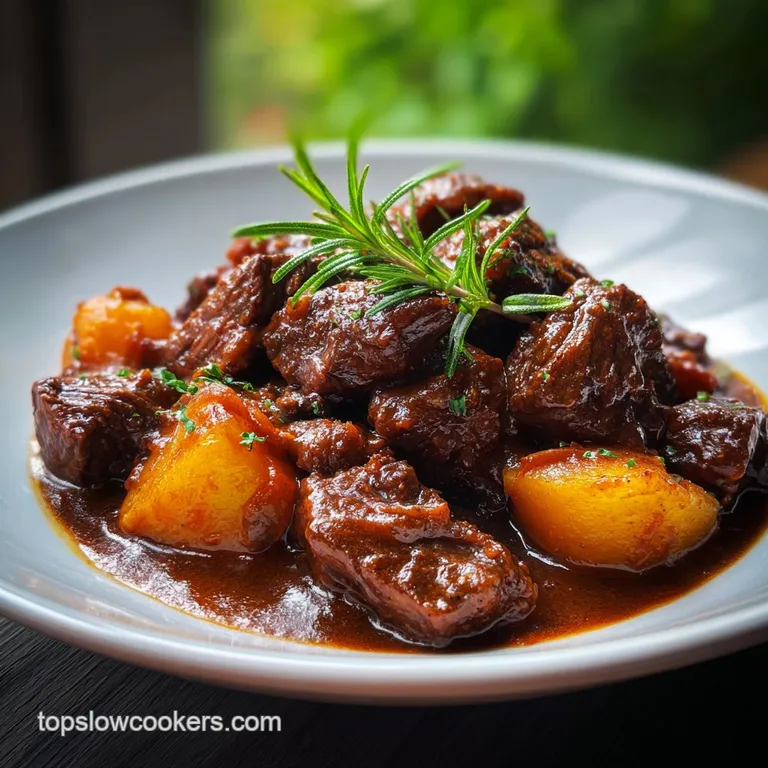
1. The Shake and Coat
Place the 2 lbs of beef chunks into a large bag or bowl with 1/4 cup flour and 1 tsp cracked black pepper. Shake vigorously until every surface is ghostly white and dry. Note: This flour creates the thickening "slurry" naturally as the meat releases juices.
2. Prepare the Base
Dice the 1 medium yellow onion and mince 3 cloves of garlic. Place them at the bottom of the slow cooker insert. This allows the aromatics to be closest to the heating element for maximum flavor extraction.
3. Layer the Vegetables
Add 1 lb of Yukon Gold potatoes (1 inch cubes), 3 sliced carrots, and 2 chopped celery stalks. Spread them out until they form a colorful, even bed for the meat.
4. Add the Protein
Place the floured beef chunks on top of the vegetables. Don't worry about browning them first this traditional budget friendly method relies on the long cook time to develop flavor.
5. Whisk the Braising Liquid
In a separate jug, whisk together 3 cups beef broth, 1 envelope onion soup mix, 2 tbsp tomato paste, 1 tbsp Worcestershire sauce, and 1 tsp dried thyme. Pour this over the meat and vegetables until the liquid barely reaches the top layer.
6. The Low and Slow Simmer
Cover and cook on LOW for 8 hours. Resist the urge to peek; every time you lift the lid, you lose about 15 minutes of heat.
7. Texture Check
After 8 hours, the beef should shatter when pressed with a fork. The sauce should be thick enough to leave a trail when you stir it.
8. Final Seasoning
Taste the gravy. If the onion soup mix didn't provide enough salt, add a pinch now. Let it sit for 5 minutes with the lid off before serving to allow the sauce to tighten further.
Troubleshooting Texture and Flavor
Sometimes things go sideways. Maybe your potatoes were extra starchy, or your slow cooker runs a bit hot. Dealing with a "thin" stew is the most common complaint I hear from my friends.
To Fix a Thin Sauce
If your stew looks more like soup at the end, don't panic. Take about half a cup of the liquid and whisk in 1 tablespoon of cornstarch. Stir it back in and turn the heat to HIGH for 15-20 minutes. The high heat will activate the starch and turn that liquid into a velvety gravy.
| Problem | Root Cause | Solution |
|---|---|---|
| Beef is tough | Cooked too fast or not long enough | Cook longer on LOW; do not use the HIGH setting |
| Stew is watery | Too much broth or meat wasn't floured | Add a cornstarch slurry and simmer on HIGH for 20 mins |
| Veggies are mushy | Cut too small for an 8 hour cook | Ensure potatoes are at least 1 inch thick |
Common Mistakes Checklist
- ✓ Never use "Stew Meat" packs; always buy a whole chuck roast for consistent texture.
- ✓ Don't skip the flour coating it is the foundation of your thick gravy.
- ✓ Keep the lid closed; peeking drops the temperature and ruins the simmer.
- ✓ Avoid the HIGH setting if possible; beef needs low heat to break down collagen properly.
- ✓ Use Yukon Gold potatoes; Russets will often disintegrate into the sauce.
Smart Recipe Variations
Cooking on a budget doesn't mean you have to skip the good stuff. You can easily tweak this recipe based on what's on sale. If you find a great deal on turkey, you can apply similar slow cooker logic to a Turkey Chili recipe, adjusting the seasonings for a different hearty meal.
For a Restaurant Quality Finish
If you have a splash of dry red wine (like a Cabernet) sitting in the fridge, swap out 1/2 cup of the beef broth for the wine. The acidity cuts through the fat of the beef chuck and adds a sophisticated depth you usually only find in expensive bistros.
For a gluten-free Option
To make this gluten-free, simply replace the 1/4 cup of all purpose flour with a 1 to-1 gluten-free flour blend. You should also check the label on your onion soup mix, as some brands use barley or wheat as a filler.
Alternatively, skip the flour and stir in a cornstarch slurry during the last 30 minutes of cooking.
Chef's Tip: If you want a deeper color, add a teaspoon of instant espresso powder to the broth. It won't taste like coffee, but it makes the gravy look incredibly rich and dark.
Scaling This Stew Up or Down
If you're cooking for a larger crowd, you can double this recipe, but you need to be careful with the liquid. When doubling to 4 lbs of beef, only use 1.5 times the broth (about 4.5 cups). The meat and vegetables will release more moisture in a larger batch, and too much liquid will prevent the sauce from thickening.
You’ll also need a 7 or 8 quart slow cooker.
For a smaller household, you can halve the recipe. Use a smaller slow cooker (3 quart) to ensure the liquid covers the ingredients properly. Reduce the total cooking time by about an hour, as smaller volumes tend to reach temperature faster.
| Servings | Beef Amount | Broth Amount | Slow Cooker Size |
|---|---|---|---|
| 3 People | 1 lb | 1.5 cups | 3 Quart |
| 6 People | 2 lbs | 3 cups | 6 Quart |
| 12 People | 4 lbs | 4.5 cups | 8 Quart |
Preservation and Reheating Guidelines
This stew is actually better the next day. As it sits in the fridge, the starches and proteins continue to settle, and the flavors of the thyme and onion soup mix sink deep into the potatoes.
- Storage
- Keep leftovers in an airtight container in the fridge for up to 4 days.
- Freezing
- This recipe freezes beautifully for up to 3 months. Let it cool completely before putting it in a freezer bag. Note: The potatoes might become slightly softer upon thawing, but the flavor will remain intact.
- Zero Waste Tip
- If you have just a little bit of gravy left over but no meat, use it as a base for a shepherd's pie or pour it over a pile of mashed potatoes the next night. You can also save your vegetable scraps (onion skins, celery ends) in a bag in the freezer to make your own beef broth later!
Serving This Hearty Stew
When it comes to serving, you want something to soak up that thick gravy. A crusty piece of sourdough bread or a side of Chicken and Dumplings recipe inspired biscuits is my go to. It provides a necessary crunch against the tender, velvety texture of the beef.
For the Ultimate Comfort Meal
Serve the stew in wide, shallow bowls. Top with a generous pinch of fresh parsley or even some sliced green onions to add a bit of brightness to the savory, brown sauce.
For a Fresh Balance
Because this is a heavy, traditional meal, a simple side salad with a sharp vinaigrette helps cleanse the palate between bites of rich beef. It's all about that balance of hearty and fresh.
Traditional Cooking Myths
Many people believe that searing the meat is "sealing in the juices." Science tells us this isn't true; moisture loss happens regardless of a sear. Searing is actually for the Maillard reaction creating those brown, flavorful compounds.
In a slow cooker with onion soup mix and tomato paste, we get plenty of that umami depth without the extra step of browning.
Another common myth is that you must cook beef on HIGH to "get it started." In reality, the high setting on most slow cookers just reaches the simmer point faster; it doesn't actually cook at a higher temperature once stabilized.
For beef chuck, the slow climb of the LOW setting is far superior for a tender, non stringy result. Trust the process, and your patience will be rewarded with a truly thick and chunky stew.
Recipe FAQs
Why is my slow cooker stew watery instead of thick?
No, flouring the meat is critical. Dusting the beef chunks in flour before adding them to the pot creates a natural slurry that thickens the liquid as it cooks down over 8 hours.
How to make the beef chunks stay whole instead of shredding?
Cook strictly on LOW for 8 hours. The high setting generates too much heat fluctuation, causing the connective tissue to break down unevenly, resulting in stringy meat.
How to deepen the savory flavor without adding more salt?
Whisk in 1 tbsp of Worcestershire sauce. This adds fermented umami depth without relying solely on the onion soup mix, which can make the stew too salty.
Is it true that searing the beef first is necessary for flavor?
No, this is a common misconception for slow cooking. Searing builds flavor through the Maillard reaction, but the low and slow method achieves deep flavor penetration without the extra cleanup step.
How to correct the texture if the stew is too thin after the cook time?
Create a cornstarch slurry and simmer on HIGH. Whisk 1 tablespoon of cornstarch into 1/2 cup of the hot liquid, stir it back into the pot, and cook on high for 15 20 minutes until velvety.
What type of potato prevents the stew from turning into mush?
Use waxy potatoes like Yukon Gold or red potatoes. These varieties have lower starch content and hold their structure well during the long, moist cooking cycle, unlike high starch Russets.
Can I substitute chicken broth for beef broth in this recipe?
No, I strongly recommend using beef broth for the traditional profile. Chicken broth lacks the deep, dark color and richness necessary to balance the chuck roast; you might see better results trying a different savory concept, like our Slow Cooker Honey recipe which handles lighter broths better.
Slow Cooker Beef Stew Recipe
Ingredients:
Instructions:
Nutrition Facts:
| Calories | 509 kcal |
|---|---|
| Protein | 31g |
| Fat | 29g |
| Carbs | 26g |
| Fiber | 3g |
| Sugar | 5g |
| Sodium | 620mg |
