Slow Cooker Butternut Squash Soup
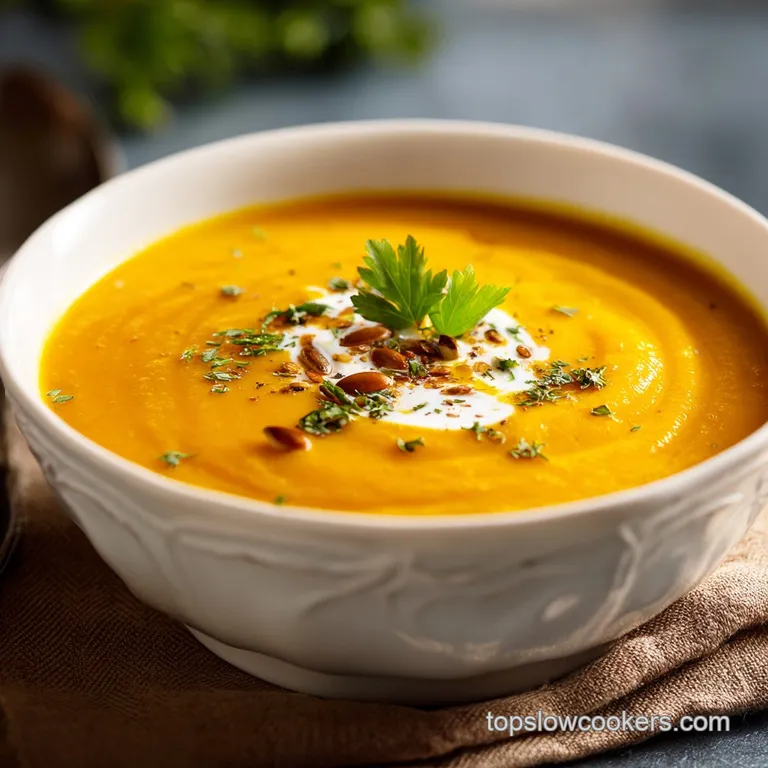
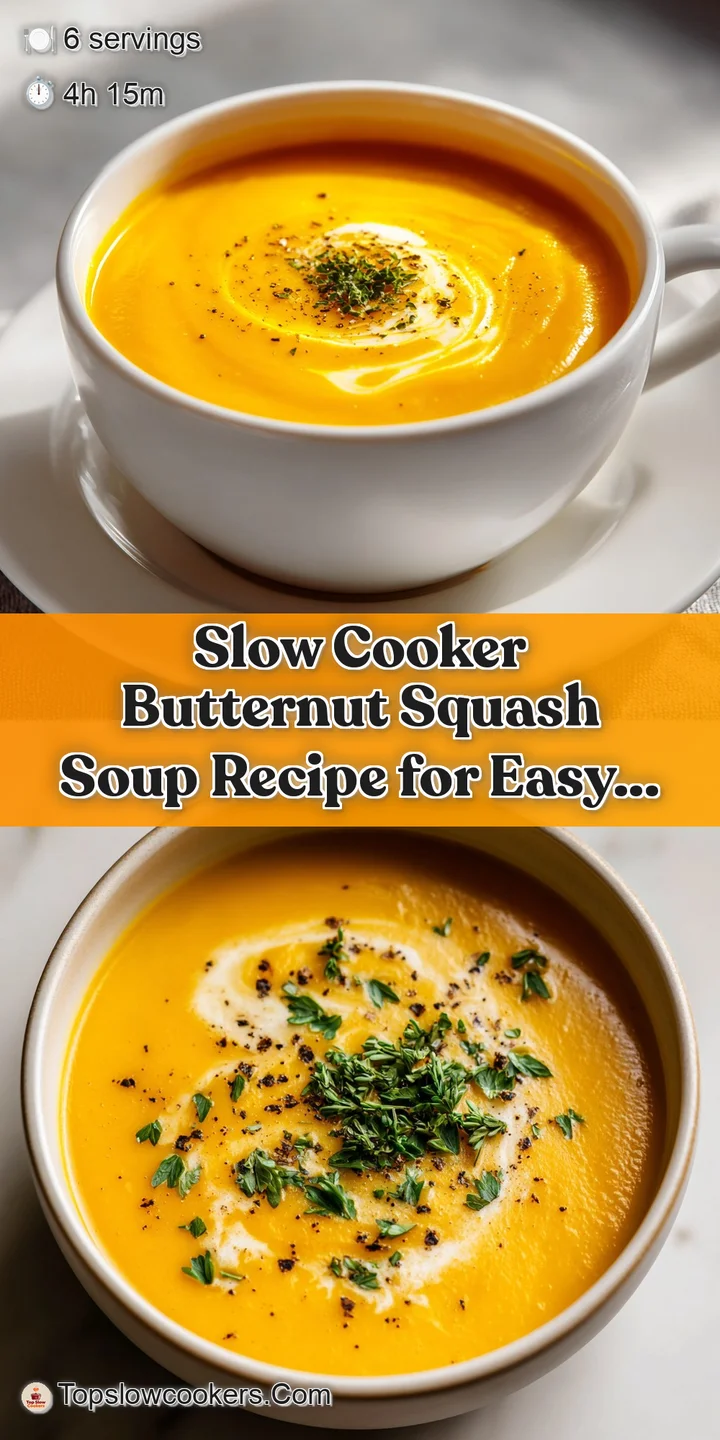
- Time: Active 15 minutes, Passive 4 hours, Total 4 hours 15 mins
- Flavor/Texture Hook: Silky, earthy, and naturally sweet
- Perfect for: Cozy weeknight dinners and stress free meal prep
- Why This Slow Cooker Butternut Squash Soup Works
- Crucial Recipe Specifications and Specs
- Selecting Your Fresh Produce Elements
- Necessary Gear for Smooth Results
- Simple Steps for Maximum Flavor
- Avoiding Common Kitchen Soup Disasters
- Creative Swaps and Flavor Twists
- Best Methods for Fresh Storage
- Serving Ideas for a Meal
- Recipe FAQs
- 📝 Recipe Card
Why This Slow Cooker Butternut Squash Soup Works
Picture this: You walk through the door after a long, grey Tuesday, and the air is thick with the scent of toasted nutmeg and sweet sage. There is no frantic chopping or pots boiling over; just a quiet crockpot waiting to yield a velvety, golden treasure.
I used to think I needed a French culinary degree to get that perfectly smooth texture, but it turns out the slow cooker does all the heavy lifting while you're busy living your life.
We are skipping the standing over-a hot-stove phase and leaning into the convenience of modern cooking. This version relies on the gentle, indirect heat of the ceramic crock to break down the starch in the squash without scorching the natural sugars.
It's a reliable, comforting staple that has saved my sanity more times than I can count when the kids are hungry and the "what's for dinner" dread kicks in.
The beauty of this dish lies in the contrast between the earthy squash and the bright, crisp bite of a Granny Smith apple. We aren't just making soup; we are building layers of flavor that taste like they took all day to develop, even though you only spent fifteen minutes at the cutting board.
It is the ultimate low effort, high reward meal that makes your kitchen smell like a high end bistro.
The Physics of the Puree
Thermal Breakdown: Extended low temperature cooking softens the rigid cellulose walls of the squash, allowing the fibers to disintegrate into a buttery liquid once blended. This creates a much silkier mouthfeel than the rapid, aggressive boiling used in traditional stovetop methods.
| Method | Active Time | Texture Outcome | Cleanup Level |
|---|---|---|---|
| Slow Cooker | 15 mins | Ultra velvety and uniform | Minimal (One pot) |
| Stovetop | 45 mins | Slightly grainy or rustic | Moderate (Splatter risk) |
| Oven Roast | 60 mins | Caramelized but thicker | Heavy (Baking sheets) |
Choosing the slow cooker method isn't just about saving time; it's about flavor stability. Because the vessel is sealed, we trap all the aromatic compounds from the garlic and ginger that would otherwise escape into the steam of a standard pot.
Chef's Tip: Freeze your fresh ginger root and grate it while still frozen; the fibers break cleanly, and you won't end up with stringy bits in your silky soup.
Crucial Recipe Specifications and Specs
Before we start tossing ingredients into the pot, let’s look at the numbers that make this work. Success in the kitchen often comes down to ratios, especially when you want that perfect spoon coating consistency. Much like preparing a Slow Cooker Potato recipe, the liquid to solid ratio is what prevents your meal from turning into a thick mash or a watery broth.
| Component | Science Role | Pro Secret |
|---|---|---|
| Butternut Squash | Primary Starch & Body | Use 1 inch cubes for even heat penetration |
| Coconut Milk | Fat Emulsification | Add at the very end to prevent curdling |
| Granny Smith Apple | Pectin & Acidity | Keeps the peel on for extra natural thickeners |
The starch in the 3 lbs of butternut squash acts as our natural thickener, so we don't need any flour or heavy creams. The 13.5 oz of full fat coconut milk provides the lipid bridge that carries the flavors of the sage and nutmeg across your palate. It's a calculated balance of sweetness, fat, and earthiness.
Selecting Your Fresh Produce Elements
For this soup, the quality of your produce matters because there are so few ingredients to hide behind. You want a squash that feels heavy for its size, which indicates high moisture content and better flavor.
I once tried using a pre cut bag from the grocery store that looked a bit dry, and the soup ended up stringy trust me, peeling the fresh one is worth the extra five minutes.
- 3 lbs Butternut Squash
- Peeled, seeded, and cubed into 1 inch chunks. Why this? Provides the creamy, nutty base and vibrant orange hue.
- 1 Large Yellow Onion
- Diced. Why this? Offers a savory depth that balances the squash's sweetness.
- 1 Granny Smith Apple
- Peeled and chopped. Why this? High acidity cuts through the richness of the coconut.
- 3 Cloves Garlic
- Minced. Why this? Adds an essential aromatic backbone to the broth.
- 1 tbsp Fresh Ginger
- Grated. Why this? Provides a subtle, warming heat that brightens the palate.
- 4 cups Vegetable Broth
- Low sodium. Why this? Controls the salt level while providing the cooking medium.
- 13.5 oz Coconut Milk
- Full fat. Why this? Creates a velvety texture without using dairy.
- 1/2 tsp Dried Sage
- Why this? Classic earthy herb that pairs perfectly with winter squash.
- 1/4 tsp Ground Nutmeg
- Why this? Adds a mysterious, sweet spiced aroma.
- 1 tbsp Maple Syrup
- Why this? Enhances the natural sugars of the roasted squash.
- 1 tsp Apple Cider Vinegar
- Why this? A tiny splash of acid wakes up all the flavors.
- 1 tbsp Olive Oil
- For the pot.
| Original Ingredient | Substitute | Why It Works |
|---|---|---|
| Vegetable Broth | Chicken Bone Broth | Adds more protein and a richer, savory mouthfeel |
| Maple Syrup | Honey or Agave | Similar viscosity; honey adds a floral note |
| Coconut Milk | Heavy Cream | Same fat content. Note: Adds dairy and lacks tropical undertones |
If you find yourself missing the apple, you can swap it for a Bosc pear. The pear is slightly softer and sweeter, so you might want to increase the apple cider vinegar by an extra half teaspoon to keep that bright edge.
Necessary Gear for Smooth Results
You don't need a pantry full of gadgets, but two things are non negotiable for this recipe: a reliable slow cooker and a way to blend. I prefer a 6 quart slow cooker for this volume to ensure there's enough room for the liquid to circulate around the squash cubes.
- Slow Cooker: A 6 quart model works best for 6 servings.
- Immersion Blender: This allows you to blend directly in the pot. If using a standard blender, work in small batches to avoid "steam explosions."
- Y Peeler: Essential for tackling the tough skin of the butternut squash without losing your patience.
- Microplane: Perfect for getting that ginger and garlic into a fine paste.
Chef's Tip: If you don't have an immersion blender, let the soup cool for 15 minutes before transferring it to a regular blender. Never fill a blender more than halfway with hot liquid, or the lid will fly off!
Simple Steps for Maximum Flavor
This is the "plan based execution" I promised. We are going to move from prep to plate in a logical flow that keeps your kitchen clean and your effort minimal. The timeline is simple: Prep at noon, cook through the afternoon, and finish just before the table is set.
1. For Maximum Flavor Foundation
Lightly grease the inside of your slow cooker with 1 tbsp of olive oil. Add the 3 lbs of cubed butternut squash, diced yellow onion, chopped apple, minced garlic, and grated ginger. Sprinkle over the 1/2 tsp dried sage, 1/4 tsp nutmeg, 1 tsp salt, and 1/2 tsp pepper.
Toss everything directly in the pot so the spices coat the vegetables.
2. The Low and Slow Infusion
Pour in the 4 cups of vegetable broth until the vegetables are mostly submerged. Cover the pot with the lid and set it to High for 4 hours or Low for 7-8 hours.
Avoid lifting the lid during this time; every time you peek, you lose about 15 minutes of heat. Cook until the squash is tender and easily smashed with a fork.
3. To Achieve a Silkier Finish
Once the cook time is up, turn off the heat. If using an immersion blender, submerge it fully before turning it on to prevent splatters. Blend until the mixture is completely smooth and no lumps remain.
If using a traditional blender, transfer in small batches, holding the lid down with a kitchen towel.
4. The Final Balancing Act
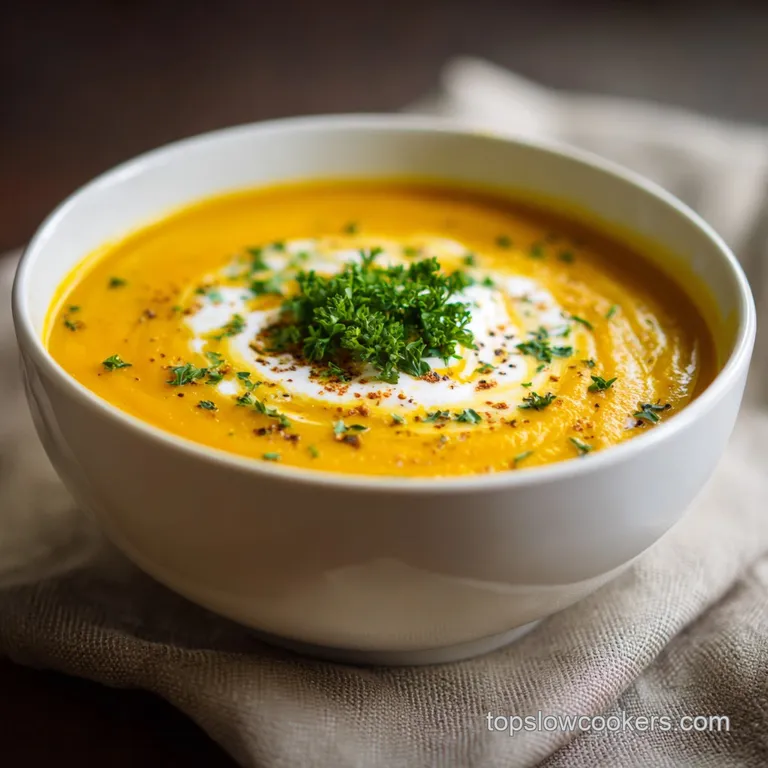
Stir in the 13.5 oz of coconut milk, 1 tbsp of maple syrup, and 1 tsp of apple cider vinegar. This is where the magic happens the vinegar cuts through the fat of the coconut milk and makes the squash flavor pop. Taste and add a pinch more salt if needed. The soup should look glossy and velvety.
Avoiding Common Kitchen Soup Disasters
Even the simplest recipes can hit a snag. The most common issue with squash soup is the texture no one wants a bowl of watery liquid or a "stringy" mess. This often happens if the squash wasn't cooked long enough or if the ratio of broth was too high. If you find your result is thinner than you'd like, similar to the troubleshooting you might do for a Slow Cooker Vegetable recipe, don't panic.
To Prevent a Watery Soup
If your soup looks more like a juice than a puree, it's usually because the squash released more water than expected. You can fix this by simmering the blended soup with the lid off for 20 minutes to evaporate excess moisture.
Alternatively, blend in a half cup of instant potato flakes it’s a secret hack that thickens perfectly without changing the flavor.
Dealing with "Stringy" Squash
Some butternut squashes are just more fibrous than others. If your blender didn't quite catch every fiber, the best solution is to pour the finished soup through a fine mesh sieve. It takes two minutes but results in a "restaurant quality" silkiness that is worth the effort.
| Problem | Root Cause | Solution |
|---|---|---|
| Bland Flavor | Lack of acidity or salt | Add more apple cider vinegar or a pinch of salt |
| Grainy Texture | Under cooked squash | Cook for another 30 mins on high before blending |
| Bitter Aftertaste | Over cooked garlic | Balance with an extra tsp of maple syrup |
Common Mistakes Checklist
- ✓ Don't skip the apple: The pectin helps with thickness and the acid balances the sugar.
- ✓ Check cube size: Ensure squash is in 1 inch chunks; larger pieces won't soften in 4 hours.
- ✓ Add coconut milk last: Boiling coconut milk for hours can cause it to separate and lose its creaminess.
- ✓ Vent the blender: If using a stand blender, remove the center plastic piece from the lid to let steam escape.
- ✓ Taste at the end: Always do a final salt check after adding the coconut milk, as fat dulls saltiness.
Creative Swaps and Flavor Twists
Once you've mastered the base, you can start playing with the profile. This recipe is a fantastic canvas for different culinary directions. Whether you want something with more heat or something that feels like a full meal, small adjustments go a long way.
For a Spicy Kick
Add 1 tbsp of red curry paste along with the broth. The lemongrass and chili in the paste dance beautifully with the coconut milk and squash, giving it a Thai inspired flair. You can also garnish with a drizzle of sriracha or red pepper flakes for a "shatter" of heat on the surface.
To Make it a Hearty Meal
Stir in some cooked quinoa or shredded rotisserie chicken after blending. It turns the soup from a starter into a filling main course. I’ve even seen people top it with crispy chickpeas or toasted pumpkin seeds to add a necessary crunch that contrasts the velvety base.
For a Low Carb Alternative
Swap the 1 tbsp of maple syrup for a monk fruit sweetener or simply omit it. The squash and apple provide plenty of natural sweetness on their own. You can also replace half the squash with cauliflower florets to reduce the overall carb count while maintaining a similar creamy texture.
Decision Shortcut
- If you want it richer: Swap 1 cup of broth for heavy cream at the end.
- If you want it smokier: Add 1/2 tsp of smoked paprika with the spices.
- If you want it fresher: Stir in a handful of fresh spinach right before serving until wilted.
Best Methods for Fresh Storage
This soup is a meal prepper's dream because it actually tastes better the next day. As it sits, the ginger and sage infuse more deeply into the liquid. I usually make a double batch and keep half in the freezer for those nights when I'm too tired to even think about the slow cooker.
- Fridge: Store in an airtight container for up to 4 days. The soup will thicken as it cools, so you may need a splash of water when reheating.
- Freezer: This soup freezes beautifully because it's pureed. Use freezer safe bags or containers and leave an inch of space for expansion. It stays fresh for up to 3 months.
- Reheating: Warm it on the stovetop over medium heat, stirring frequently to maintain the emulsion. Avoid the microwave if possible, as it can heat unevenly and cause "splatters" from steam pockets.
Zero Waste Tip: Don't throw away those squash seeds! Rinse them, pat them dry, and roast them with a little olive oil and salt at 350°F (180°C) for 15 minutes. They make the perfect crunchy garnish for the top of your soup.
Serving Ideas for a Meal
To make this a complete experience, think about textures. Since the soup is so smooth, you need something with a "snap" or "crunch" to keep things interesting. A crusty sourdough baguette is the classic choice for dipping, but I also love serving this alongside a Slow Cooker Corn Chowder recipe for a "soup flight" night if I'm hosting friends.
To Balance the Silkiness
Top each bowl with a dollop of Greek yogurt or extra coconut cream. Sprinkle with toasted pepitas, a few fried sage leaves, or even some crumbled bacon if you aren't keeping it vegetarian. The salty, smoky bacon provides a "shatter" of texture that cuts through the creamy squash.
For a Full Seasonal Menu
Serve this as an appetizer for a roasted chicken dinner or alongside a crisp kale and pomegranate salad. The bright acidity of a citrus based salad dressing provides a lovely counterpoint to the warm, spiced notes of the nutmeg and ginger.
- 1. 12
- 00 PM: Chop the squash, apple, and onion. Toss everything into the slow cooker.
- 2. 4
- 00 PM: Check for tenderness. If the squash "shatters" under a fork, it's ready.
- 3. 4
- 10 PM: Blend until velvety, stir in the coconut milk and vinegar, and serve hot.
Recipe Myths Debunked
"You must roast the squash first for flavor." While roasting adds caramelization, the slow cooker develops a deep, concentrated sweetness through long infusion that is much easier for a weeknight. You aren't losing flavor; you're just changing its character from "toasty" to "aromatic."
"Coconut milk makes it taste like a dessert." Not if you use the apple cider vinegar! The acid is the essential bridge that keeps the coconut fat in the savory realm, preventing it from feeling like a pudding.
Recipe FAQs
How to make butternut squash soup in a slow cooker?
Combine vegetables, broth, and spices in the slow cooker first. Place the cubed butternut squash, onion, apple, garlic, ginger, broth, sage, nutmeg, salt, and pepper into the crock.
Set to low for 7-8 hours or high for 4 hours until the squash is fork tender, then blend until silky smooth before stirring in the coconut milk.
What spices pair well with butternut squash?
Sage, nutmeg, and ginger are the essential trio. Sage provides earthy depth, nutmeg adds warm sweetness, and ginger gives a necessary bright lift. You can enhance these with a touch of cinnamon or a dash of red curry paste for a global twist.
Can you cook butternut squash in a slow cooker?
Yes, the slow cooker is excellent for breaking down squash. The long, gentle heat softens the tough cellulose fibers perfectly, resulting in an exceptionally smooth, velvety puree when blended. This low-and-slow method prevents the scorching that can happen on a stovetop.
What are some common mistakes when making squash soup?
The biggest mistake is not balancing the final flavor profile. Always taste after adding the coconut milk; the fat dulls the saltiness, so you often need an extra pinch of salt or a teaspoon of apple cider vinegar to brighten the flavors.
How do I ensure my slow cooker squash soup is perfectly smooth?
Blend until absolutely uniform, preferably with an immersion blender. If the squash is fully cooked, it should break down easily, but for true restaurant silkiness, use an immersion blender right in the pot. If you enjoyed mastering the texture control here, see how the same blending principles apply when achieving perfect consistency in our Slow Cooker Beef recipe.
Is it true I need to roast the squash before using the slow cooker?
No, this is a common misconception. While roasting adds a smoky caramelization, the slow cooker achieves a deep, concentrated sweetness through long infusion that negates the need for the extra step. This keeps your active prep time under 15 minutes.
What liquid should I use instead of vegetable broth?
Chicken bone broth works well if you prefer a richer, savory base. This replaces the vegetable stock and adds extra body and protein to the final blend. If you are interested in other savory slow cooker main dishes that utilize bone broth for depth, check out the preparation in the Pepperoncini Beef Slow recipe.
Slow Cooker Butternut Soup

Ingredients:
Instructions:
Nutrition Facts:
| Calories | 297 kcal |
|---|---|
| Protein | 4.1 g |
| Fat | 16.8 g |
| Carbs | 38.5 g |
| Fiber | 6.2 g |
| Sugar | 11.2 g |
| Sodium | 658 mg |
