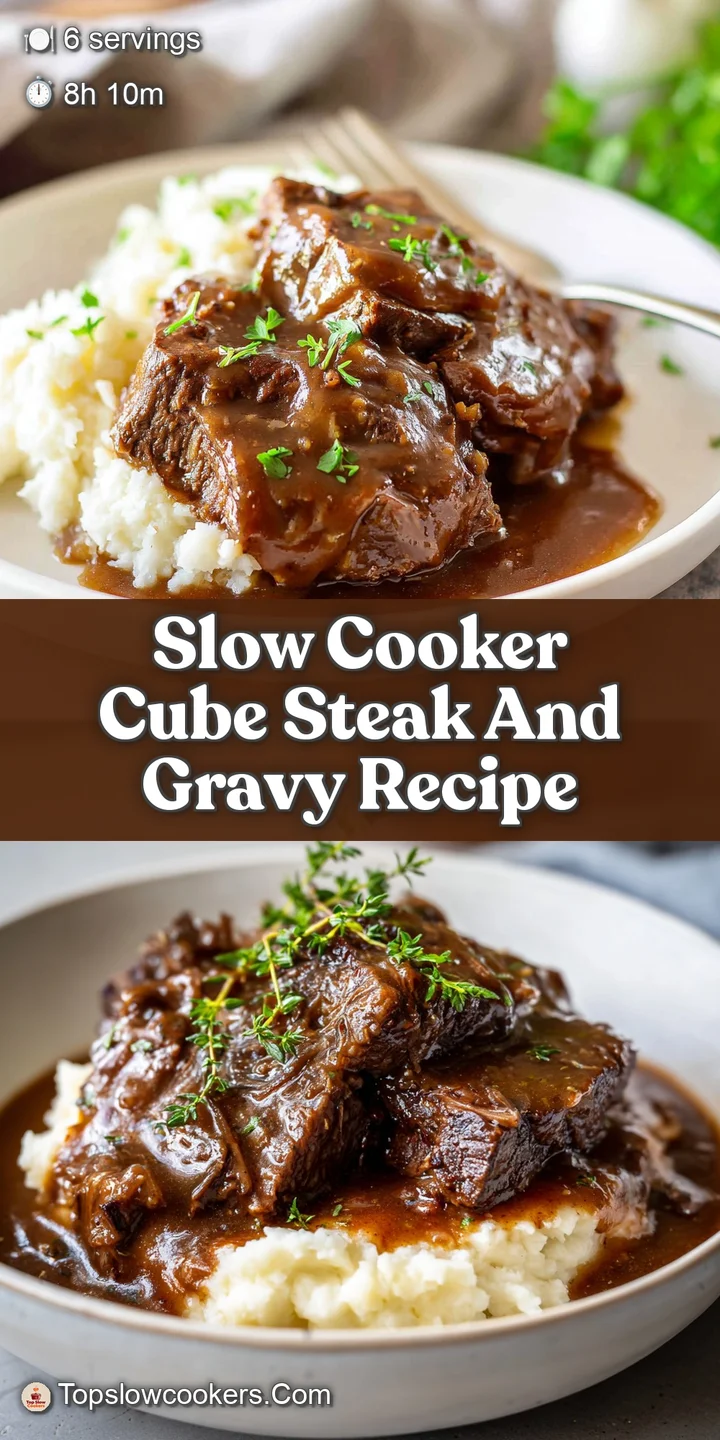
Slow Cooker Cube Steak and Gravy
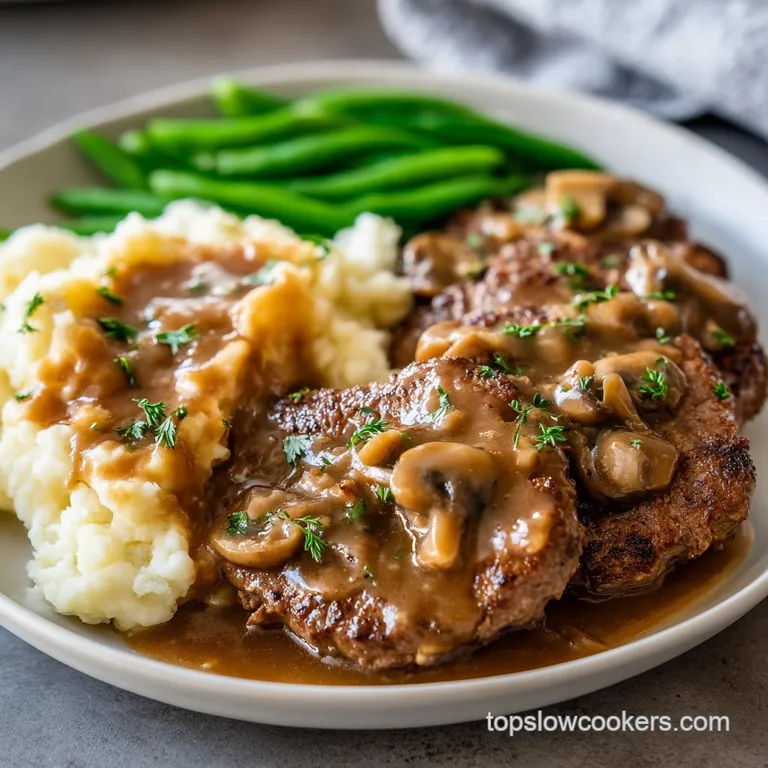
- Time: Active 10 minutes, Passive 8 hours, Total 8 hours 10 minutes
- Flavor/Texture Hook: Velvety, melt in-the mouth beef with a savory, salt forward onion gravy
- Perfect for: Traditional family Sunday dinners or hands off weeknight meal prep
- Hearty Slow Cooker Cube Steak and Gravy Recipe Guide
- Scientific Methods for Achieving Maximum Beef Tenderness and Flavor
- Essential Timing and Measurements for Consistent Success Every Time
- Selecting the Best Components for a Savory Umami Gravy
- Required Kitchen Tools for a Simple Slow Cooking Experience
- Step by Step Execution of the Slow Cooker Method
- Solving Common Texture and Sauce Issues During the Cook
- Creative Variations to Customize the Traditional Flavor Profile
- Proper Storage and Reheating Methods for Maintaining Quality
- Ideal Pairings for This Traditional Beef Dinner
- Myths About Slow Cooking Beef
- Recipe FAQs
- 📝 Recipe Card
Hearty Slow Cooker Cube Steak and Gravy Recipe Guide
There is a specific kind of magic that happens when you walk through the front door after a long, grueling day and the air is thick with the scent of slow simmered beef and onions. It’s a sensory hug that tells you dinner is already handled.
I remember the first time I attempted this; I was skeptical that a cut as humble (and often tough) as cube steak could ever become something elegant. I had always associated it with greasy, flour dredged frying, but the slow cooker changed my entire perspective on what this meat can do.
What we are making here isn't just a meal; it's a testament to patience. By the time that timer hits zero, the beef doesn't just cut easily it practically shatters at the mere suggestion of a fork.
The gravy, darkened by the Worcestershire and the natural juices of the beef, develops a thick, glossy consistency that demands a bed of mashed potatoes or rice to soak up every single drop.
You don't need fancy gadgets or expensive cuts of ribeye to make a dinner that feels special. We are taking simple, pantry staple ingredients and letting thermodynamics do the heavy lifting.
This is the ultimate "set it and forget it" dish that actually delivers on the promise of a hearty, traditional meal without the fuss of standing over a hot stove.
Scientific Methods for Achieving Maximum Beef Tenderness and Flavor
The physics of this dish relies on a process called hydrolytic breakdown. Unlike a quick sear on a steak, which focuses on the Maillard reaction for surface flavor, our slow cooker environment targets the stubborn connective tissues within the beef.
Cube steak is already mechanically tenderized those little indentations are purposeful and those "wounds" in the meat act like tiny channels that allow our savory liquid to penetrate deep into the muscle fibers.
Breaking Down Tough Connective Tissue
The steady, low heat (around 190°F to 200°F) over eight hours is the sweet spot for converting collagen into gelatin. If we cooked this too fast, the muscle fibers would tighten and squeeze out all their moisture, leaving you with something resembling a literal shoe sole.
By keeping the temperature consistent and low, we ensure the protein denaturation happens slowly enough that the meat stays succulent while the gravy thickens into a velvety glaze.
Emulsifying the Mahogany Gravy
The interaction between the condensed soup and the beef broth creates a stable emulsion. As the fats from the 1.75 lb beef cube steaks render out, they are captured by the starch in the cream of mushroom soup, preventing the sauce from breaking or becoming oily.
This creates a cohesive, savory blanket that coats the meat perfectly rather than just sliding off.
| Steak Thickness | Target Internal Temp | Rest Time | Visual Finished Cue |
|---|---|---|---|
| 0.5 inch | 195°F - 205°F | 10 minutes | Fibers separate with a fork |
| 0.75 inch | 195°F - 205°F | 10 minutes | Meat appears dark and saturated |
| 1.0 inch | 195°F - 205°F | 15 minutes | Gravy is bubbling and thick |
Essential Timing and Measurements for Consistent Success Every Time
When it comes to traditional comfort food, precision in your measurements ensures that the salt levels and the sauce thickness are balanced. We are using low sodium components because as the liquid reduces and the flavors concentrate over eight hours, a standard broth could easily become an oversalted mess.
Trust the 2 cups low sodium beef broth; it provides the exact volume needed to submerge the meat without drowning it.
Component Analysis
The following table breaks down why our primary ingredients are non negotiable for this specific texture.
| Component | Science Role | Pro Secret |
|---|---|---|
| Low Sodium Beef Broth | Provides the hydration for collagen conversion | Use bone broth for extra gelatin and a richer mouthfeel |
| Condensed Mushroom Soup | Acts as the primary thickening agent and emulsifier | Don't dilute it with water; let the beef juices do that |
| Worcestershire Sauce | Introduces acidity and fermented umami notes | Rub a few drops directly onto the steaks before layering |
| Yellow Onion | Breaks down into natural sugars for sweetness | Slice into half moons so they don't disappear into the sauce |
The 1.75 lb beef cube steaks are the star here, and the 2 tbsp Worcestershire sauce is our supporting actor, providing that deep, fermented tang that cuts through the richness of the condensed soup. Much like the technique used in a Mississippi Pot Roast recipe, we are looking for that specific balance of salt, fat, and acid to make the beef sing.
Selecting the Best Components for a Savory Umami Gravy
To get the most out of this recipe, you have to be intentional about your substitutions. While the base recipe is solid, sometimes you need to work with what you have in the pantry. Just remember that every swap changes the "physics" of the final sauce.
- Beef cube steaks (1.75 lb):Why this? Mechanically tenderized to allow gravy penetration.
- Yellow onion (1 large):Why this? Provides a sweet, aromatic base that softens into the sauce.
- Low sodium beef broth (2 cups):Why this? Prevents the concentrated sauce from becoming overly salty.
- Cream of mushroom soup (10.5 oz):Why this? The starch and fat provide immediate body to the gravy.
- Worcestershire sauce (2 tbsp):Why this? Adds essential acidity and savory depth.
- Garlic & Onion powder (1 tsp each):Why this? Distributes flavor evenly without the grit of fresh aromatics in a long cook.
- Cornstarch (2 tbsp):Why this? Essential for that final glossy, "shatter proof" thickness.
| Original Ingredient | Substitute | Why It Works |
|---|---|---|
| Cream of Mushroom Soup | Cream of Celery | Similar fat/starch content. Note: Lighter, more vegetal flavor profile. |
| Beef Broth | Red Wine (1 cup) + Water (1 cup) | The alcohol mimics the acidity of Worcestershire. Note: Adds deep purple hue. |
| Cube Steak | Round Steak (pounded) | Both are lean, tough cuts. Note: Must pound to 1/2 inch thickness first. |
Required Kitchen Tools for a Simple Slow Cooking Experience
One of the reasons I gravitate toward this meal is the lack of cleanup. You don't need a battery of pans or a high end sous vide machine. You need a reliable slow cooker I find a 6 quart oval model works best to allow the steaks to lay in even layers rather than being cramped into a tower.
Beyond the crockpot, a sharp chef's knife for those onions and a small whisk for the cornstarch slurry are all that stand between you and dinner. If you use a slow cooker with a timer, you can truly walk away. Honestly, don't even bother with browning the meat in a separate skillet.
While some purists insist on it, the 8 hour soak in Worcestershire and mushroom soup creates a savory crust on the meat that is just as satisfying without the extra dirty pan.
Chef's Tip: Freeze your cube steaks for about 15 minutes before you plan to handle them. This makes it much easier to trim any excess silver skin without the meat sliding around under your knife.
step-by-step Execution of the Slow Cooker Method
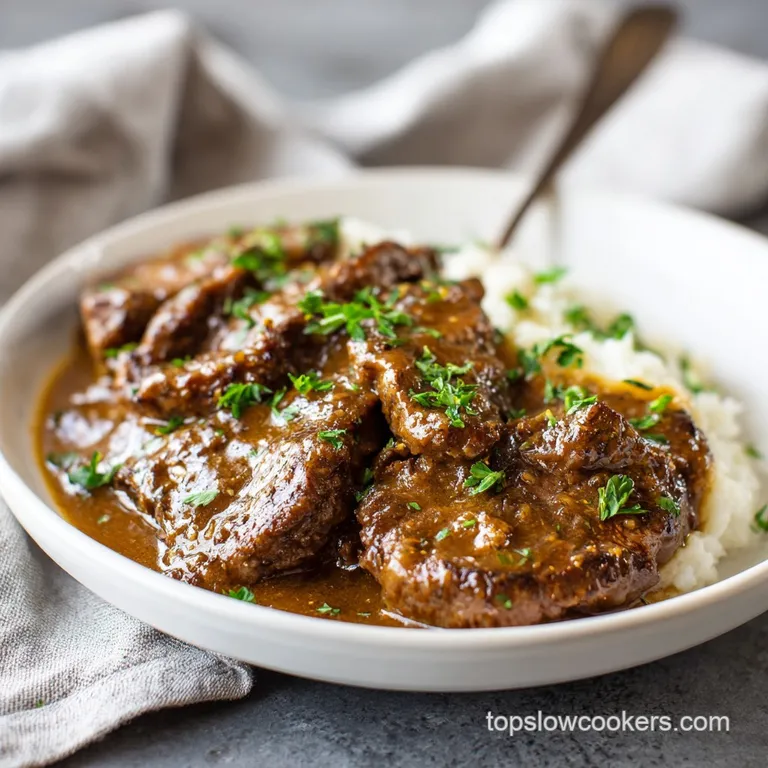
- Prepare the aromatics. Slice the large yellow onion into half moons. Note: Half moons maintain their structure better than diced onions over long cook times.
- Season the beef. Sprinkle the 0.5 tsp cracked black pepper, 1 tsp garlic powder, and 1 tsp onion powder over both sides of the 1.75 lb beef cube steaks.
- Layer the base. Place half of the sliced onions at the bottom of the slow cooker. This creates a rack so the meat doesn't scorch.
- Arrange the meat. Lay the seasoned cube steaks over the onions in a single or slightly overlapping layer.
- Whisk the liquid. In a separate bowl, combine the 2 cups low sodium beef broth, 10.5 oz condensed cream of mushroom soup, and 2 tbsp Worcestershire sauce.
- Submerge the steaks. Pour the liquid mixture over the beef until the meat is completely covered.
- Cover and cook. Set the slow cooker to LOW for 8 hours. Do not open the lid during the first 6 hours.
- Thicken the sauce.30 minutes before serving, whisk the 2 tbsp cornstarch with 2 tbsp cold water.
- Incorporate the slurry. Stir the slurry into the slow cooker liquid. Cook 30 mins until the gravy is bubbling and thick.
- Final rest. Turn off the heat and let the meat sit for 10 minutes. This allows the fibers to reabsorb the savory juices.
Solving Common Texture and Sauce Issues During the Cook
The biggest mistake people make with "slow cooker cube steak and gravy" is rushing the process. If you try to cook this on high for 4 hours instead of low for 8, the meat will be edible, but it won't have that "velvety" texture we are aiming for. High heat causes the proteins to contract too violently.
Rescuing Tough or Chewy Meat
If your timer goes off and the meat still feels "bouncy" or resistant to a fork, it simply hasn't reached the collagen to gelatin conversion point. Add another hour on low. Every slow cooker runs at a slightly different temperature, so your "8 hours" might actually be 9.
Fixing a Thin or Watery Sauce
If the gravy looks more like soup than a sauce, it’s usually because of the natural water release from the onions. The cornstarch slurry is your best friend here. If the first slurry doesn't do the trick, repeat the process, but always mix the cornstarch with cold water first to avoid "gravy rocks" (clumps of raw starch).
| Problem | Root Cause | Solution |
|---|---|---|
| Meat is dry/stringy | Cooked on "High" for too long | Always use "Low" setting for lean cube steaks. |
| Gravy is too salty | Used standard broth instead of low sodium | Stir in a splash of heavy cream or unsalted butter. |
| Sauce is lumpy | Cornstarch added directly to hot liquid | Always whisk cornstarch with cold water into a slurry first. |
Common Mistakes Checklist:
- ✓ Always use low sodium broth to prevent a salt bomb as the sauce reduces.
- ✓ Layer onions at the bottom to prevent the meat from sticking to the ceramic.
- ✓ Resist the urge to peek; lifting the lid releases critical steam and adds 20 mins to cook time.
- ✓ Check the "use by" date on your condensed soup; old starch loses its thickening power.
Creative Variations to Customize the Traditional Flavor Profile
While I love the traditional "brown gravy" vibe, you can easily pivot this recipe to suit different moods. If you're craving something with more depth, try the earthier version by adding 8 oz of sliced baby bella mushrooms. The mushrooms release their own liquid (liquor), which intensifies the beefy notes of the sauce.
Adding an Earthy Twist
For a "slow cooker cube steak and mushroom gravy" variant, simply layer the mushrooms with the onions. The extra fungi provide a meaty texture that complements the steak perfectly. If you want to lean into the savory sweet side, add a tablespoon of balsamic vinegar in place of one tablespoon of Worcestershire.
Adapting for gluten-free Diets
To make this gluten-free, ensure your cream of mushroom soup is a certified GF brand (like Pacific Foods) and use tamari instead of Worcestershire, as some brands contain malt vinegar. The cornstarch is naturally gluten-free, so it remains your primary thickener.
This keeps the sauce glossy and safe for everyone at the table.
Proper Storage and Reheating Methods for Maintaining Quality
Leftovers of this "slow cooker cube steak and gravy" are arguably better the next day. As the dish sits in the fridge, the flavors continue to marry, and the gravy thickens even further.
- Fridge: Store in an airtight container for up to 4 days. The gravy will gelatinize when cold; this is normal and a sign of a good, protein rich sauce.
- Freezer: You can freeze the cooked steak and gravy for up to 3 months. I recommend freezing them in individual portions for easy lunches.
- Reheating: Avoid the microwave if possible, as it can make the beef rubbery. Instead, place the steak and gravy in a small saucepan over medium low heat. Add a splash of beef broth or water to loosen the sauce and cover with a lid to steam the meat back to tenderness.
Zero Waste Tip: If you have leftover gravy but no meat, use it as a base for a poutine or pour it over sautéed mushrooms and toast for a quick "savory on toast" breakfast. Never throw away that mahogany liquid gold!
Ideal Pairings for This Traditional Beef Dinner
You need something to catch that gravy. My personal favorite is a heap of buttery mashed potatoes the kind with far too much butter and a splash of heavy cream. The velvety potatoes and the tender beef create a texture profile that is pure comfort.
The Classic Pairing
If you're looking for something different, serve this over wide egg noodles. The ridges of the noodles are designed to hold onto thick sauces. It turns the dish into something reminiscent of a beef stroganoff but with a much heartier, rustic feel.
For a lighter side, a simple roasted broccoli or a crisp green salad provides a necessary crunch to contrast the softness of the main course.
The Healthier Alternative
If you're watching carbs, cauliflower mash or even a simple Slow Cooker Potato recipe (served on the side) can round out the meal. The beauty of this cube steak is its versatility. Whether it's a cold winter night or a busy Tuesday, this recipe brings a sense of traditional, home cooked stability to the table. Trust the process, let the clock do the work, and prepare for a dinner that will have everyone asking for seconds.
| If you want... | Then do this... |
|---|---|
| A richer sauce | Stir in 1/4 cup of heavy cream at the very end. |
| More "zip" | Add 1 tsp of prepared horseradish to the liquid mix. |
| A thicker crust | Dredge the steaks in seasoned flour before adding to the pot. |
Myths About Slow Cooking Beef
There’s a common misconception that searing meat "seals in the juices." Science tells us this isn't true; moisture loss is a function of temperature and time, not surface crust.
While searing adds flavor through the Maillard reaction, in a 8 hour slow cook, the Worcestershire and beef broth provide plenty of deep color and savory notes without the extra step.
Another myth is that you can't overcook meat in a slow cooker. You absolutely can. Even in liquid, meat can become "mushy" if left for 12+ hours. Stick to the 8 hour mark for the perfect balance between "tender" and "falling apart." If you go too long, the muscle fibers lose all structural integrity, and you end up with beef porridge rather than a steak dinner.
Recipe FAQs
How long does cube steak need to cook in the crockpot?
Set it for 8 hours on LOW. This duration is crucial for breaking down the tough connective tissues in cube steak into rich, tender gelatin.
Can I put raw beef cubes in a slow cooker?
Yes, you can skip searing entirely. The 8-hour, moist cooking environment breaks down the beef effectively without the need for a pre-sear.
Does cube steak get more tender the longer you cook it?
Up to a point, yes, but there is a risk of overcooking. The collagen converts to gelatin over many hours, but if cooked significantly past 9 or 10 hours, the meat structure itself can begin to break down excessively into mush.
How to cook steak in a slow cooker with gravy?
Layer onions on the bottom, place seasoned steaks on top, and cover completely with a liquid mixture. The standard liquid uses condensed soup and broth, which reduces and thickens around the meat during the low-temperature cook.
Is it true that searing the cube steak first seals in the juices?
No, this is a common misconception. Searing only creates surface flavor via the Maillard reaction; it does not trap moisture inside the meat during an 8-hour slow cook, so you can skip this step to save time.
What is the best way to thicken the gravy at the end?
Whisk 2 tablespoons of cornstarch with 2 tablespoons of cold water to create a slurry. Stir this slurry into the hot liquid during the last 30 minutes of cooking until it bubbles and thickens.
What should I serve with cube steak and gravy for a complete meal?
Serve over mashed potatoes or wide egg noodles to soak up the rich sauce. This is a heavy dish, so a simple side like roasted green beans or a fresh salad works best to balance the richness.
Slow Cooker Cube Steak
Ingredients:
Instructions:
Nutrition Facts:
| Calories | 298 kcal |
|---|---|
| Protein | 31.8 g |
| Fat | 11.2 g |
| Carbs | 9.4 g |
| Fiber | 1.1 g |
| Sugar | 2.3 g |
| Sodium | 342 mg |
