Slow Cooker Lasagna Soup Recipe
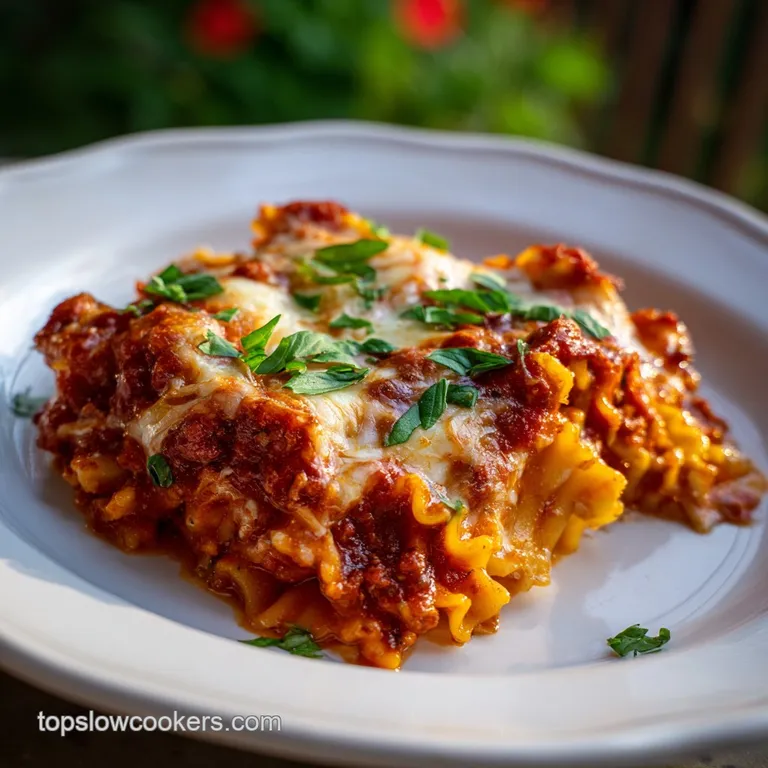
- Time: Active 15 minutes, Passive 4 hours, Total 4 hours 15 mins
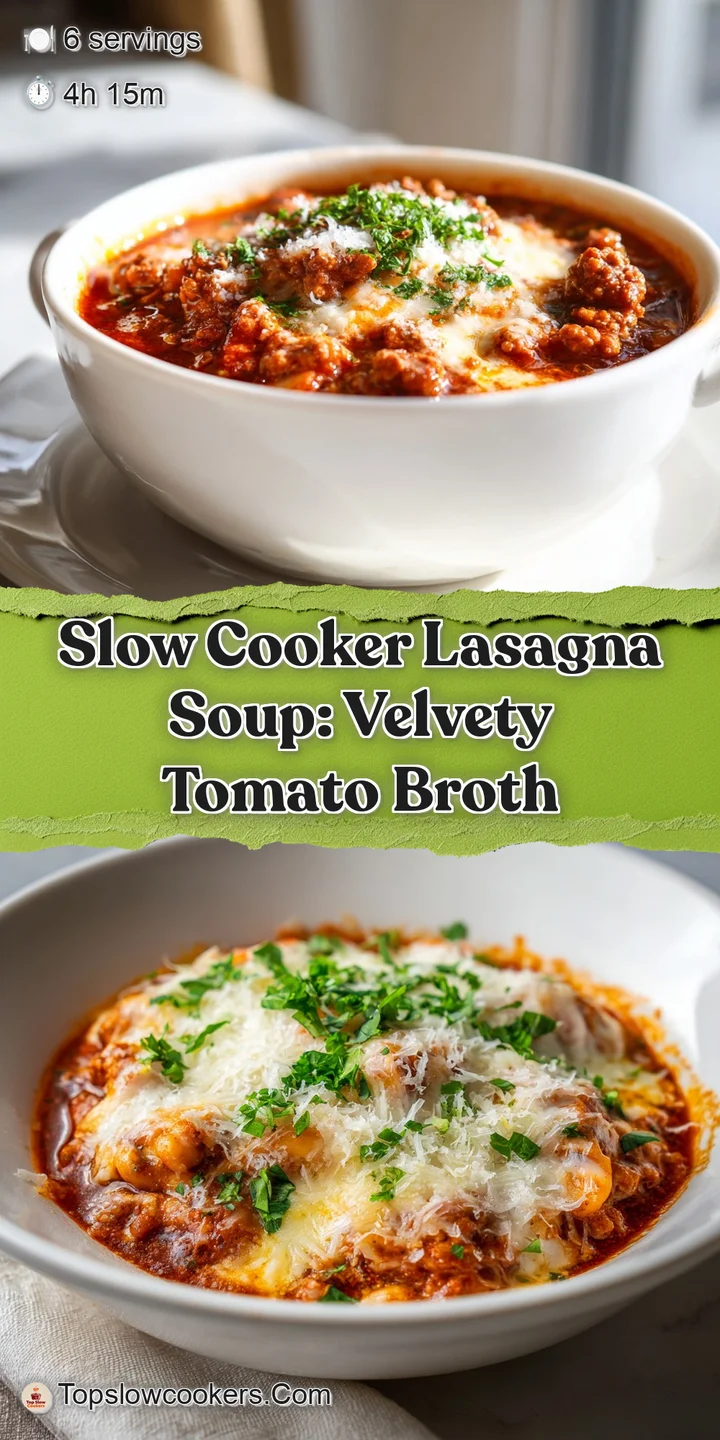
- Flavor/Texture Hook: Velvety tomato broth with savory sausage and silky cheese dollops
- Perfect for: Stress free weeknight dinners or meal prep for busy families
- Why This slow cooker lasagna soup Saves Weeknights
- The Science of Comfort
- Efficiency and Method Comparison
- Decoding the Component Chemistry
- Selecting Your Pantry Elements
- Essential Tools for Success
- Master the Cooking Flow
- Pro Fixes for Soup Snags
- Scaling for Different Crowds
- Adaptations for Every Palate
- Debunking Kitchen Myths
- Preservation and Storage Guidelines
- Finishing Touches and Plating
- Very High in Sodium
- Recipe FAQs
- 📝 Recipe Card
Why This slow cooker lasagna soup Saves Weeknights
The sizzle of Italian sausage hitting a hot skillet is the only alarm clock I need in the kitchen. I used to spend my Tuesday nights wrestling with slippery, par boiled lasagna noodles, trying to engineer a structural masterpiece that usually just slumped into a puddle on the plate anyway. It was exhausting.
One evening, after a particularly long shift, I stared at a box of broken noodles and realized I didn't need the layers; I just needed the soul of the dish.
This slow cooker lasagna soup is the result of that "aha" moment. It’s for those of us who want the cheese pulls and the herby, tomato rich depths of a classic lasagna without the architectural frustration.
We’re letting the slow cooker do the heavy lifting, allowing the flavors to meld into something far more complex than a quick stovetop version ever could. It’s pure, zero fuss comfort in a bowl.
Trust me, once you smell the garlic and smoked paprika infusing into that beef bone broth, you’ll never go back to the oven baked version on a weeknight. We’re looking for a result that is rich, hearty, and thick enough to hug your spoon.
It's about working smarter, not harder, so you can actually enjoy your evening instead of scrubbing baked on cheese off a casserole dish.
The Science of Comfort
Maillard Reaction: Searing the sausage and beef before slow cooking creates complex flavor molecules that raw simmering simply cannot replicate.
Starch Gelatinization: Adding the noodles at the very end allows them to absorb the seasoned broth perfectly without losing their structural integrity or becoming mushy.
Emulsion Stability: The addition of heavy cream and residual starch from the pasta creates a silky, unified liquid that prevents the fat from the meat from separating.
Efficiency and Method Comparison
When you're deciding how to tackle dinner, it helps to see how the slow cooker stacks up against the classic oven method. While the oven gives you that crispy top layer, the slow cooker excels at flavor saturation.
| Method | Active Time | Texture | Best For |
|---|---|---|---|
| Traditional Bake | 45 minutes | Crispy edges, firm layers | Sunday dinner |
| Slow Cooker | 15 minutes | Silky, velvety, unified | Hectic weeknights |
| Stovetop Soup | 30 minutes | Brighter, less depth | Last minute meals |
Choosing the slow cooker means you gain hours of hands off time. This is particularly helpful if you’re also prepping other items, like a Slow Cooker Taco recipe for later in the week to keep your kitchen flow consistent.
Decoding the Component Chemistry
Every ingredient in this recipe serves a specific purpose beyond just filling the bowl. Understanding these roles helps you become a more intuitive cook.
| Ingredient | Science Role | Pro Secret |
|---|---|---|
| Beef Bone Broth | Provides gelatin and collagen | Use bone broth over standard stock for a richer mouthfeel |
| Tomato Paste | Concentrated umami and acidity | Sauté it with the meat to caramelize the sugars |
| Lasagna Noodles | Primary starch source | Break them into irregular shapes to catch more soup in the ridges |
| Ricotta Cheese | High moisture protein | Mix with parmesan to prevent it from dissolving completely |
The bone broth is the secret hero here. While standard stock works, bone broth contains more protein and gelatin, which gives the soup a "weight" that feels incredibly satisfying on the palate.
Selecting Your Pantry Elements
- 1 lb Italian sausage: Use bulk sausage to save time on removing casings. Why this? Adds fat and essential fennel notes that define the lasagna profile.
- Substitute: Ground turkey sausage for a leaner option.
- 1 lb lean ground beef (90/10): Keeps the soup from becoming overly greasy. Why this? Provides a clean, meaty base that doesn't mask the herbs.
- Substitute: Ground bison for an earthier flavor.
- 24 oz marinara sauce: Use a high-quality brand with low added sugar. Why this? Acts as a pre seasoned shortcut for tomato depth.
- Substitute: Crushed tomatoes with an extra pinch of sugar and oregano.
- 6 cups beef bone broth: Look for low sodium versions to control the seasoning. Why this? The liquid foundation that carries all other flavors.
- Substitute: Vegetable broth, though it will lack the beefy punch.
- 11 dry lasagna noodles: Classic ridged noodles work best. Why this? The ridges trap the sauce and provide a nostalgic texture.
- Substitute: Campanelle or Mafaldine pasta for a similar "ruffled" look.
- 1/2 cup heavy cream: This provides the "creaminess" we’re aiming for. Why this? Rounds out the acidity of the tomatoes.
- Substitute: Full fat coconut milk (note: will add a slight nutty flavor).
- Cheese Trio (Ricotta, Parmesan, Mozzarella): The "Lasagna" signature. Why this? Each provides a different melt point and saltiness level.
- Substitute: Cottage cheese can replace ricotta for a higher protein, lower fat swap.
Essential Tools for Success
You don't need much to pull this off, which is the beauty of the recipe. A standard 6 quart slow cooker is the primary vessel. You’ll also need a large skillet for the initial browning of the meat this is a non negotiable step if you want that deep, savory base.
A sturdy wooden spoon is great for breaking up the meat into fine crumbles. Unlike some recipes where big chunks are nice, for this soup, you want the meat to be fairly uniform so you get a bit of everything in every spoonful.
Finally,, a sharp chef's knife for dicing that yellow onion and mincing the garlic will make the prep work fly by.
Master the Cooking Flow
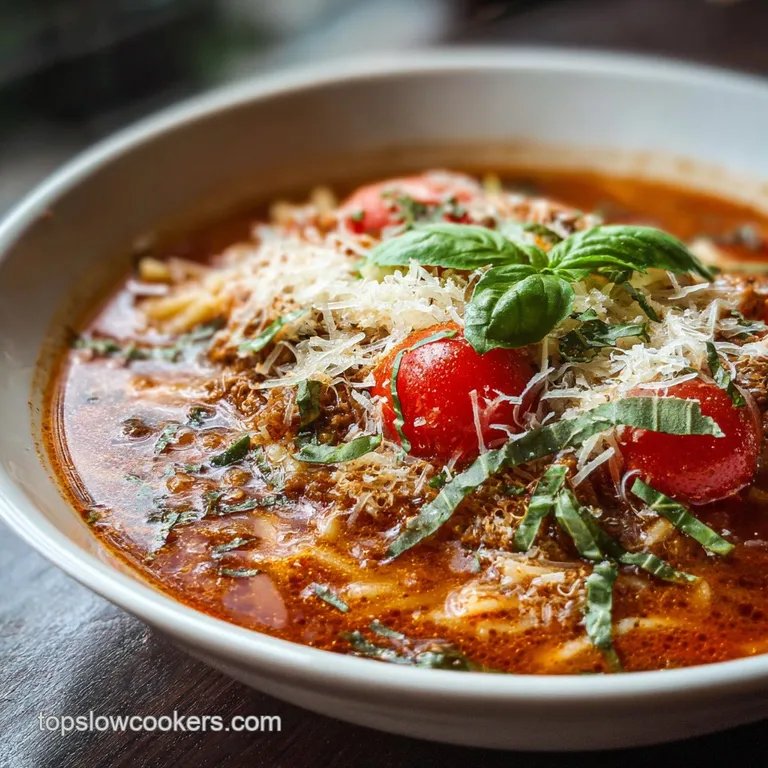
1. The Flavor Extraction (Searing)
Brown 1 lb Italian sausage and 1 lb ground beef in a skillet over medium high heat until no longer pink and starting to crisp. Add the diced yellow onion during the last 3 minutes of browning.
Note: Searing first prevents the meat from having a "boiled" texture in the slow cooker.
2. The Aromatics
Stir in 4 cloves minced garlic, 2 tbsp tomato paste, 1 tsp kosher salt, and 1/2 tsp black pepper. Sauté for 1 minute until the garlic is fragrant and the paste turns a deep brick red.
3. Loading the Cooker
Transfer the meat mixture to the slow cooker. Pour in 24 oz marinara sauce and 6 cups beef bone broth.
4. Seasoning the Base
Add 1 tbsp Italian seasoning, 1 tsp smoked paprika, and 2 dried bay leaves. Give everything a good stir to incorporate the tomato paste.
5. The Slow Infusion
Cover and cook on LOW for 4 hours. You want a gentle simmer to develop the flavors without scorching the tomato solids.
6. Prepping the Noodles
About 30 minutes before serving, break 11 dry lasagna noodles into 1-2 inch pieces. Add them directly into the liquid.
7. The Precision Pasta Finish
Continue cooking on LOW for 20-30 mins until the noodles are tender but still have a slight bite (al dente). Note: Don't overcook here or the noodles will swell and absorb all your broth.
8. The Silky Enrichment
Stir in 1/2 cup heavy cream and 2 cups fresh baby spinach. The heat from the soup will wilt the spinach in about 2 minutes.
9. The Ricotta Topping
In a small bowl, mix 1 cup ricotta with 1/2 cup grated parmesan and 2 tbsp fresh parsley. This will be your "dollop" for the final bowl.
10. The "Cheese Crown" Assembly
Ladle the soup into bowls. Top with a generous scoop of the ricotta mixture and a sprinkle of 1 cup shredded mozzarella cheese.
Pro Fixes for Soup Snags
1. Fixing Thin, Watery Broth
If your soup looks more like a tea than a hearty stew, it's usually because the marinara was too thin or the slow cooker didn't reach a high enough temperature.
| Problem | Root Cause | Solution |
|---|---|---|
| Watery base | Excess moisture from onions | Stir in an extra tbsp of tomato paste or simmer uncovered for 20 mins |
| Broken noodles | Overcooking after adding | Always add noodles in the final 30 mins, never at the start |
| Oily surface | Fat from sausage/beef | Skim the surface with a wide spoon or use a fat separator before adding noodles |
2. Preventing "Noodle Bloat"
If you plan on having leftovers, the noodles are your biggest enemy. They act like sponges, soaking up every drop of liquid until you're left with a thick pasta mash the next day. To avoid this, you can actually boil the noodles separately and add them to each individual bowl.
Chef's Tip: If you are a fan of bold spices, add a pinch of red pepper flakes to the meat while browning. It cuts through the richness of the ricotta beautifully.
Common Mistakes Checklist
- ✓ Never add the dry noodles at the beginning; they will turn into a gluey paste after 4 hours.
- ✓ Don't skip browning the meat it’s the difference between a flat flavor and a rich one.
- ✓ Use bone broth instead of water for the liquid base to ensure a velvety mouthfeel.
- ✓ Wait to add the cream and spinach until the very end to keep the greens bright and the dairy from curdling.
- ✓ Taste for salt after adding the parmesan, as the cheese adds its own significant saltiness.
Scaling for Different Crowds
Downsizing (1/2 Batch): If you're cooking for two, cut all ingredients in half. Use a smaller 3 quart slow cooker if possible. The cook time remains roughly the same, but check the noodles at the 20 minute mark to ensure they don't overcook in the smaller volume of liquid.
Expanding (2x Batch): To feed a crowd of 12, double the meat and broth, but be careful with the spices. Increase the salt and Italian seasoning to only 1.5x the original amount, then taste and adjust.
You will likely need two slow cookers or one very large 8 quart unit to accommodate the volume once the noodles expand.
If you enjoy the "dump and go" nature of this, you might also like the ease found in my Slow Cooker Chicken recipe, which follows a similar philosophy of minimal effort for maximum flavor payoff.
Adaptations for Every Palate
1. Slow Cooker Lasagna Soup Vegetarian
To make this meatless, swap the beef and sausage for 1 lb of chopped cremini mushrooms and a bag of frozen "meatless" crumbles. Use vegetable broth instead of beef bone broth. To keep that savory depth, add a teaspoon of soy sauce or liquid aminos it mimics the umami found in beef.
2. The White Lasagna Twist
For a creamy, "Alfredo" style version, omit the marinara and tomato paste. Use 8 cups of chicken broth instead. Increase the heavy cream to 1 cup and add 4 cups of chopped cooked chicken. Use a mix of Gruyère and white cheddar instead of mozzarella for a sophisticated flavor profile.
Debunking Kitchen Myths
A common misconception is that you must use "no boil" noodles for slow cooker soups. In reality, regular dry lasagna noodles are actually better. They hold their shape longer and release just enough starch to thicken the broth naturally. No boil noodles tend to dissolve too quickly into the liquid.
Another myth is that you can't freeze cream based soups. While it's true that heavy cream can sometimes grain up after thawing, the high fat content in this recipe combined with the starch from the pasta actually helps stabilize the emulsion. Just reheat it slowly on the stovetop while whisking.
Preservation and Storage Guidelines
Fridge Storage: Store the soup in an airtight container for up to 4 days. As mentioned before, the noodles will absorb liquid, so you may need to add a splash of broth when reheating to restore the "soup" consistency.
Freezer Instructions: This soup freezes well for up to 3 months. Note: For the best results, freeze the soup base without the noodles. When you're ready to eat, thaw the base, bring it to a boil on the stove, and drop in fresh noodles.
Zero Waste Tip: Don't throw away those parmesan rinds! Toss a rind into the slow cooker at the beginning of the cook cycle. It dissolves slightly and adds an incredible, salty depth to the broth that you just can't get from the grated cheese alone.
Finishing Touches and Plating
Presentation is everything when it comes to soup. Since this dish can look a bit "rustic" (read: brown), the garnishes are your best friend. A bright pop of fresh parsley and a drizzle of high-quality olive oil can transform the bowl.
If you're feeling fancy, serve this with a side of toasted sourdough rubbed with a raw garlic clove. The crunch of the bread against the silky texture of the lasagna soup is a match made in heaven. If you're looking for other hearty options, my Turkey Chili recipe offers a similar balance of warmth and texture for your next meal prep session.
Decision Shortcuts
- If you want it thicker: Smash 1/4 cup of the cooked noodles against the side of the pot to release more starch.
- If you want it spicier: Double the smoked paprika and add 1/2 tsp of crushed red pepper flakes during the browning stage.
- If you want it lighter: Replace the heavy cream with half and half and use 95% lean ground beef.
Very High in Sodium
1790 mg mg of sodium per serving (78% of daily value)
The American Heart Association recommends limiting sodium intake to about 2,300mg per day.
Tips to Reduce Sodium in Your Lasagna Soup
-
Low-Sodium Broth-30%
Replace the regular beef bone broth with a low-sodium or no-salt added version. This simple swap can significantly reduce the overall sodium content.
-
Reduce Added Salt-25%
Eliminate or drastically reduce the added kosher salt. Taste the soup before adding any salt. Remember, the sausage and broth already contain sodium.
-
Lower Sodium Cheese-15%
Opt for low-sodium mozzarella and ricotta cheese options. Consider using a smaller amount of parmesan, or omit it entirely, as it's high in sodium.
-
No Salt Added Marinara-10%
Choose a marinara sauce with no added salt. Many brands offer lower sodium alternatives that don't compromise on flavor.
-
Lean Protein Choices-10%
Consider using freshly ground turkey breast instead of sausage to reduce sodium and fat content, or look for a reduced sodium sausage option.
-
Spice It Up!
Enhance the flavor with fresh herbs and spices! Experiment with garlic powder, onion powder, oregano, basil, and red pepper flakes to boost flavor without adding sodium. These additions will have no significant impact on sodium reduction.
Recipe FAQs
Can I skip browning the meat before putting it in the slow cooker?
No, searing the meat is crucial for flavor. Browning creates the Maillard reaction, building complex savory notes that raw simmering cannot achieve.
How long should the lasagna noodles cook in the soup base?
Add noodles only during the final 30 minutes of cooking time. Cook them on LOW just until they are tender but still have a slight chew (al dente) to prevent them from dissolving.
What is the best way to prevent the finished soup from being too watery?
Smash a portion of the cooked noodles against the pot side before serving. This releases starch into the liquid, naturally thickening the broth for a richer mouthfeel.
Is it true that the broth base should always be beef bone broth?
No, though it is highly recommended for texture. Bone broth contributes vital gelatin, which adds a desirable weight and silkiness compared to using standard broth, similar to how we develop body in our Slow Cooker Beef recipe.
How to substitute ricotta cheese if I want a lower fat option?
Substitute full fat ricotta with cottage cheese, mixed with parmesan. Cottage cheese provides a similar high moisture protein but with less fat, though the texture will be slightly grainier.
Can I prepare this recipe ahead of time for meal prepping?
Yes, but freeze the soup base without the noodles first. Noodles absorb all the liquid when chilled or frozen; cook fresh noodles when reheating the base to maintain the proper soup consistency.
What is the purpose of adding heavy cream at the very end?
The cream balances the acidity from the tomatoes and creates a unified, silky emulsion. Adding it early can cause the dairy to break or curdle during the long cook time.
Slow Cooker Lasagna Soup
Ingredients:
Instructions:
Nutrition Facts:
| Calories | 748 kcal |
|---|---|
| Protein | 46 g |
| Fat | 41 g |
| Carbs | 52 g |
| Fiber | 4.5 g |
| Sugar | 9 g |
| Sodium | 1790 mg |
