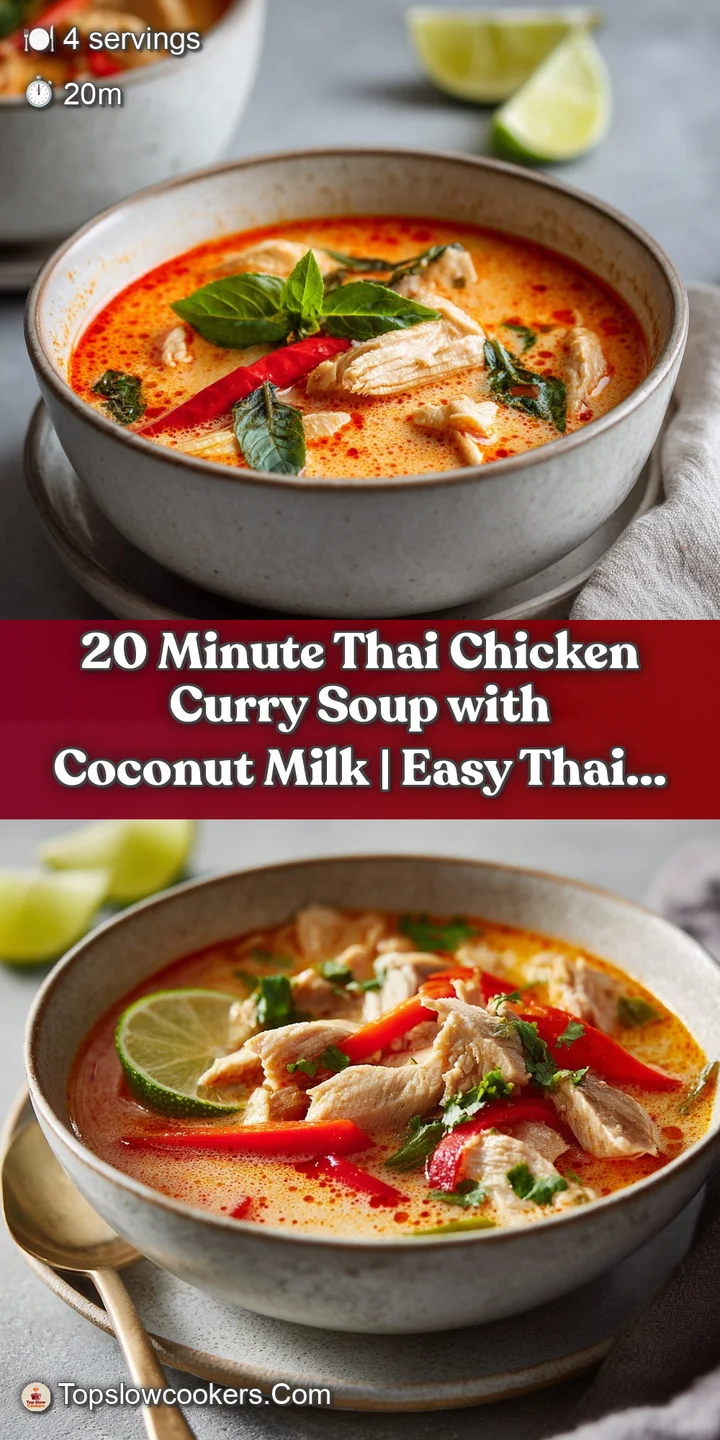
20 Minute Thai Chicken Curry Soup with Coconut Milk
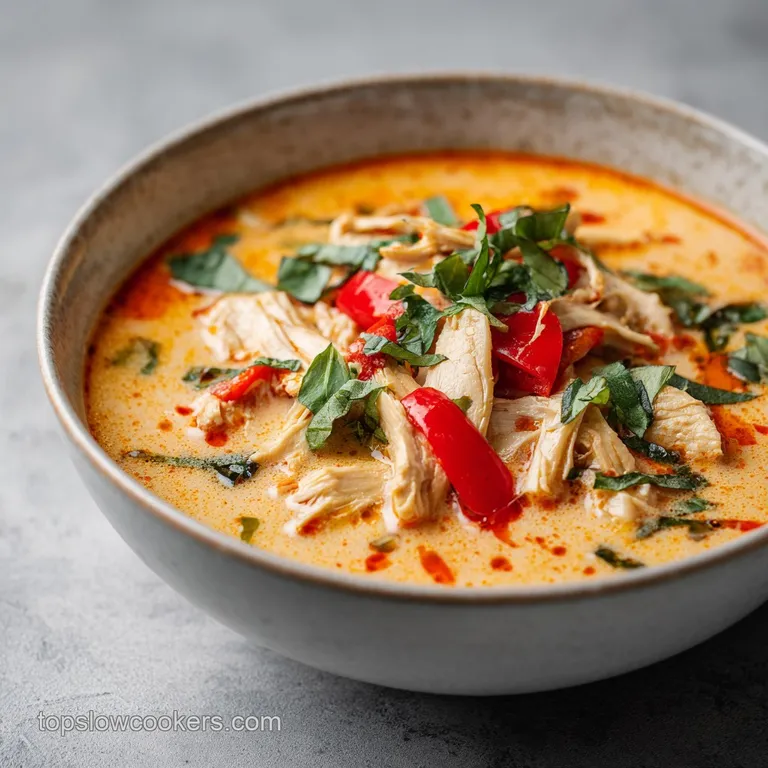
- Time:5 minutes prep + 15 minutes cook = Total 20 minutes
- Flavor/Texture Hook: Velvety coconut broth with a spicy sweet balance
- Perfect for: Stress free weeknight dinners or quick meal prep
- Get a Cozy Bowl of 20 Minute Thai Chicken Curry Soup with Coconut Milk
- Why This Recipe Works for Busy Weeknights
- Component Analysis for Better Broth
- Essential Time and Yield Data for Planning
- Selecting the Best Ingredients for Rich Flavor
- The Only Kitchen Tools You Actually Need
- Step by Step Flow for Velvety Results
- Pro Fixes for Common Cooking Mishaps
- Simple Substitutions for Every Dietary Need
- Keeping Leftovers Fresh and Using Every Scrap
- What to Serve for a Complete Meal
- Very High in Sodium
- Recipe FAQs
- 📝 Recipe Card
Get a Cozy Bowl of 20 Minute Thai Chicken Curry Soup with Coconut Milk
We've all been there, standing over a pot of what was supposed to be a vibrant Thai meal, only to realize the broth looks like grey dishwater and tastes like nothing but salt. The biggest mistake most of us make is just "dumping and hoping" with the curry paste.
When you don't fry that paste first, the spices stay raw and muted, and you end up adding more and more salt trying to find the flavor. This article features a truly remarkable 20 Minute Thai Chicken Curry Soup with Coconut Milk that fixes that exact issue by focusing on a quick sear of the aromatics.
I remember the first time I tried making this on a Tuesday after a long shift. I was so tired I almost skipped the step of sautéing the onions and ginger, thinking I could just boil everything together. Total disaster. It was thin, bland, and honestly, pretty depressing.
But once I learned the trick of "blooming" the curry paste in a little oil until it smells like heaven, everything changed. You get that gorgeous red oil shimmering on top of the velvety coconut milk, and every spoonful feels like a warm hug.
Right then, let's get into why this works so well for those of us who want zero fuss but high reward. You don't need a pantry full of rare ingredients to make this happen. We're using clever shortcuts and a specific order of operations to ensure the chicken stays tender and the vegetables keep their snap.
Trust me on this, once you smell that garlic and ginger hitting the hot oil, you'll know you're onto something special.
Why This Recipe Works for Busy Weeknights
Aromatic Blooming: Frying the curry paste in oil releases fat soluble flavor compounds that boiling alone can't touch. This creates a deeply concentrated foundation for the broth in just sixty seconds.
Fat Based Emulsification: Using full fat coconut milk provides the necessary lipids to carry the heat of the red curry, softening the spice into a smooth, velvety texture rather than a sharp burn.
Residual Heat Poaching: Adding the chicken and vegetables at the very end ensures the protein stays juicy and the peppers don't turn into mush, as they cook through perfectly in the simmering liquid.
Acid Balancing: The final splash of lime juice acts as a chemical "brightener," cutting through the heavy coconut fats and waking up the savory notes of the fish sauce.
| Method | Time | Texture | Best For |
|---|---|---|---|
| Stovetop | 15 minutes | Bright, crisp vegetables and silky broth | Quick weeknight dinners |
| Oven (Bake) | 35 minutes | Denser, more concentrated flavors | Hands off cooking |
Using the stovetop method is my absolute favorite because it gives you total control over the vegetable texture. If you've ever had a Crock Pot Chicken Noodle Soup, you know how comforting a long simmered broth can be, but for Thai flavors, that 15 minute quick simmer keeps everything tasting fresh and vibrant rather than heavy.
Component Analysis for Better Broth
Understanding what each piece of the puzzle does helps you adjust the soup to your own taste. For example, if you find the soup too spicy, knowing that the fat in the coconut milk is what tames that heat lets you know exactly how to fix it without ruining the pot.
| Ingredient | Science Role | Pro Secret |
|---|---|---|
| Red Curry Paste | Primary Flavor Concentrates | Sauté until it turns a shade darker to unlock the oils. |
| Full Fat Coconut Milk | Emulsifier and Mouthfeel | Do not use "light" milk; the fat is needed to carry the spice. |
| Fish Sauce | Umami and Salinity | Provides a deeper "funk" than table salt ever could. |
| Lime Juice | pH Balancer | Adds a top note brightness that prevents the soup from feeling "flat." |
The brown sugar in this list might seem small, but it's the bridge between the salty fish sauce and the spicy curry. It doesn't make the soup "sweet" in a dessert way, it just rounds off the sharp edges. It's a classic trick in Southeast Asian cooking that makes the whole bowl feel much more balanced.
Essential Time and Yield Data for Planning
When you're trying to get dinner on the table, knowing exactly how much time you have is half the battle. This isn't one of those recipes where "20 minutes" actually means an hour of chopping.
Since we only have a few main vegetables to slice, the 5 minute prep is actually realistic if you have a sharp knife and a clear counter.
This recipe yields 4 generous servings, which is perfect for a small family or for a couple who wants the best leftovers for lunch the next day. The chicken to broth ratio is designed to be filling without being overly heavy, making it a great year round meal.
| Servings | Chicken Amount | Broth Amount | Cook Time |
|---|---|---|---|
| 2 People | 225g | 500ml | 12 minutes |
| 4 People | 450g | 1 Liter | 15 minutes |
| 6 People | 675g | 1.5 Liters | 18 minutes |
If you're cooking for a larger crowd, just make sure your pot is big enough to handle the volume without overcrowding. If the pot is too full, the chicken will take longer to cook and your vegetables might get soft before the meat is safe to eat.
Selecting the Best Ingredients for Rich Flavor
I'm a big believer in using what you have, but for this 20 Minute Thai Chicken Curry Soup with Coconut Milk, a few specific choices make a world of difference. Don't worry about finding "gourmet" brands, but do look for "full fat" on that coconut milk can.
- Neutral oil (1 tbsp): Use canola, vegetable, or grapeseed oil. Why this? It has a high smoke point and won't compete with the curry flavors.
- Small yellow onion (150g): Thinly sliced. Why this? They soften quickly and add a natural sweetness to the base.
- Thai red curry paste (3 tbsp): Look for brands like Mae Ploy or Maesri. Why this? These provide a more concentrated, authentic punch than grocery store jars.
- Fresh ginger (1 tbsp): Grated finely. Why this? Fresh ginger provides a zesty heat that powdered ginger lacks.
- Garlic cloves (3): Minced. Why this? Adds essential savory depth to the aromatic base.
- Chicken broth (4 cups): Low sodium is best. Why this? Allows you to control the saltiness from the fish sauce.
- Full fat coconut milk (14 oz can): Do not shake the can before opening. Why this? Provides the velvety texture and tempers the curry's heat.
- Fish sauce (1 tbsp): The "salt" of the dish. Why this? Adds a complex umami depth that plain salt cannot achieve.
- Brown sugar (1 tsp): Just a pinch. Why this? Balances the salt and heat for a well rounded flavor profile.
- Chicken breast (1 lb): Sliced into very thin strips. Why this? Thin strips cook in under 5 minutes, keeping them tender.
- Red bell pepper (1): Thinly sliced. Why this? Adds a pop of color and a mild, sweet crunch.
- Mushrooms (1 cup): Sliced. Why this? They act like little sponges for the flavorful broth.
- Lime juice (2 tbsp): Freshly squeezed. Why this? Cuts through the fat of the coconut milk for a bright finish.
| Original Ingredient | Substitute | Why It Works |
|---|---|---|
| Chicken Breast | Firm Tofu (pressed) | Absorbs broth well. Note: Add at the very end to prevent breaking. |
| Red Curry Paste | Yellow Curry Paste | Milder heat profile. Note: Flavors will be more earthy and less spicy. |
| Fish Sauce | Soy Sauce | Provides the necessary salt. Note: Lacks the fermented depth but works in a pinch. |
If you ever find yourself out of red curry paste but still craving that warm spice, you can experiment with other styles. I've even tried a version similar to Slow Cooker Jamaican Curry Chicken by swapping the red paste for a yellow curry blend, and while it's a different flavor profile, the coconut milk base makes it just as comforting.
The Only Kitchen Tools You Actually Need
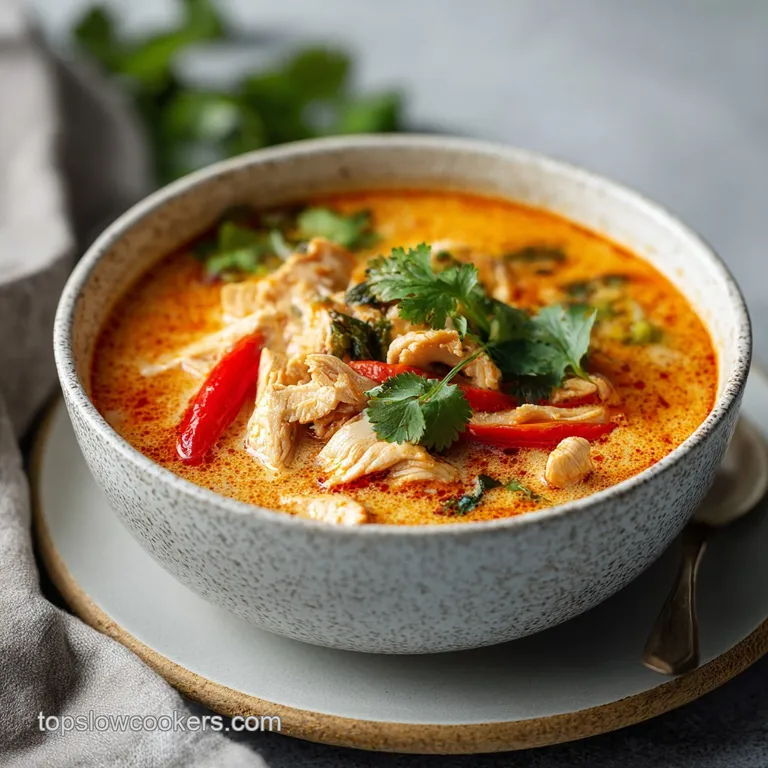
You don't need a fancy kitchen to make a great soup, but having the right pot makes the process much smoother. I prefer using a heavy bottomed pot, like a Dutch oven or a thick stainless steel pot.
These hold heat better, which means when you add a pound of cold chicken to the broth, the temperature doesn't drop so low that the chicken starts "stewing" in lukewarm water.
A good box grater or a microplane is also a lifesaver for the ginger and garlic. I used to spend way too much time finely dicing ginger, only to bite into a big woody chunk later. Grating it ensures it melts into the broth perfectly.
Finally,, a sturdy wooden spoon is essential for scraping the bottom of the pot. When you fry the curry paste, some of it might stick to the bottom. That "stick" is actually concentrated flavor (fond), and you want to make sure you scrape all of it into the broth when you add the liquid.
It's the difference between a good soup and one that tastes like a professional made it.
step-by-step Flow for Velvety Results
1. Bloom the Aromatics
Place your large heavy bottomed pot over medium heat and add the oil. Once it shimmers, toss in the sliced onion and sauté for 3 minutes until the edges are soft and translucent. Now, stir in the red curry paste, ginger, and garlic.
Cook this for exactly 1 minute, stirring constantly. Note: You want the paste to turn a slightly darker shade of red, which signals the spices have "awakened" in the oil.
2. Build the Golden Broth
Pour in the chicken broth and add the brown sugar. Use your spoon to scrape any of those dark curry bits off the bottom of the pot. Increase the heat to medium high and bring the mixture to a gentle simmer. Once it's bubbling softly, whisk in the coconut milk and fish sauce.
Note: Whisking helps the coconut fat integrate fully with the broth for that uniform, creamy look.
3. Poach and Garnish
Add your thinly sliced chicken, bell peppers, and mushrooms into the bubbling liquid. Keep it at a gentle simmer for 4 to 6 minutes until the chicken is no longer pink in the middle and the peppers are tender crisp. Turn off the heat and stir in the lime juice.
Note: Adding the lime at the very end preserves its bright, citrusy acidity which can fade if boiled too long.
Chef's Tip: If you want an even silkier broth, pour the coconut milk through a fine mesh strainer as you add it to the pot to catch any solidified coconut cream chunks.
Pro Fixes for Common Cooking Mishaps
Sometimes things go wrong even with the best plans. Maybe your curry paste was extra spicy, or perhaps you accidentally let the broth boil too hard and it looks a bit "broken." Don't panic! Most soup issues are easily fixed with a little kitchen chemistry.
Why Your Soup Looks Separated
If you see little oily droplets floating on top or the broth looks grainy, the soup has "split." This usually happens if the coconut milk boils too vigorously or if you used a low-fat version. To fix it, simply take the pot off the heat and give it a vigorous whisk. The mechanical action can often re emulsify the fats.
If that doesn't work, a tiny splash of extra room temperature coconut milk can help bring it back together.
Why Your Chicken Is Tough
If the chicken feels rubbery or dry, it was likely boiled too hard or for too long. Next time, make sure your chicken strips are uniform and thin (about 0.5cm). They should poach gently in the simmering broth, not bounce around in a rolling boil.
Remember, the chicken will continue to cook slightly from the residual heat of the soup even after you turn off the stove.
| Problem | Root Cause | Solution |
|---|---|---|
| Too Spicy | Curry paste varies in heat | Add an extra tablespoon of brown sugar or more coconut milk. |
| Too Salty | Broth or fish sauce overlap | Add a squeeze of extra lime or a splash of water to dilute. |
| Thin Broth | Not enough fat/reduction | Let it simmer for 3 more minutes without the lid to thicken. |
Common Mistakes Checklist
- ✓ Never skip the "blooming" phase; raw curry paste tastes metallic and flat.
- ✓ Don't use "light" coconut milk if you want that classic velvety texture.
- ✓ Keep the heat at a "gentle simmer" once the coconut milk is added to prevent curdling.
- ✓ Pat the chicken dry before slicing so it doesn't add excess water to the pot.
- ✓ Taste the broth before adding the lime juice so you can judge the salt/heat balance properly.
Simple Substitutions for Every Dietary Need
One of the reasons I love this recipe is how flexible it is. You can easily swap out the protein or the vegetables based on what’s in your fridge. If you're out of chicken, frozen shrimp is a fantastic alternative just add them in the last 3 minutes of cooking until they turn pink and opaque.
For a vegan version, the main swaps are the protein and the seasoning. You'll want to use firm tofu cut into cubes and replace the fish sauce with a "no fish" sauce or a mix of soy sauce and a little mushroom powder for that umami hit.
Make sure your red curry paste doesn't contain shrimp paste, as many traditional brands do!
If you're watching your carbs, this soup is naturally quite low carb already. To make it even more "keto friendly," you can swap the mushrooms for bok choy or spinach and skip the brown sugar entirely. The coconut milk provides plenty of healthy fats to keep you full without needing rice or noodles on the side.
Keeping Leftovers Fresh and Using Every Scrap
This soup actually tastes even better the next day because the spices have more time to meld with the coconut milk. However, there are a few things to keep in mind to make sure your leftovers stay delicious.
- Storage: Store in an airtight container in the fridge for up to 3 days. When reheating, do it gently on the stovetop over medium low heat. Avoid the microwave if possible, as it can cause the chicken to get tough and the coconut milk to separate.
- Freezing: You can freeze this soup for up to 2 months. However, be aware that coconut milk can sometimes change texture after thawing. If it looks grainy when you reheat it, just give it a good whisk or a quick pulse with an immersion blender to smooth it out.
- Zero Waste: Don't throw away those cilantro stems! If you have them, chop them finely and add them in with the ginger and garlic for extra flavor. Any leftover lime halves can be tossed into a glass of water, and the onion peels can be saved in a bag in the freezer for your next batch of homemade veggie stock.
If you have extra broth but no more chicken, it makes a great base for a quick lunch the next day. Just drop in some pre cooked noodles or a handful of frozen peas, and you've got a whole new meal without any extra effort.
What to Serve for a Complete Meal
While this soup is plenty filling on its own, I usually like to serve it with something to soak up that incredible broth. A simple bowl of jasmine rice is the classic choice. The floral aroma of the rice pairs perfectly with the spicy red curry.
If you're feeling fancy, you can even cook the rice with a little bit of coconut milk and a pinch of salt for a "coconut rice" experience.
For a crunchier side, some lightly toasted naan or even crusty French bread works surprisingly well for dipping. If you want to keep things light, a simple cucumber salad with a splash of rice vinegar and a pinch of sugar provides a cooling contrast to the heat of the soup.
Whatever you choose, just remember that the soup is the star. Don't overcomplicate the sides. A few fresh cilantro leaves, some sliced green onions, or a few extra wedges of lime on the table are often all you need to make it feel like a complete, restaurant style feast right in your own kitchen.
Enjoy your zero fuss, velvety bowl of goodness!
Very High in Sodium
1245 mg 1245 mg (54% 54%)
The American Heart Association recommends limiting sodium intake to less than 2,300mg per day, ideally to no more than 1,500mg for most adults.
Tips to Reduce Sodium
-
Swap Broth-30%
Replace the 4 cups of low-sodium chicken broth with no-salt added chicken broth. This is a significant sodium source in the recipe.
-
Choose Low-Sodium Curry Paste-20%
Opt for a low-sodium Thai red curry paste. Traditional curry pastes are often high in sodium.
-
Reduce Fish Sauce-15%
Decrease the amount of fish sauce from 1 tbsp to 1/2 tbsp. If needed, add a pinch of salt at the end to adjust flavor, but start by reducing this key sodium contributor.
-
Boost Aromatics and Herbs
Increase the amount of fresh ginger and garlic, and add fresh herbs like cilantro or basil. These natural flavor enhancers will add depth without sodium.
Recipe FAQs
Can I use light coconut milk instead of full fat?
No, avoid light coconut milk for this recipe. Using full fat coconut milk is essential to achieve that signature velvety texture; light versions are too thin and will result in a watery soup.
Why is my curry paste tasting raw or metallic?
You skipped the blooming phase. You must sauté the curry paste with the ginger and garlic for one minute until fragrant, as this releases the essential oils and removes the harsh, metallic raw edge.
How to prevent the coconut milk from curdling?
Maintain a gentle simmer throughout the cooking process. If you boil the soup vigorously after adding the coconut milk, the proteins can separate, leading to a grainy appearance rather than a smooth, creamy base.
Is it necessary to use thin strips for the chicken?
Yes, slicing the chicken into thin strips is vital for the 20-minute timeline. Thin pieces cook rapidly in just 4 6 minutes, ensuring the meat stays tender while keeping the total cooking time within your goal. If you want to practice efficient protein prep for other meals, see how we apply this consistent slicing technique to ensure even cooking.
How to balance the flavors of the soup?
Taste the broth before adding the lime juice. Adjusting the saltiness with fish sauce or sweetness with brown sugar is easiest before the final hit of lime acid brightens the dish and shifts the overall profile.
Can I prep the vegetables in advance?
Yes, slicing your onion, bell peppers, and mushrooms ahead of time is a great time saver. Keeping them pre-cut allows you to move seamlessly through the 15-minute cooking window without rushing your prep.
Do I need to pat the chicken dry before cooking?
Yes, patting the chicken dry prevents it from releasing excess water into the pot. Removing surface moisture ensures the chicken cooks efficiently in the broth without diluting the richness of your coconut milk base.
Thai Chicken Curry Soup
Ingredients:
Instructions:
Nutrition Facts:
| Calories | 491 kcal |
|---|---|
| Protein | 44 g |
| Fat | 29 g |
| Carbs | 15 g |
| Fiber | 3 g |
| Sugar | 6 g |
| Sodium | 1245 mg |
