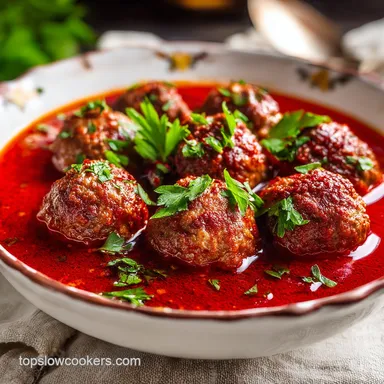
Meatball Soup: Hearty and Italian
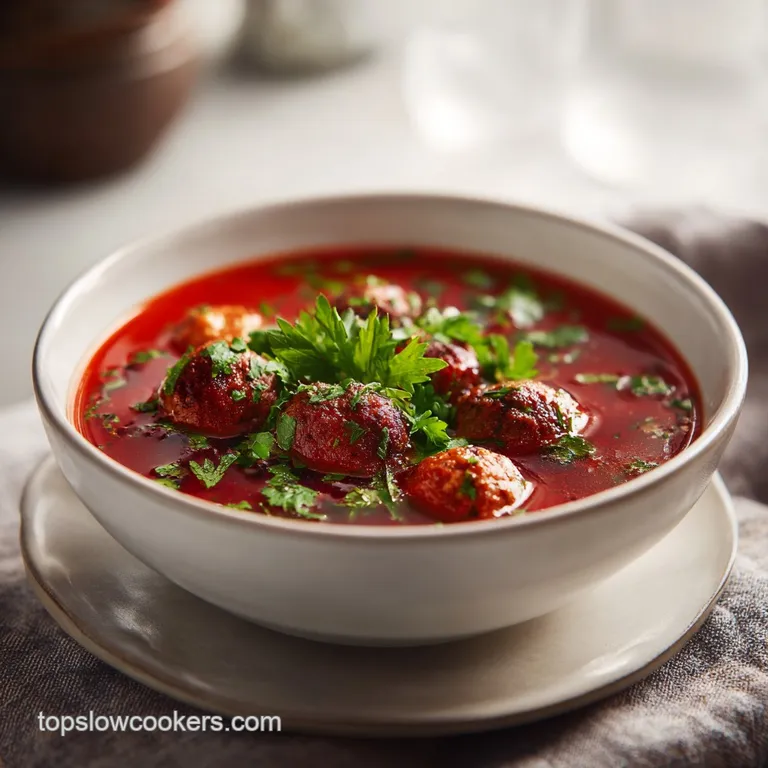
- Time: 15 min active + 40 min cook = 55 min total
- Flavor/Texture Hook: Mahogany crusted meatballs in a velvety, savory tomato broth
- Perfect for: Hearty weeknight dinner, cold weather comfort, or family meal prep
Ever wonder why some meatballs just dissolve into mush the second they hit the liquid, while others stay tender and juicy? It's a frustrating mystery that has ruined many a pot of dinner, leaving you with a grainy sauce instead of distinct, savory bites.
I remember one winter night where I tried to shortcut the process by skipping the sear, and I ended up with something that looked more like beef porridge than a meal.
That mistake taught me that the secret isn't just in the ingredients, but in the order of operations. When you get the timing right, this Meatball Soup transforms from a simple bowl of broth into a substantial, soul warming feast.
We're talking about meatballs that hold their shape and a broth that tastes like it's been simmering for a whole day, even though it only takes under an hour.
You can expect a rich, savory experience here. We're using lean beef to keep things clean, but we're adding depth through a slow sauté of aromatics and a proper sear. This Meatball Soup is designed to be a one pot wonder that fills the house with the smell of garlic and oregano, making it the kind of meal that practically hugs you from the inside.
Making the Best Meatball Soup
Right then, let's get into why this specific approach works. Most people just drop raw meat into boiling water, but that's a recipe for bland, rubbery spheres. By searing the meat first, we create a crust that locks in flavor and adds a toasted quality to the entire pot.
It's the difference between a boiled meatball and a savory one.
The choice of lean beef is also a strategic move. When you're making a Meatball Soup, you don't want a thick layer of yellow oil floating on top of your broth. Using 93% lean beef ensures the soup stays clear and hearty without feeling heavy or greasy on the palate.
Then there's the binder. Whole wheat breadcrumbs don't just hold the meat together, they act like little sponges. They soak up the juices from the beef and the flavors from the broth, ensuring every single bite is moist.
If you've ever had a dry meatball, it's usually because the binder to meat ratio was off or the meat was overcooked before it hit the soup.
Why the Meatballs Stay Whole
Protein Binding: The egg acts as a glue, cross linking the meat proteins so they don't separate during the simmer.
Starch Absorption: Breadcrumbs create a matrix that traps moisture, preventing the meat from shrinking and toughening.
Surface Setting: Searing the exterior creates a physical barrier that keeps the meatball intact while it poaches in the liquid.
Low Agitation Simmer: A gentle bubble rather than a rolling boil prevents the meatballs from knocking into each other and breaking.
| Method | Prep Time | Texture | Best For |
|---|---|---|---|
| Classic Seared | 15 min | Firm crust, tender center | Flavor focused dinners |
| Fast Frozen | 5 min | Soft, uniform | Ultra quick weeknights |
| Slow Cooker | 20 min | Very soft, integrated | Set and forget meals |
The Ingredient Breakdown
When you're building a Meatball Soup, every component has a job. You can't just throw in any beef or any pasta and expect the same result. The interaction between the acidity of the tomatoes and the richness of the beef is what creates that classic, savory profile.
According to Serious Eats, the quality of your binder significantly impacts the final crumb of the meatball. That's why I insist on whole wheat breadcrumbs here, as they provide a slightly nuttier flavor and a sturdier structure than white crumbs.
| Ingredient | Science Role | Pro Secret |
|---|---|---|
| 93% Lean Beef | Main Protein | Prevents grease slicks in the broth |
| Beaten Egg | Emulsifier/Binder | Ensures the meat doesn't crumble |
| Crushed Tomatoes | Acid Balance | Cuts through the richness of the beef |
| Ditalini Pasta | Starch Thickener | Small size fits perfectly on a spoon |
The Essential Gear
You don't need a professional kitchen to pull this off, but a few specific tools make the process a lot smoother. The most important piece of kit is a heavy bottomed Dutch oven. Because we're searing, sautéing, and simmering in one pot, you need something that distributes heat evenly so you don't burn the garlic or scorch the bottom of the soup.
I also recommend a set of tongs rather than a spoon for removing the meatballs. Tongs allow you to grab the spheres without breaking the mahogany crust we've worked so hard to build.
If you're rolling the meatballs by hand, a small bowl of olive oil nearby helps keep your palms from sticking, making the process much faster.
Finally, a sharp chef's knife is non negotiable for the "mirepoix" (the onion, carrot, and celery mix). You want those vegetables cut into consistent sizes so they cook at the same rate. If your carrots are huge and your onions are tiny, the onions will be mush before the carrots are tender.
The Cooking Process
Let's crack on with the actual build. We'll follow a three phase flow: forming the proteins, building the savory base, and the final simmer. Trust me on this, don't rush the searing phase, as that's where the real flavor lives.
Phase 1: Forming and Searing
- Combine 450g (1 lb) lean ground beef, 60g (1/2 cup) whole wheat breadcrumbs, 1 beaten egg, 15g (1/4 cup) chopped parsley, 2 minced garlic cloves, 3g (1/2 tsp) salt, and 1g (1/4 tsp) black pepper in a bowl. Note: Mix gently by hand to avoid overworking the meat, which can make meatballs tough.
- Roll the meat mixture into small, 1 inch spheres. Note: Consistent size ensures they all cook through at the same time.
- Heat 15ml (1 tbsp) olive oil in a Dutch oven over medium high heat. Sear meatballs in batches until a mahogany colored crust forms on all sides, then remove with tongs and set aside. Note: Don't crowd the pan or the meat will steam instead of sear.
Phase 2: Building the Broth
- In the same pot, sauté 1 diced onion, 2 sliced carrots, and 2 sliced celery stalks for 5-7 minutes until onions are translucent. Note: Use the leftover beef fat in the pan for extra flavor.
- Stir in 3 minced garlic cloves and cook for 1 minute until fragrant. Note: Garlic burns quickly, so keep it moving.
- Add 794g (28 oz) crushed tomatoes, 1.4L (6 cups) low sodium beef broth, 2g (1 tsp) dried oregano, 2g (1 tsp) dried basil, and 1g (1/2 tsp) red pepper flakes. Bring to a simmer. Note: A gentle simmer prevents the broth from reducing too quickly.
Phase 3: Simmering and Finishing
- Return the seared meatballs to the pot and simmer for 15-20 minutes until the meatballs are cooked through. Note: This allows the Meatball Soup to develop a cohesive, integrated flavor.
- Stir in 60g (2 cups) fresh baby spinach and 100g (1 cup) cooked ditalini or orzo pasta during the final 3 minutes of cooking. Note: Cooking pasta separately or adding it at the end prevents it from absorbing all the broth.
- Serve hot, garnished with 30g (1/4 cup) grated Parmesan cheese and extra salt and pepper. Note: The cheese adds a salty, umami finish that ties everything together.
Fixing Soup Issues
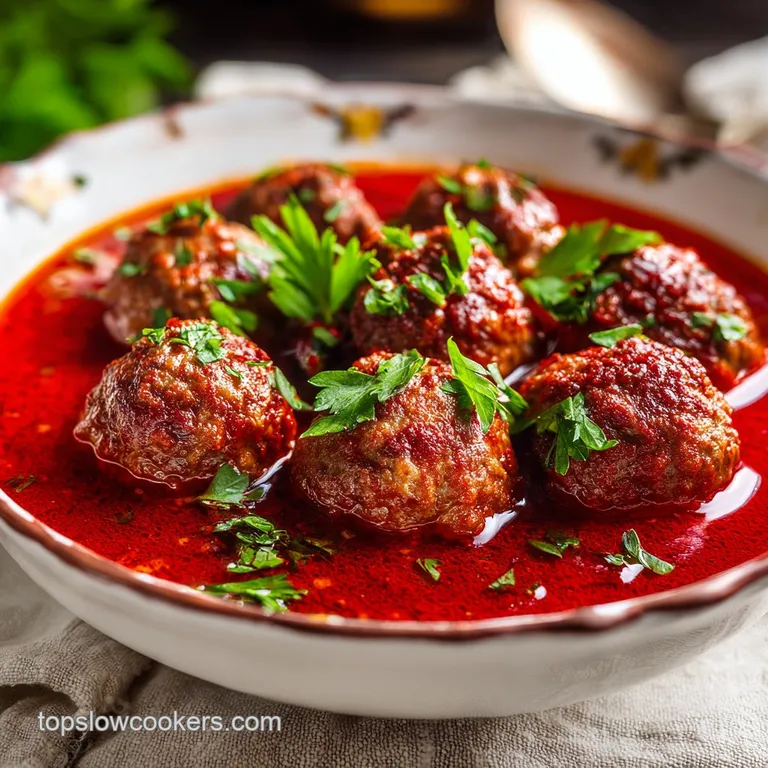
Even the best of us hit a snag. Maybe your meatballs decided to go on a journey and break apart, or your broth feels more like water than a savory soup. The key is knowing how to pivot without starting over.
Meatballs Falling Apart
This usually happens because of over mixing or a lack of binder. If you over work the beef, the proteins become too tight and then snap, causing the ball to crumble. Or, perhaps the meatballs weren't seared long enough to set the exterior.
If this happens, don't panic; you've essentially made a chunky beef stew, which still tastes great.
Thin Broth Texture
If your Meatball Soup feels too thin, it's often because the vegetables weren't sautéed long enough to release their sugars, or you used too much broth. You can fix this by simmering the soup without a lid for an extra 10 minutes to reduce the liquid and concentrate the flavors.
Overpowering Garlic
Sometimes a clove of garlic is larger than expected, and the flavor becomes too aggressive. To balance this, add a pinch of sugar or a small squeeze of lemon juice. The acidity and sweetness neutralize the harsh sulfur notes of the garlic.
| Problem | Root Cause | Solution |
|---|---|---|
| Mushy Meatballs | Too many binders | Reduce breadcrumbs by 1 tbsp |
| Bland Broth | Lack of salt/acid | Add a splash of lemon or balsamic vinegar |
| Greasy Surface | Meat too fatty | Use 93% lean beef or skim fat with a spoon |
Common Mistakes Checklist
- ✓ Over mixing the meat (Keep it light!)
- ✓ Crowding the pan during searing (Work in batches!)
- ✓ Boiling the soup too hard (Keep it at a gentle simmer!)
- ✓ Adding pasta too early (It'll soak up all your broth!)
- ✓ Skipping the sear (You lose the mahogany flavor!)
Twists and Variations
One of the best things about a Meatball Soup is how easy it is to pivot the flavor profile. Depending on what you have in the pantry, you can take this in several different directions.
If you're in the mood for something with a bit more kick, you can try a Mexican Meatball Soup (Albondigas) vibe. Swap the oregano and basil for cumin and coriander, and replace the ditalini with diced potatoes and corn. Adding a squeeze of fresh lime at the end makes it bright and zesty.
For those who prefer a slower approach, a Crock Pot Meatball Soup is a fantastic option. You'll still want to sear the meatballs in a pan first (don't skip this!), but then you can throw everything into the slow cooker on low for 6-8 hours.
The flavors meld beautifully over time, creating a very tender result.
If you're short on time, you can actually make a meatball soup with frozen meatballs. Just ensure they are high-quality, beef based meatballs. Since they're already cooked, skip the searing and add them directly to the simmering broth for the last 15 minutes.
It's not quite as savory as the homemade version, but it's a lifesaver on a Tuesday.
For a more traditional approach, an Italian Meatball Soup usually incorporates a bit of heavy cream or a dollop of ricotta at the end for a richer mouthfeel. If you love those kinds of textures, you might also enjoy my Italian Sausage White Bean Soup, which uses a similar flavor base but with a different protein.
Finally, if you're watching your carbs, a low carb alternative is easy. Just swap the ditalini pasta for cauliflower florets or zoodles. They don't provide the same thickness to the broth, but they keep the soup light and healthy.
Adjusting the Batch Size
Scaling a Meatball Soup requires a bit of nuance, especially when it comes to the seasonings. You can't just multiply everything by four and expect it to taste the same; often, the liquids and spices don't scale linearly.
When scaling down to a half batch, use a smaller pot to ensure the broth doesn't evaporate too quickly. Reduce the simmering time by about 20%, as smaller volumes of liquid reach temperature faster. For the egg, beat one egg in a small bowl and then use exactly half of the liquid.
When scaling up for a crowd (2x or 3x), be careful with the salt and red pepper flakes. I recommend scaling spices to only 1.5x the original amount, then tasting and adjusting at the end. Liquids can usually be reduced by about 10% because you'll have less surface area evaporation in a larger pot.
Most importantly, work in batches when searing the meat. If you dump three pounds of beef into one pot, you'll end up boiling the meat in its own juices instead of getting that essential sear.
| Batch Size | Pot Suggestion | Spice Adjustment | Cooking Time |
|---|---|---|---|
| Half (3 serv) | 3 Qt Saucepan | Direct 50% | 10% faster |
| Double (12 serv) | 7 Qt Dutch Oven | 1.5x Spices | Same |
| Triple (18 serv) | 10 Qt Stock Pot | 1.75x Spices | 10% slower |
Meatball Misconceptions
There's a lot of old school advice floating around that doesn't actually hold up. Let's clear a few things up so you can cook with confidence.
First, many people believe that searing meat "seals in the juices." This is a myth. Moisture loss happens regardless of whether you sear or not. However, the sear creates a complex layer of flavor through a process that browns the proteins and sugars. We sear for taste, not for "sealing."
Another common misconception is that you need to use high fat beef for the best flavor in a Meatball Soup. While fat equals flavor, too much of it in a soup leads to a greasy film that coats the roof of your mouth and masks the other ingredients.
Lean beef, combined with a proper sear and a rich broth, gives you the best of both worlds.
Some folks think you should cook the pasta directly in the soup. While this is convenient, the pasta releases a lot of starch that can make the broth cloudy and thick. More importantly, if you have leftovers, the pasta will continue to absorb liquid in the fridge, turning your soup into a thick porridge by day two.
Cooking it separately is the only way to keep the broth velvety.
Storage and Leftovers
Knowing how to handle your leftovers is the difference between a great second meal and a disappointing one. Storing Meatball Soup is relatively straightforward, but there are a few tricks to keep it fresh.
In the fridge, this soup stays great for 3-4 days. Store it in airtight glass containers to prevent it from picking up other fridge smells. If you cooked your pasta in the soup, be prepared for it to be much thicker when you open it.
If you followed my advice and kept the pasta separate, just add a scoop of fresh pasta to your bowl before pouring in the hot soup.
For the freezer, this is a fantastic meal prep option. I recommend freezing the soup without the spinach and pasta. The spinach will turn into a slimy mess, and the pasta will lose its structure. Freeze the meatball and broth base for up to 3 months in freezer safe bags or containers.
When you're ready to eat, thaw it in the fridge overnight or heat it slowly on the stove.
Reheating Meatball Soup is simple: use a pot on medium low heat. Avoid the microwave if possible, as it tends to heat the meatballs unevenly, leaving the centers cold while the broth boils. Once it reaches a simmer, stir in some fresh spinach and a sprinkle of Parmesan to wake up the flavors.
To reduce waste, save your veggie scraps (the onion ends, carrot peels, and celery tops) in a bag in the freezer. Once the bag is full, boil them with water to make a homemade vegetable stock. You can use this stock as a base for your next batch of soup or for a Slow Cooker Beef Barley Soup if you want something even heartier.
Perfect Side Pairings
While a Meatball Soup is a meal in itself, pairing it with the right sides can turn a simple dinner into a real occasion. You want something that can soak up that savory broth or provide a contrasting texture.
A crusty piece of sourdough or a warm baguette is the gold standard here. The crunch of the bread contrasts with the tender meatballs and the velvety broth. I love brushing the bread with a bit of garlic butter and toasting it in the oven until it's golden and shatters when you bite into it.
A simple, bright salad also works well to cut through the richness of the beef. A mix of arugula, shaved Parmesan, and a lemon olive oil vinaigrette provides a peppery contrast that refreshes the palate between spoonfuls of your Meatball Soup.
If you're serving this to a crowd, a side of roasted root vegetables, like honey glazed parsnips or carrots, adds a touch of sweetness that complements the savory, tomato based broth. Just keep the sides light; the soup is the star of the show, and you don't want to overwhelm the guests.
This beef Meatball Soup is more than just a recipe; it's a strategy for a cozy night. Whether you're using this easy Meatball Soup for a quick Tuesday win or taking your time with the best meatball soup recipe for a Sunday family gathering, the result is always the same: a hearty, savory, and simple Meatball Soup that everyone loves.
Trust the process, don't skip the sear, and enjoy every single spoonful.
Recipe FAQs
What soup is best for diabetics?
This version is a strong option. It utilizes 93% lean beef and whole wheat breadcrumbs to provide a more balanced nutritional profile than standard meatball soups.
What is the Mexican soup with meatballs?
That is called Albóndigas. It differs from this recipe by typically using mint and lime instead of the basil and oregano used here.
What soup is good for gastritis?
This specific recipe is generally not recommended. The acidity of the crushed tomatoes and the heat from the red pepper flakes can irritate the stomach lining during a flare-up.
What is the famous soup in Italy?
Polpette soup is a traditional favorite. This version captures those classic flavors by combining a savory beef broth with crushed tomatoes and ditalini pasta.
How to prevent the pasta from getting soggy in leftovers?
Store the cooked pasta in a separate airtight container. This prevents the ditalini or orzo from absorbing the liquid and thickening the soup too much during the 3-4 days it stays in the fridge.
Why are my meatballs falling apart in the soup?
You likely overmixed the beef. Mix the meat and breadcrumbs gently by hand until just combined to maintain the structural integrity of the spheres.
Can I make this in a slow cooker?
Yes, you can adapt the simmer step for a crock pot. If you prefer that method, our vegetable beef soup uses a similar base of aromatic vegetables and beef broth.
Hearty Italian Meatball Soup