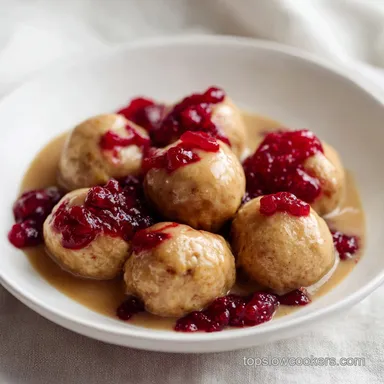
Swedish Meatballs: Tender and Savory

- Time:20 minutes active + 30 minutes cooking = Total 50 minutes
- Flavor/Texture Hook: Savory, tender meat with a glossy, velvet smooth gravy
- Perfect for: A hearty winter dinner or a cozy weekend meal prep
- Swedish Meatballs
- Why these meatballs actually work
- Component Analysis
- The essential ingredient list
- Gear you'll need today
- Step by step cooking guide
- Avoiding common kitchen pitfalls
- Troubleshooting Common Issues
- Customizing your savory dinner
- Adjusting the batch size
- Truths about meatball myths
- Storage and zero waste
- Best side dish pairings
- Recipe FAQs
- 📝 Recipe Card
Listen, there is nothing quite like the sound of butter foaming in a heavy skillet on a rainy Tuesday. That specific, aggressive sizzle when the meat hits the pan, followed by the scent of nutmeg and allspice filling the kitchen, is an instant mood shifter.
I remember the first time I tried making these for a group of friends, I was so worried about them falling apart that I over mixed the meat until it was practically rubber. I learned the hard way that less is more when you're handling ground protein.
But once I stopped overthinking it and let the ingredients breathe, everything changed. This version isn't about being fancy, it's about that deep, mahogany crust and a sauce that clings to every single bite.
If you've ever had those Swedish Meatballs from the big blue furniture store, this is the homemade version that actually tastes like a real meal. It's hearty, it's filling, and it doesn't cut corners on the fat, because that's where the flavor lives.
Right then, let's get into how to actually get this right. We're going to focus on the texture of the meat and the stability of the gravy. Trust me on this, once you see the sauce turn glossy and thick, you'll never go back to the frozen stuff.
Swedish Meatballs
The goal here is a meatball that doesn't resist the tooth but isn't mushy. We're aiming for a tender interior and a savory exterior. Most people make the mistake of using only beef, but the secret to that specific, traditional profile is the pork.
It adds a layer of richness and a softer texture that beef alone just can't provide.
When you combine these, you get a balance that feels substantial. The allspice and nutmeg are the unsung heroes here. They don't make the dish taste like a dessert, but they provide a warm, woody undertone that cuts through the heavy cream.
It's that specific flavor profile that makes Swedish Meatballs feel different from an Italian polpetta or a slider.
And the sauce? It's a classic roux. We're talking butter and flour cooked just until they smell like toasted nuts. By scraping up the browned bits from the meat, we incorporate all those savory juices back into the gravy.
It creates a cohesive dish where the meat and the sauce aren't just sitting next to each other, they're integrated.
Why these meatballs actually work
- Dual Protein Blend: Mixing beef and pork prevents the meatballs from becoming too dense, ensuring a tender bite.
- Breadcrumb Hydration: Soaking panko in milk creates a "panade," which keeps the proteins from bonding too tightly and keeps the meat moist.
- The Roux Base: Cooking flour in butter before adding liquid prevents raw flour taste and ensures the sauce is velvety, not lumpy.
- Deglazing: Using beef broth to lift the browned bits (fond) from the pan adds a deep, savory intensity to the gravy.
- Low Simmer: The final gentle cook allows the meatballs to reach 71°C without toughening the exterior.
| Method | Time | Texture | Best For |
|---|---|---|---|
| Classic Pan Sear | 50 minutes | Crusty exterior, velvety sauce | Traditional dinner |
| Slow Cooker | 4 hours | Soft, uniform texture | Set and forget meals |
| Oven Baked | 40 minutes | Lighter, less crust | Large crowds |
The choice of method really changes the soul of the dish. I always stick to the pan sear because that mahogany crust is non negotiable for me.
Component Analysis
| Ingredient | Science Role | Pro Secret |
|---|---|---|
| Pork/Beef Mix | Structure & Fat | Use 80/20 beef for the best moisture levels |
| Panko + Milk | Moisture Buffer | Let the mixture sit for 5 mins before rolling |
| Allspice | Aromatic Depth | Toast the spice in a dry pan for 30 seconds first |
| Heavy Cream | Emulsion Stability | Add at the end to prevent splitting during the boil |
Understanding how these parts interact helps you troubleshoot on the fly. For instance, if your mix feels too wet, a bit more panko solves it without ruining the tender texture.
The essential ingredient list
For the meat mixture, you'll need: - 225g ground beef (80/20 lean) Why this? Fat provides the savory depth and prevents drying - 225g ground pork Why this? Adds tenderness and a traditional flavor profile - 30g panko breadcrumbs (1/2 cup)
Why this? Lighter than traditional crumbs, holds more moisture - 60ml whole milk (1/4 cup) Why this? Creates a panade to keep meat tender - 1 large egg, beaten Why this? Binds the fats and proteins together - 1 small onion,
Finely grated Why this? Grating releases juices that flavor the meat - 1/2 tsp ground allspice Why this? The signature warm, spicy scent - 1/4 tsp ground nutmeg Why this? Adds a subtle, earthy sweetness - 5g salt (1 tsp) -
2g black pepper (1/2 tsp)
For the gravy sauce: - 28g unsalted butter (2 tbsp) - used for browning - 42g unsalted butter (3 tbsp) - used for the roux - 30g all purpose flour (1/4 cup) Why this? Essential for thickening the gravy - 480ml beef broth, low sodium (2 cups) Why this? Provides the savory base - 240ml heavy cream (1 cup) Why this? Creates the velvety finish - 1 tbsp Worcestershire sauce Why this? Adds umami and a hint of acidity - 5g salt (1 tsp) - 2g black pepper (1/2 tsp)
Budget Smart Swaps:
| Original Ingredient | Substitute | Why It Works |
|---|---|---|
| Panko Breadcrumbs | Regular breadcrumbs | Similar thickening effect. Note: Texture is slightly denser |
| Heavy Cream | Whole milk + 1tbsp butter | Mimics fat content. Note: Sauce will be thinner and less glossy |
| Beef Broth | Water + 1 beef bouillon cube | Same savory base. Note: Watch salt levels carefully |
Honestly, don't even bother with low-fat cheese or skim milk in this. The fat is what makes these Swedish Meatballs feel like a hug in a bowl.
Gear you'll need today
You don't need a fancy kitchen for this, but a few things make it easier. A large stainless steel or cast iron skillet is a must. Non stick is okay, but you won't get as good of a sear, and the browned bits (the fond) won't stick as well, which means your sauce will lose some of that deep flavor.
I also recommend a box grater for the onion. If you chop the onion, you get little chunks of onion in your meatballs. If you grate it, the onion becomes a pulp that blends into the meat, providing flavor and moisture without the texture of raw onion bits.
Finally, a sturdy whisk. You'll be making a roux, and you want that flour and butter to be perfectly smooth before the broth goes in. A fork works in a pinch, but a whisk is the way to go.
Step by step cooking guide
- Mix the base. Combine the beef, pork, breadcrumbs, milk, egg, grated onion, allspice, nutmeg, salt, and pepper in a large bowl. Mix gently with your hands until just combined. Note: Over mixing makes the meat tough.
- Shape the spheres. Roll the mixture into 1 inch spheres. Try to keep them uniform so they cook at the same rate.
- Sear the meat. Melt 28g of butter over medium high heat in a large skillet. Brown the Swedish Meatballs in batches for 2-3 minutes per side until a deep brown crust forms.
- Rest the protein. Remove the meatballs from the pan and set them aside on a plate. Don't clean the pan! Those brown bits are flavor gold.
- Create the roux. In the same skillet, melt 42g of butter. Whisk in the flour and cook for 1-2 minutes until the roux is pale gold and smells nutty.
- Build the liquid base. Slowly whisk in the beef broth and Worcestershire sauce. Keep whisking while you pour to avoid lumps, scraping up the browned bits from the pan.
- Finish the sauce. Stir in the heavy cream and simmer for 5 minutes until the sauce has thickened and looks silky.
- The final simmer. Return the Swedish Meatballs to the skillet. Stir to coat and simmer on low for 5-8 minutes until the internal temperature reaches 71°C and the sauce is glossy.
According to Serious Eats, controlling the heat during the final simmer is key to ensuring the meat doesn't overcook while the sauce reduces.
Avoiding common kitchen pitfalls
Troubleshooting Common Issues
| Issue | Solution |
|---|---|
| Why your meatballs are tough | This usually happens because of over working the meat. When you mix ground beef and pork too vigorously, you develop too much myosin, which creates a tight, rubbery texture. You want to mix just until |
| Why your sauce is lumpy | Lumps happen when the flour isn't cooked properly or when the liquid is added too quickly. The trick is to make sure your roux is a consistent paste and to whisk the broth in a slow, steady stream. If |
| Why your meat is pale | If your Swedish Meatballs look grey instead of brown, your pan wasn't hot enough, or you crowded the pan. When there's too much meat, the temperature drops and the meat steams in its own juices instea |
Common Mistakes Checklist:
- ✓ Did I grate the onion instead of chopping it?
- ✓ Did I avoid over mixing the meat mixture?
- ✓ Was the pan hot enough to create a deep brown sear?
- ✓ Did I whisk the broth slowly into the roux to prevent lumps?
- ✓ Did I check the internal temperature (71°C) before serving?
Customizing your savory dinner
If you want to tweak this, there are a few ways to go. For those who want a slightly lighter version, you can swap the pork for ground turkey, but be warned: you'll lose some of that hearty richness. I'd suggest adding an extra tablespoon of butter to the pan to compensate for the lean meat.
For a more intense flavor, some people like to add a teaspoon of Dijon mustard to the meat mixture. It adds a sharp, tangy note that cuts through the creaminess of the sauce. Another trick is to add a splash of brandy or cognac to the pan right after browning the meat and before adding the flour.
It adds a sophisticated depth that feels very traditional.
If you're looking for a diet specific swap, you can use almond flour instead of all purpose flour for the roux. It won't be as thick, but it works well for a low carb version. Just keep in mind that the sauce will have a slightly nuttier taste.
Adjusting the batch size
Scaling Down (Half Batch): If you're only cooking for two, use half of everything. When handling the egg, beat one egg in a small bowl and use exactly half of it. Use a smaller skillet so the butter doesn't spread too thin and burn.
Reduce the final simmer time by about 20% since there's less mass in the pan.
Scaling Up (Double or Triple Batch): When making a huge batch of Swedish Meatballs, work in batches for the searing process. If you crowd the pan, you'll end up with steamed meat. For the sauce, increase the liquids and flour linearly, but only increase the salt and spices by about 1.5x.
Spices can become overpowering when scaled up directly.
If you're using the oven for a double batch, lower the temperature by about 15°C and extend the cooking time. This ensures the center is cooked through without the outside burning.
| Batch Size | Pan Choice | Prep Change | Cook Time Adjustment |
|---|---|---|---|
| 1/2 Batch | 8 inch skillet | Use 1/2 beaten egg | -20% simmer time |
| 2x Batch | 12 inch skillet | Sear in 3-4 batches | +10% simmer time |
| 4x Batch | Two large skillets | Prep in two bowls | Work in stages |
Always remember to leave room in the pan. If the meatballs are touching, they won't brown.
Truths about meatball myths
You might hear that searing the meat "seals in the juices." This is actually a myth. Searing doesn't create a waterproof seal; moisture loss happens throughout the cooking process regardless. However, the sear is still vital because it creates a crust of flavor that adds a savory dimension to the Swedish Meatballs.
Another misconception is that you must use a specific "Swedish" beef. While regional breeds exist, the secret is really in the beef to pork ratio and the allspice. Any standard 80/20 ground beef will work perfectly as long as you don't go too lean.
Finally,, some think that adding cream at the start of the sauce is better. In reality, adding it toward the end prevents the cream from breaking or curdling during the over high heat stage of the roux, keeping the sauce glossy.
Storage and zero waste
Storage Guidelines: Store your leftovers in an airtight container in the fridge for up to 4 days. The sauce actually gets a bit thicker and more flavorful the next day.
When reheating, add a tablespoon of water or beef broth to the pan and heat over low to bring the sauce back to its original velvety consistency.
Freezing: These freeze beautifully. You can freeze the meatballs in the sauce for up to 3 months. Let them cool completely before freezing to avoid ice crystals. Thaw in the fridge overnight before reheating on the stovetop.
Zero Waste Tips: Don't throw away those onion skins or the ends of the onion you didn't use. Toss them into a freezer bag with other veggie scraps. Once the bag is full, boil them with water to make a homemade vegetable stock.
Also, if you have leftover panko, you can pulse it with dried herbs to make a seasoned breading for chicken or fish.
Best side dish pairings
The most traditional way to serve Swedish Meatballs is with mashed potatoes. The creamy potatoes act as a sponge for that glossy gravy. I prefer them whipped with plenty of butter and a pinch of salt for a hearty, comforting base.
If you want something different, try Swedish Meatballs with egg noodles. The noodles provide a great contrast in texture and hold onto the sauce perfectly. It transforms the dish into something that feels more like a savory pasta meal.
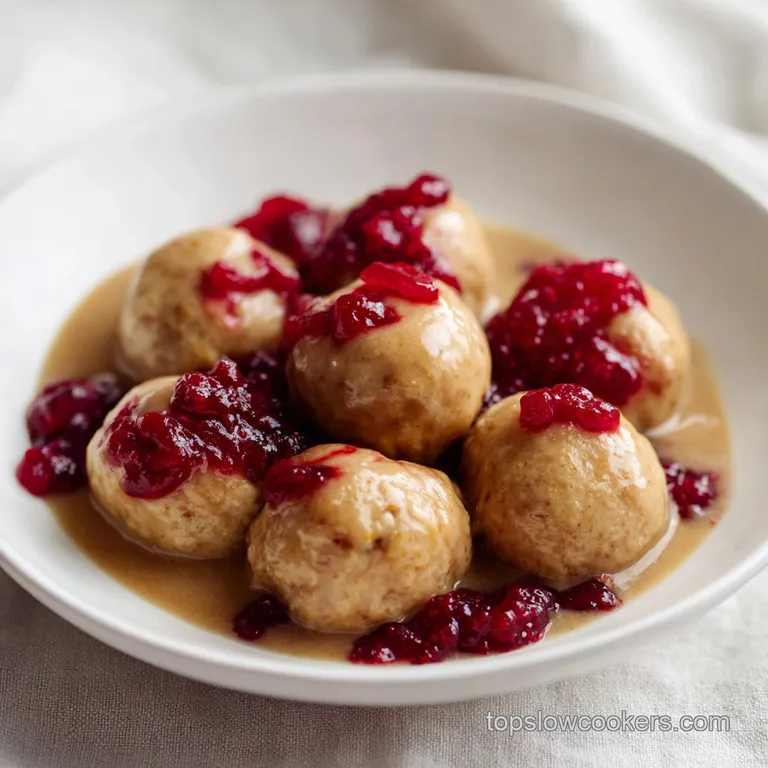
And we can't forget the lingonberry jam. If you can't find it, a tart cranberry sauce is a great substitute. The acidity and sweetness of the jam are essential because they balance the richness of the pork and cream. Without that tart hit, the dish can feel a bit too heavy.
For a lighter side, some steamed green beans or sautéed kale provide a nice pop of color and a bit of bitterness that cuts through the savory gravy. It makes the whole meal feel more balanced.
Right then, that's the secret to a proper batch of Swedish Meatballs. Just remember: don't over mix, get a good sear, and be patient with your roux. Once you see that glossy sauce clinging to those tender meatballs, you'll know you've got it right. Happy cooking!
Recipe FAQs
What is the secret to the best Swedish meatballs?
Mix the ingredients gently with your hands. Overworking the ground beef and pork develops too much myosin, which results in a rubbery, tough texture.
Are meatballs high in potassium?
Yes, they contain potassium. The ground beef, ground pork, and milk used in this recipe all provide this mineral.
What makes Swedish meatballs different?
The use of allspice, nutmeg, and a cream-based gravy. These warm spices and the roux-based sauce distinguish them from meatball styles that use herbs or tomato sauce.
What are traditional Swedish meatballs made of?
A blend of ground beef and ground pork. These are combined with panko, milk, egg, grated onion, allspice, and nutmeg.
How to prevent the meatballs from becoming tough?
Mix the meat just until combined. Avoid mixing vigorously to ensure the meatballs remain tender rather than tight.
Why is my sauce lumpy?
The flour was likely not cooked enough or the liquid was added too quickly. Ensure the roux is a pale gold paste and whisk in the beef broth in a slow, steady stream.
How to store and reheat leftovers?
Store in an airtight container in the fridge for up to 4 days. Add a tablespoon of beef broth when reheating on the stovetop to restore the velvety consistency.
Swedish Meatballs in 50 Minutes