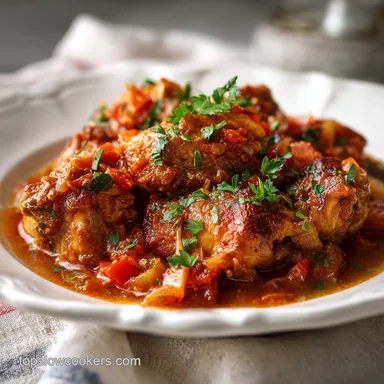
One-Pot Chicken Cacciatore

- Time: 15 min active + 60 min cooking
- Flavor & Texture: Savory and hearty with a thick, glossy sauce
- Perfect for: Comforting weeknight dinners
Why does a dish designed for hunters end up feeling like the most comforting home meal possible? It usually comes down to the patience of the braise. When you let chicken thighs simmer in a mix of tomatoes and peppers, the meat stops resisting and starts absorbing the sauce.
This version of chicken cacciatore focuses on budget-friendly ingredients that punch above their weight. You don't need fancy imports to get that deep, rustic taste, just a few pantry staples and a heavy pan.
You can expect a meal that's thick and savory, not watery. The goal is a sauce that clings to the chicken and vegetables, making it a great fit for a side of pasta or just a big piece of bread.
Chicken Cacciatore
Bone-in Thighs: Opting for thighs over breasts ensures the meat remains juicy through the extended simmering process. Additionally, the bone imparts a richer flavor to the sauce.
The Searing Phase: Searing the skin leaves behind caramelized brown bits in the pan. As these dissolve into the cooking liquid, they provide a deep, savory foundation for the sauce.
Two-Stage Reduction: Keeping the lid on during the simmer preserves the chicken's moisture, while uncovering the pan at the final stage allows excess liquid to evaporate and the sauce to thicken.
Gear You Will Need
You'll want a large Dutch oven or a deep, heavy skillet with a tight lid. A heavy bottom prevents the tomato paste from scorching when you're building the flavor base. A wooden spoon is also helpful for scraping the bottom of the pan during deglazing.
Ingredients and Swaps
Your selection of vegetables and meat plays a vital role here. We recommend bone-in thighs for the best possible outcome.
| Original Ingredient | Substitute | Why It Works |
|---|---|---|
| Cremini Mushrooms (8 oz) | White Button Mushrooms | Comparable texture. Note: Offers a milder taste |
| Red Bell Pepper (1 large) | Orange or Yellow Pepper | Consistent structure. Note: Adds a bit more sweetness |
| Fresh Parsley (1/4 cup) | Fresh Cilantro | Close alternative. Note: Significantly shifts the flavor profile |
- 2 lbs bone-in, skin-on chicken thighs Pro Tip: Stays tender during braising
- 1 tsp kosher salt
- ½ tsp cracked black pepper
- 2 tbsp extra virgin olive oil
- 1 medium yellow onion, diced
- 1 large red bell pepper, sliced into strips
- 8 oz cremini mushrooms, sliced
- 4 cloves garlic, minced
- 2 tbsp tomato paste Pro Tip: Enhances color and thickness
- 1 cup chicken broth
- 28 oz crushed tomatoes
- 1 tsp dried oregano
- ½ tsp red pepper flakes
- ¼ cup fresh parsley, chopped
- 1 tbsp unsalted butter Pro Tip: Provides a lustrous finish
- fresh basil leaves
Recipe Specs
- Prep time: 15 minutes
- Cook time: 60 minutes
- Total time: 75 minutes
- Yield: 4 servings
Bringing It Together
Phase 1: Achieving the Dark golden Sear
Thoroughly pat the chicken thighs dry with paper towels. Season them with 1 tsp kosher salt and ½ tsp cracked black pepper. Bring 2 tbsp extra virgin olive oil to a shimmer in a Dutch oven set to medium-high.
Lay the chicken skin-side down. Brown for 5–7 minutes per side without disturbing the meat, until the skin is a dark golden-brown and releases easily from the surface. Transfer the chicken to a plate. Drain the rendered fat, leaving just 2 tbsp and the browned bits.

Phase 2: Building the Flavor Base
Reduce the heat to medium. Add 1 diced yellow onion and 1 sliced red bell pepper, sautéing for 5 minutes until softened. Stir in 8 oz sliced cremini mushrooms and cook for 4 minutes until they release their moisture and brown.
Add 4 minced garlic cloves and 2 tbsp tomato paste. Stir constantly for 1–2 minutes until the paste turns a darker brick-red.

Phase 3: The Slow Braise
Pour in 1 cup chicken broth, scraping the bottom of the pot with a wooden spoon to deglaze. Mix in 28 oz crushed tomatoes, 1 tsp dried oregano, and ½ tsp red pepper flakes.
Nestle the seared chicken back into the sauce, keeping the skin partially above the liquid to avoid sogginess. Cover with a tight lid and simmer on low for 30–35 minutes. Alternatively, place the pot in a 160°C oven for 45 minutes.

Phase 4: Final Reduction and Gloss
Remove the lid and increase the heat to medium-low. Simmer uncovered for 10–15 minutes, stirring occasionally, until the sauce has thickened to a rich consistency.
Stir in 1 tbsp unsalted butter and ¼ cup chopped fresh parsley. Confirm the meat is done when a thermometer reads 165°F (74°C). Garnish with fresh basil leaves before serving.
Pro Tips and Pitfalls

Fixing a Runny Sauce
If the sauce is too thin after the reduction phase, remove the chicken. Boil the sauce on high for 5 minutes. This concentrates the flavor and thickens the consistency quickly.
Preventing Burnt Garlic
Garlic burns fast and tastes bitter. Always add it at the same time as the tomato paste, and keep it moving in the pan. If the pan looks too dry, add a tiny splash of oil.
Avoiding Rubberized Meat
Overcooking chicken, even thighs, can make them tough. Use a thermometer to hit exactly 165°F (74°C). I like to pull the chicken off the heat a degree or two early and let it rest in the sauce.
Keeping It Fresh
Store leftovers in an airtight container in the fridge for 3 to 4 days. According to USDA guidelines for leftovers, this is the safe window for refrigerated meat. The flavors usually deepen after 24 hours, making the second day even better.
This dish freezes well. Put it in a freezer-safe bag for up to 3 months. Thaw it overnight in the fridge before reheating. To warm it up, use a skillet over medium heat until the chicken reaches 165°F (74°C) inside. Add a splash of chicken broth if the sauce has thickened too much.
When reheating cooked leftovers, check with a food thermometer that the center reaches 165°F (74°C); the appliance temperature and time alone do not confirm this.
Easy Swaps and Add-Ins
If you're using a slow cooker for this meal, sear the chicken and sauté the vegetables first to keep the flavor. Then, dump everything into the pot and cook on low for 6 to 7 hours.
For an Instant Pot version, use the sauté function for the searing and vegetable stages. Add the liquid and chicken, then pressure cook on high for 15 minutes. You'll still need to simmer the sauce uncovered at the end to get that velvety texture.
I like adding a handful of sliced black olives or a pinch of sugar if the tomatoes are too acidic. For a garden twist, stir in some diced carrots or zucchini during the vegetable sauté.
Perfect Complements
This is a heavy dish, so it needs something to soak up the sauce. I recommend serving it over a bed of creamy polenta or wide egg noodles. A piece of toasted sourdough rubbed with a raw garlic clove is also a great choice.
If you want to lighten things up, serve it with steamed spinach or a simple arugula salad with a sharp lemon dressing. The acidity of the salad cuts through the richness of the butter and chicken skin.
Critical in Sodium
1150 mg of sodium per serving (50% of daily value)
American Heart Association recommendation: no more than 2,300 mg of sodium per day
Tips to Reduce Sodium
-
Swap the Broth
Replace the standard chicken broth with a low-sodium or no-salt-added version to reduce the liquid base's salt content.
-
Choose No-Salt Canned Goods
Use no-salt-added crushed tomatoes and tomato paste, as canned tomato products often contain hidden sodium.
-
Limit Added Salt
Reduce or completely omit the kosher salt, relying instead on the natural flavors of the vegetables and chicken.
-
Add Bright Acidity
Stir in a squeeze of fresh lemon juice before serving to enhance the flavors without needing extra salt.
-
Boost Fresh Herbs
Increase the amount of fresh parsley and basil to add more aromatic depth and flavor to the dish.
Questions Readers Ask
Is there an onion in chicken cacciatore?
Yes, this recipe uses one diced yellow onion. It is sautéed with red bell pepper to build the aromatic base.
How do you thicken cacciatore sauce?
Simmer the sauce uncovered on medium-low heat for 10–15 minutes. This evaporates excess moisture until the liquid coats the back of a spoon.
Can I scale the recipe for more guests?
Yes, adjust the ingredients proportionally based on the weight of the chicken. Use a larger Dutch oven to avoid overcrowding the pan during searing.
Why is the sauce remaining watery despite simmering?
The lid may be trapping too much steam. Remove it and increase the heat to medium-low to help the liquid reduce faster.
How can I keep the chicken skin crisp?
Nestle the seared chicken into the sauce with the skin partially above the liquid. This keeps the skin out of the liquid, though it will still soften somewhat during braising.
Could this be made ahead and frozen?
Yes, cook the dish fully before freezing. Store it in the refrigerator after thawing and reheat until the chicken reaches 165°F (74°C) inside. When reheating cooked leftovers, check with a food thermometer that the center reaches 165°F (74°C); the appliance temperature and time alone do not confirm this.
Are boneless thighs or breasts suitable replacements?
Yes, these cuts work well. Reduce the simmering time since they cook faster than bone-in thighs to prevent the meat from drying out.
One-Pot Chicken Cacciatore