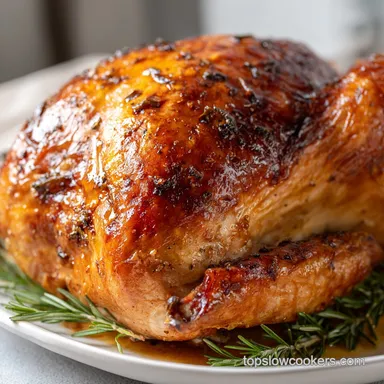
Roast Turkey: Golden and Tender
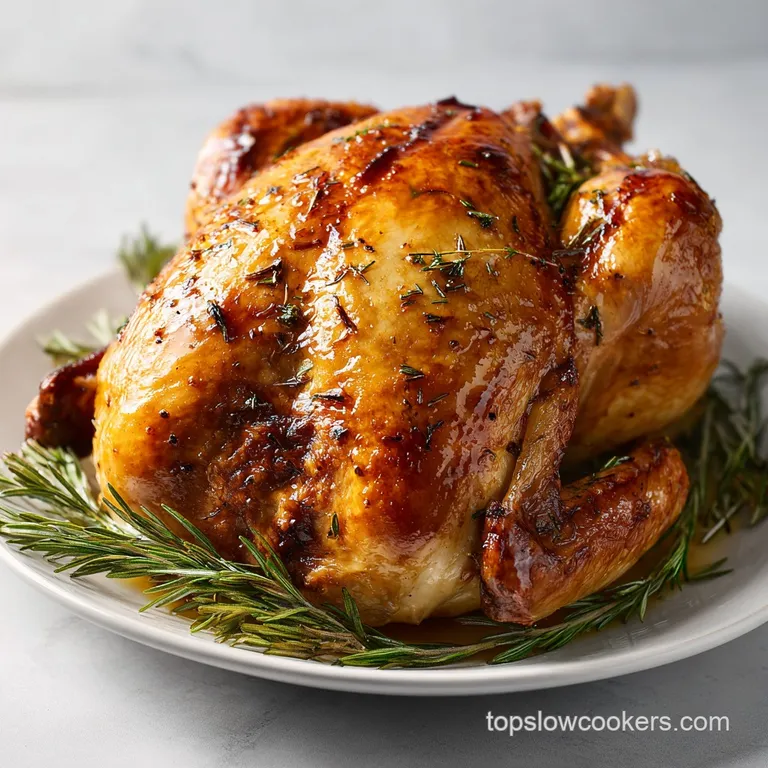
- Time: 30 min active + 150 min roasting + 45 min resting = Total 3 hours 45 mins
- Flavor/Texture Hook: Shattering, golden skin with velvety, herb infused meat
- Perfect for: Traditional holiday dinners or big family gatherings
- How to Actually Nail This Roast Turkey
- Why These Steps Actually Work
- The Component Analysis
- Ingredients and Smart Swaps
- Minimal Tools for Success
- Step by Step Roasting Process
- Fixing Common Roasting Problems
- Troubleshooting Common Issues
- Flavor Variations to Try
- Scaling Your Roast
- Truths About Turkey Myths
- Storage and Zero Waste
- Hearty Sides for Dinner
- Recipe FAQs
- 📝 Recipe Card
How to Actually Nail This Roast Turkey
That first hiss when the bird hits the hot pan and the smell of fresh sage hitting the heat, it's the best part of the whole day. I remember one year I tried to be too clever and brined my bird for three days, but I forgot to dry the skin. The result?
A grey, rubbery skin that looked more like a boiled potato than a holiday centerpiece. It was a disaster, but it taught me that moisture is the enemy of a crisp crust.
The real hero here isn't some fancy gadget, it's the compound butter. We aren't just rubbing butter on top; we're tucking it directly against the breast meat. This creates a protective fat barrier that bastes the meat from the inside out while it cooks.
When you get that Roast Turkey out of the oven, you want it to look like a mahogany carving, not a pale piece of poultry.
Trust me on this, the resting period is non negotiable. I've seen people carve into a bird the second it leaves the oven, and you can practically see the juices running across the board, leaving the meat dry. If you give it those 45 minutes, the fibers relax and soak all that liquid back in.
It's the difference between a meal people remember and one they just tolerate.
Why These Steps Actually Work
High Heat Start: Starting at 218°C shocks the skin, forcing the fat to render quickly and creating a crisp texture. This prevents the skin from becoming soggy during the longer, slower roasting phase.
Under Skin Butter: Placing fat directly on the breast meat prevents it from drying out. Since the breast is the leanest part of the Roast Turkey, this added fat mimics the marbling found in higher end cuts of meat.
Vegetable Rack: Using chunks of onion and carrots lifts the bird off the bottom of the pan. This allows hot air to circulate under the turkey, ensuring the bottom doesn't just stew in its own juices.
Carry over Cooking: Removing the bird at 71°C allows the internal temperature to climb to the safe zone while resting. This ensures the meat stays tender rather than becoming stringy from overcooking.
| Method | Time | Texture | Best For |
|---|---|---|---|
| Oven Roast | 3 hours 45 mins | Shattering skin, tender meat | Traditional feasts |
| Slow Cooker | 8-10 hours | Very soft, no crisp skin | Easy prep, shredding |
| Stovetop/Sear | 4-5 hours | Mixed textures, high effort | Small birds, gourmet |
This comparison shows why the oven is the gold standard for a Roast Turkey. While a slow cooker is great for tacos, you lose that signature golden brown crust that makes a holiday meal feel special.
The Component Analysis
| Ingredient | Science Role | Pro Secret |
|---|---|---|
| Unsalted Butter | Fat Barrier | Use softened, not melted, for better skin adhesion |
| Coarse Kosher Salt | Moisture Draw | Salt draws water out of the skin for a better sear |
| Fresh Sage/Thyme | Aromatic Oil | Chop finely to release oils directly into the butter |
| Yellow Onion | Steam Source | Creates a fragrant vapor that moistens the cavity |
Ingredients and Smart Swaps
- - 3 tbsp coarse kosher salt (Substitute
- Sea salt - slightly different mineral taste)
- - 1 tbsp black pepper (Substitute
- White pepper - more subtle heat)
- - 4 cloves garlic, minced (Substitute
- Garlic powder - less punchy)
- - 1 tsp salt (Substitute
- Celery salt - adds savory depth)
For the aromatic bed: - 1 large yellow onion, quartered (Substitute: White onion - sharper taste) - 3 large carrots, cut into chunks (Substitute: Parsnips - sweeter, earthier) - 3 stalks celery, cut into chunks (Substitute: Bok choy stems - crunchier) - 1 lemon, halved (Substitute: Orange - sweeter, citrusy) - 1 head
Garlic, halved crosswise (Substitute: Shallots - milder flavor)
Minimal Tools for Success
You don't need a professional kitchen to make a great Roast Turkey, but a few basics make it way easier. A heavy duty roasting pan with a rack is ideal, but if you don't have one, the vegetable bed we're making acts as a natural rack.
I always use a digital meat thermometer. Guessing when a 12 lb bird is done is a recipe for disaster. You can't rely on the "clear juices" trick because that's often too late. A probe thermometer allows you to monitor the Roast Turkey without opening the oven door and letting all the heat escape.
Finally, a set of sharp carving knives is a must. If you hack at the meat with a dull blade, you'll tear the fibers and lose all those precious juices we worked so hard to keep inside.
Step by step Roasting Process
Phase 1: Preparing the Bird
- Pat the turkey completely dry with paper towels. Note: Any moisture on the skin will steam the bird instead of searing it.
- Season the cavity and the skin generously with kosher salt and black pepper.
- Allow the bird to sit at room temperature for 45 minutes. Note: This prevents the outside from overcooking before the center is done.
Phase 2: Applying the Flavor Base
- In a small mixing bowl, combine the softened butter, minced garlic, and chopped rosemary, sage, and thyme.
- Gently loosen the skin over the breast meat using your fingers and slide approximately half of the compound butter underneath, spreading it evenly. Note: Be careful not to rip the skin.
- Rub the remaining compound butter over the outside of the skin.
Phase 3: The Roasting Process
- Place the quartered onion, carrots, celery, lemon, and halved head of garlic in the bottom of the roasting pan to create a natural rack.
- Place the Roast Turkey on top of the vegetables in the roasting pan.
- Preheat oven to 218°C (425°F) and roast for 20 minutes until the skin starts to sizzle and brown.
- Lower the oven temperature to 163°C (325°F) and continue roasting until the thickest part of the breast reaches an internal temperature of 71°C (160°F).
Phase 4: The Essential Rest
- Remove the turkey from the oven and let it rest for 45 minutes before carving. Note: This allows carry over cooking to hit the safe target.
I remove my turkey from the oven when its internal temperature reaches 160°F. The USDA recommends165°F, but in my experience, the temperature continues to rise during the rest, so pulling it early prevents the meat from drying out.
Fixing Common Roasting Problems
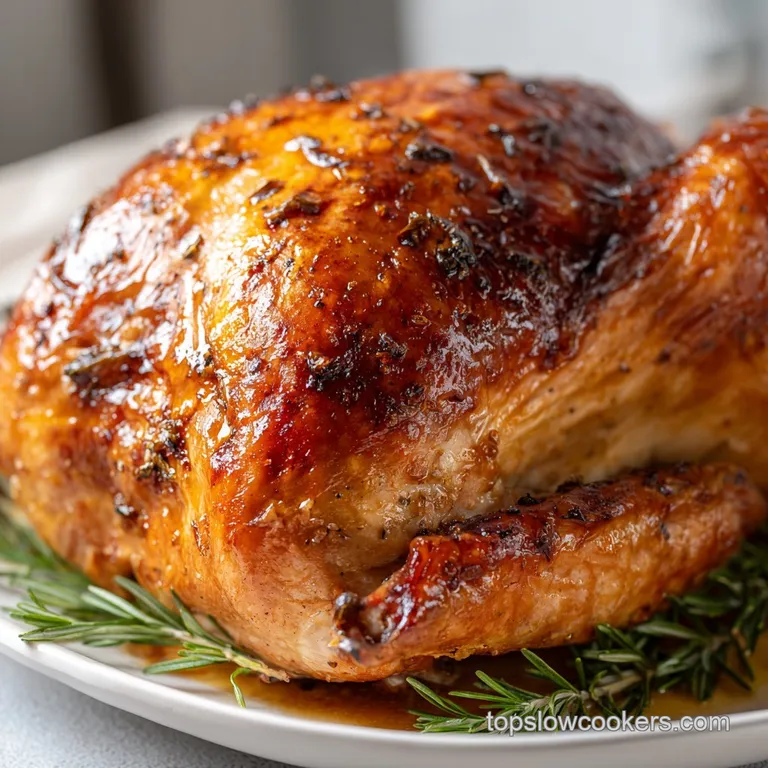
Troubleshooting Common Issues
| Issue | Solution |
|---|---|
| Why Your Bird Skin is Pale | If your Roast Turkey looks like it's been steamed rather than roasted, it's usually because the oven temperature dropped too much or the bird was too wet. Make sure you pat it dry twice. If it's still |
| Why the Breast is Dry | This usually happens when the bird is left in the oven too long. Even 10 extra minutes can turn a juicy breast into sawdust. Using a thermometer is the only way to stop this. If you find yourself with |
| Why the Legs are Raw | Since the breast cooks faster than the thighs, you might hit 71°C in the breast while the legs are still pink. I usually tuck a small piece of foil over the breast once it hits 60°C to slow it down, a |
Common Mistakes Checklist
- ✓ Did you pat the skin bone dry before seasoning?
- ✓ Is the butter tucked under the skin and not just on top?
- ✓ Did you use a meat thermometer instead of a timer?
- ✓ Did you remember to let the bird sit at room temperature for 45 mins?
- ✓ Are you resisting the urge to carve it immediately?
Flavor Variations to Try
For a Citrus Twist
If you want something brighter, swap the lemon in the cavity for a halved orange and a lime. Rub a bit of orange zest into the compound butter. This gives the Roast Turkey a sunny, aromatic quality that cuts through the richness of the butter. It's brilliant with a cranberry sauce.
For a Smoked Profile
You can get a smoky taste without a smoker by adding 1 tsp of smoked paprika to the butter mixture. If you prefer a more intense flavor, use a brine containing liquid smoke. Just be careful not to overdo it, or the bird will taste like a campfire.
For a Leaner Option
If you're using a Roast Turkey breast recipe instead of a whole bird, reduce the cooking time by about 40%. Since there's no cavity to heat up, the meat reaches temperature much faster. I recommend roasting breasts on a wire rack over a sheet pan to ensure they don't sit in their own grease.
For a Low Sodium Swap
Replace the kosher salt with a blend of lemon juice and garlic powder. You'll lose some of the skin's "shatter" because salt helps draw out moisture, but the flavor remains hearty. For other low sodium meal ideas, my Italian Sausage White Bean Soup is a great example of using aromatics instead of salt for depth.
Scaling Your Roast
Cooking a Smaller Bird
If you're doing a 6-8 lb bird, you'll need to reduce the cooking time. Start with the same over high heat sear, but check the internal temperature about 40 minutes earlier than the 12 lb version.
Use a smaller roasting pan so the juices don't evaporate too quickly, which can dry out a smaller Roast Turkey.
Handling a Giant Turkey
For birds over 15 lbs, the cooking time increases, but not linearly. I usually add about 15-20 minutes per extra 2 lbs. When scaling up, don't double the salt; only increase it by about 50%. Too much salt in a large bird can make the exterior overly briney while the inside remains bland.
If you're cooking a massive bird, I recommend lowering the second oven temp to 150°C (300°F) and extending the time. This prevents the outside from burning before the deep center is safe to eat.
Truths About Turkey Myths
Searing meat does not "seal in juices." This is a classic kitchen myth. Moisture loss happens throughout the entire cooking process regardless of the sear. The over high heat start for a Roast Turkey is actually about flavor and texture, creating that savory crust we love, not about creating a waterproof seal.
Another myth is that you must stuff the bird to keep it moist. In reality, stuffing can actually slow down the cooking process and increase the risk of the meat overcooking while you wait for the stuffing to reach a safe temperature. I prefer the vegetable bed method as it's safer and just as savory.
Finally,, some people think you should baste the bird every 30 minutes. While it looks great in movies, opening the oven door constantly drops the temperature and extends the cooking time. Trust the under skin butter to do the work for you.
Storage and Zero Waste
Keeping it Fresh
Store any leftover Roast Turkey in an airtight container in the fridge for up to 3-4 days. If you've got more than you can eat in a few days, shred the meat and freeze it in portions for up to 3 months. I always freeze mine with a bit of the leftover pan drippings to keep it from getting freezer burn.
To reheat, don't just throw it in the microwave. Place the meat in a baking dish with a splash of broth, cover it tightly with foil, and warm it at 150°C (300°F) until heated through. This prevents the meat from becoming rubbery.
Using Every Bit
Don't you dare throw away the carcass! After the meal, put the bones, the roasted carrots, onion, and celery into a large pot. Cover with water, add a few peppercorns, and simmer for 4-6 hours. You'll get a velvety, rich stock that's far better than anything you can buy in a carton.
The leftover skin can be chopped up and fried in a pan until crispy, then used as a garnish for a soup or a salad. It adds a concentrated hit of herb butter flavor that's absolutely addictive.
Hearty Sides for Dinner
A Roast Turkey needs companions that can stand up to its savory weight. I always go for something with a bit of a crunch or a creamy texture to balance the meal. Mashed potatoes with plenty of butter and roasted Brussels sprouts with a drizzle of honey are my go tos.
If you're looking for something different to serve alongside, a hearty vegetable dish is key. While not a traditional pairing, a side of Minestrone Soup served in small cups can be a great way to start the meal before the main event.
The key to a great Roast Turkey dinner is balance. Since the meat is rich and fatty, make sure your sides include something acidic like a cranberry relish or a sharp apple chutney to cleanse the palate between bites.
Recipe FAQs
How many hours does it take to roast a turkey?
Roast for approximately 150 minutes. This cooking time follows a 20-minute initial sear and precedes a 45-minute resting period.
Is it better to roast a turkey at 350 or 325?
Use 325°F (163°C). After the initial high heat sear, this lower temperature ensures the breast meat stays juicy while the bird finishes cooking.
Should I cover turkey with foil when cooking?
No, leave it uncovered. Covering the turkey traps steam, which prevents the skin from becoming crisp and golden.
Is it 30 minutes per pound for turkey?
No, this is a common misconception. Timing varies by oven, so you must roast until the thickest part of the breast reaches 160°F (71°C).
Can I cook this turkey in a slow cooker?
No, an oven is necessary to achieve a sear and crisp skin. If you are looking for a tender, low-effort main dish, try our Pepperoncini Beef.
How to prevent the breast meat from drying out?
Use a meat thermometer. Pull the turkey from the oven exactly when the breast reaches 160°F to avoid overcooking.
How to ensure the skin is golden and crisp?
Pat the skin completely dry with paper towels. Start the process with a 20-minute sear at 425°F to lock in the texture.
Classic Roast Turkey