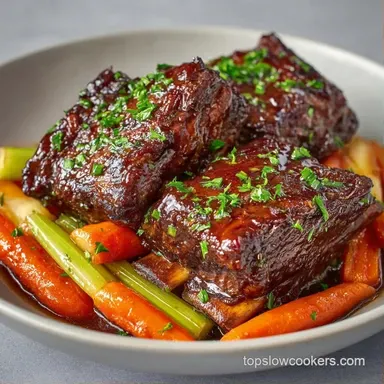
Beef Short Ribs: Rich and Tender
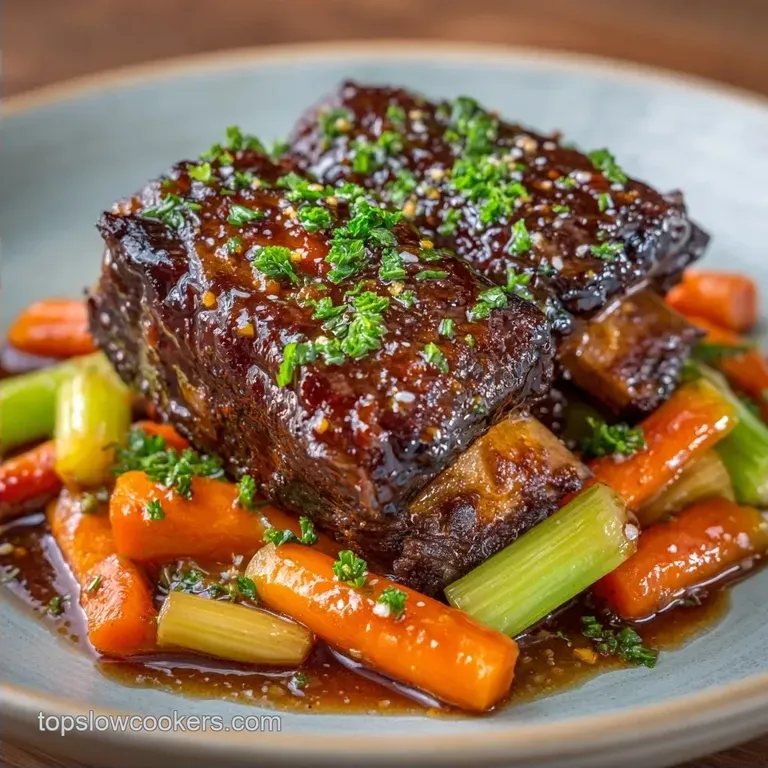
- Time: 20 min active + 8 hrs cooking
- Flavor/Texture Hook: Deep mahogany crust with succulent, shreddable meat
- Perfect for: Cold Sunday dinners or impressive low effort hosting
That loud, aggressive sizzle when the meat hits the hot oil is the best part of the whole process. I remember the first time I tried this for a winter get together. The house smelled like red wine and seared beef for hours, and my guests were practically hovering in the kitchen before the timer even went off.
There is something about the aroma of slow cooked meat that makes a home feel lived in and warm.
For a long time, I thought you needed a fancy Dutch oven and a precise oven temperature to get that restaurant style result. But I found that the slow cooker is actually more forgiving. It keeps the meat from drying out, which is the biggest risk with Beef Short Ribs.
You get that same rich, savory depth without worrying about the liquid evaporating too quickly.
This recipe is all about patience and a few specific moves in the pan. We aren't just dumping things in a pot. We are layering flavors through a hard sear and a quick sauté of aromatics.
By the time the eight hours are up, the meat isn't just cooked, it's transformed into something that practically melts on your tongue.
Tender Slow Cooker Beef Short Ribs
When you look at a raw short rib, it looks intimidating. It's full of thick connective tissue and fat. Most people are afraid they'll end up with a rubbery piece of meat, but that's actually where the magic happens.
Those tough fibers are mostly collagen, and when they cook slowly in a moist environment, they turn into gelatin. This is what gives the sauce that sticky, velvety feel and the meat its succulent texture.
The secret to the depth of flavor is the "fond", those little brown bits that stick to the bottom of the pan after searing. If you just throw everything in the slow cooker, you lose all that concentrated beefiness. By deglazing the pan with red wine, you lift those bits and stir them right back into the sauce.
It is a simple step, but it's the difference between a bland stew and a rich, savory meal.
I've learned that the choice of liquid matters more than you'd think. A dry red wine provides the acidity needed to cut through the heavy fat of the ribs. If you use something too sweet, the sauce becomes cloying. A Cabernet or a Merlot works best here. According to Serious Eats, the acidity in wine helps break down the protein structures, which assists in the tenderizing process over several hours.
The slow cooker is the ideal tool for this because it maintains a consistent, low temperature. High heat can cause the muscle fibers to tighten up and squeeze out all the moisture. Low heat allows the collagen to dissolve slowly without toughening the meat.
It's a gentle process that ensures every bite is equally tender from the bone to the edge.
Meat Science Explained
- Collagen Conversion
- Low heat turns tough collagen into gelatin, creating a silky mouthfeel.
- Fond Extraction
- Searing creates browned proteins that add savory depth after deglazing.
- Acidic Tenderizing
- Red wine breaks down tough muscle fibers during the long braise.
- Fat Rendering
- Slow cooking melts the internal marbling, basting the meat from the inside.
| Method | Prep Time | Texture | Best For |
|---|---|---|---|
| Sear & Slow Cook | 20 mins | Velvety/Falling apart | Maximum flavor and tenderness |
| Dump & Go | 5 mins | Softer/Less depth | Ultra busy weeknights |
| Oven Braise | 30 mins | Concentrated/Rich | Small batches with thick glaze |
Ingredient Deep Dive
The quality of your beef determines the final result. I always go for bone in ribs because the marrow adds a richness to the sauce that boneless cuts simply can't match. Make sure to trim the thick exterior fat cap, but leave some of the internal marbling.
| Ingredient | Science Role | Pro Secret |
|---|---|---|
| Bone in Ribs | Protein & Gelatin | Pat completely dry for a better sear |
| Dry Red Wine | Acid & Flavor | Use a wine you'd actually drink |
| Tomato Paste | Umami & Color | Fry it until it turns brick red |
| Beef Broth | Hydration/Base | Low sodium allows you to control salt |
Essential Ingredient List
For this recipe, you'll need a few staples. I prefer using a medium yellow onion for a balanced sweetness that doesn't overpower the beef.
- 4 lbs (1.8 kg) bone in beef short ribs, trimmed of excess exterior fat Why this? Bone in adds flavor and prevents overcooking
- 1 tbsp (15 ml) olive oil Why this? High smoke point for searing
- 1 medium yellow onion, diced Why this? Classic aromatic base
- 3 large carrots, sliced into rounds Why this? Adds natural sweetness to the gravy
- 2 stalks celery, sliced Why this? Adds earthy depth
- 4 cloves garlic, minced Why this? Pungent aroma that mellows during cooking
- 2 tbsp (30 ml) tomato paste Why this? Thickens sauce and adds umami
- 1 cup (240 ml) dry red wine Why this? Cuts through the richness of the fat
- 2 cups (480 ml) low sodium beef broth Why this? Provides the braising liquid base
- 1 tbsp (15 ml) Worcestershire sauce Why this? Adds a salty, fermented kick
- 1 tsp dried thyme Why this? Earthy herb that pairs well with beef
- 2 bay leaves Why this? Adds a subtle floral note
- salt to taste
- black pepper to taste
If you find yourself missing an ingredient, don't panic. You can usually swap the wine for a bit more broth and a splash of apple cider vinegar.
| Original Ingredient | Substitute | Why It Works |
|---|---|---|
| Dry Red Wine | Beef Broth + 1 tbsp Vinegar | Similar acidity. Note: Lacks the complexity of wine |
| Fresh Thyme | Dried Oregano | Similar earthy profile. Note: Use slightly less |
| Carrots | Parsnips | Similar root vegetable texture. Note: Slightly more peppery |
| Tomato Paste | Tomato Puree | Similar color/acid. Note: Sauce will be thinner |
Minimal Tool Guide
You don't need a professional kitchen for this. A standard slow cooker and one heavy skillet are the only tools required. I recommend a cast iron skillet if you have one, as it holds heat better during the searing process, ensuring the meat doesn't steam in its own juices.
If you don't have a skillet, you can sear the meat in batches in the bottom of a pot. Just make sure not to crowd the pan. When you put too much meat in at once, the temperature drops, and the Beef Short Ribs will grey instead of brown.
Simple Cooking Steps
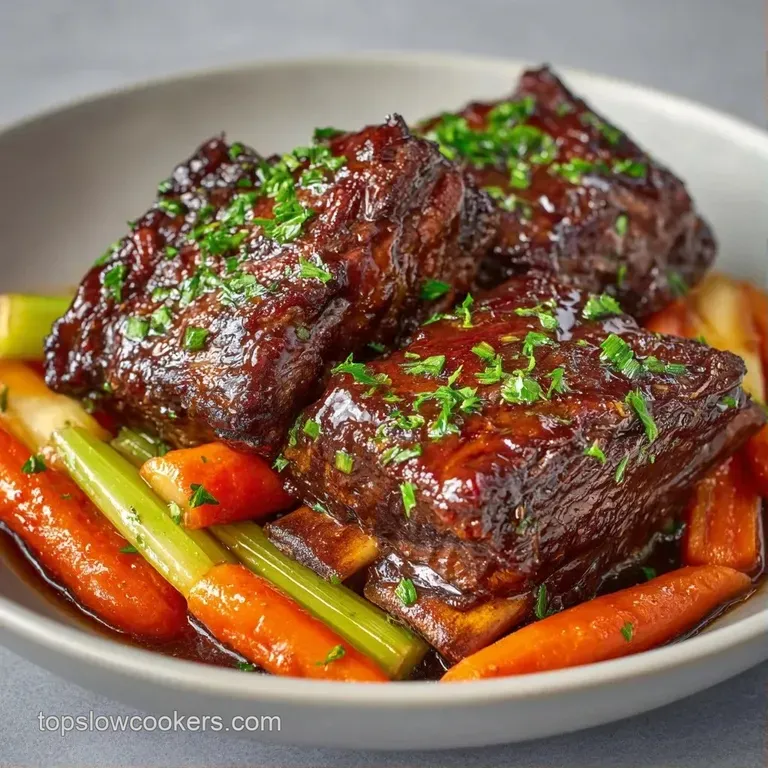
- Pat the short ribs completely dry with paper towels and season liberally with salt and pepper. Note: Moisture on the surface prevents a good crust
- Heat olive oil in a skillet over medium high heat. Sear the ribs on all sides until a deep, mahogany colored crust forms (about 2-3 minutes per side). Transfer the browned ribs to the slow cooker.
- In the same skillet, add the onions, carrots, and celery. Sauté for 5 minutes until the onions become translucent.
- Stir in the garlic and tomato paste, cooking for another 60 seconds until the paste turns a deep brick red.
- Deglaze the skillet by pouring in the red wine, scraping the bottom to release the brown bits. Pour this mixture over the beef in the slow cooker.
- Add the beef broth, Worcestershire sauce, thyme, and bay leaves to the slow cooker.
- Cover and cook on Low for 8 hours or High for 4 hours until the beef is tender enough to be pulled apart with a fork.
- Carefully remove the ribs and vegetables to a platter. Strain the remaining liquid into a saucepan and simmer over medium high heat until the liquid reduces by a third and thickens into a gravy.
Fixing Common Errors
When you're cooking for eight hours, it's easy to assume everything will just work out. But some things can go sideways. The most common issue is the consistency of the final sauce. If you skip the reduction step at the end, you'll end up with a soup rather than a rich gravy.
Troubleshooting Common Issues
| Issue | Solution |
|---|---|
| Why Your Sauce Is Thin | The slow cooker traps all the moisture, meaning the liquid doesn't evaporate like it would in an oven. This is why the final simmer in a saucepan is mandatory. |
| Why Meat Stays Tough | If the ribs are still chewy after 8 hours, they likely haven't hit the temperature where collagen breaks down. This happens if the slow cooker is too crowded or the lid was opened too often. |
| Why The Meat Is Dry | This usually happens when cooking on "High" for too long. While 4 hours on high works, the low setting is much safer for maintaining moisture. |
Common Mistakes Checklist:
- ✓ Did you pat the meat dry? (Wet meat won't brown)
- ✓ Did you deglaze the pan? (Don't leave the flavor bits behind)
- ✓ Did you trim the excess fat cap? (Prevents an overly greasy sauce)
- ✓ Did you reduce the sauce at the end? (Essential for that velvety texture)
- ✓ Did you check for fork tenderness? (Don't rely solely on the clock)
Creative Flavor Swaps
Once you have the base method down, you can play with the flavor profile. If you want something more modern, you can try a BBQ twist. Instead of red wine and thyme, use a mix of apple cider vinegar and a touch of brown sugar.
For an Asian inspired version, swap the red wine for soy sauce and mirin, and replace the thyme with fresh ginger and star anise. This works incredibly well with the richness of the Beef Short Ribs. If you're looking for something lighter, a white wine and lemon zest base creates a bright, summery braise.
If you're avoiding alcohol, a mixture of beef broth and a tablespoon of balsamic vinegar provides that necessary acidity. You can also try using boneless ribs for a faster cleanup, but remember that the cooking time might be 30-60 minutes shorter since there is no bone to slow down the heat penetration.
For a keto friendly version, simply omit the carrots and use celery root or cauliflower instead. The beef and broth are naturally low carb, making this a great comfort meal for restricted diets. You can pair this with my Easy Baked Potato Soup for a full, hearty spread.
Storage and Waste
These ribs actually taste better the next day. The flavors have more time to meld, and the fat settles, making the sauce even more concentrated. Store them in an airtight container in the fridge for up to 4 days.
When reheating, don't use the microwave on high. It will toughen the meat. Instead, place the ribs and gravy in a covered baking dish and warm them in the oven at 150°C (300°F) for about 20 minutes.
This gently brings the fat back to a liquid state without overcooking the protein.
For freezing, let the dish cool completely. Place the meat and sauce together in a freezer safe bag. They will stay good for up to 3 months. Thaw them in the fridge overnight before reheating on the stove.
Don't toss the leftover bones if you have any. You can throw them into a pot with some water and veggie scraps to make a quick, rich bone broth. Even the leftover carrots and celery from the pot can be blended into the gravy for extra thickness and nutrition. According to the USDA FoodData, bone in meats provide essential minerals that leach into the cooking liquid, so using every bit of the pot is a win.
Best Pairing Ideas
Since Beef Short Ribs are so rich, you need sides that can stand up to the flavor without being too heavy. A creamy polenta or a buttery garlic mash is the classic choice. The starch acts like a sponge for that reduced red wine gravy.
If you want something fresher, try roasted Brussels sprouts with a drizzle of honey. The bitterness of the sprouts and the sweetness of the honey balance the savory intensity of the beef. A crisp arugula salad with a lemon vinaigrette also works well to cleanse the palate between bites.
For a fun twist, I've found that serving these ribs over a bed of wide egg noodles is a great way to feed a crowd. If you're feeling adventurous, you can even shred the meat and serve it inside homemade flour tortillas with some pickled red onions and lime.
Scaling Guidelines
Cooking for a smaller crowd (1/2 batch): If you're only using 2 lbs (900g) of meat, use a smaller slow cooker if possible. If you use a large pot, the liquid may evaporate faster, so check the levels halfway through. Reduce the overall cooking time by about 20% since there is less mass to heat up.
Cooking for a party (2x batch): When doubling the recipe to 8 lbs (3.6 kg), do not double the salt or dried thyme. Increase spices to about 1.5x to avoid an overpowering taste. You will need to sear the meat in 3 or 4 batches to avoid crowding the pan.
If you're using a very large slow cooker, you might need to extend the cooking time by 1 hour on low to ensure the center pieces are fully tender.
Common Kitchen Myths
Myth: Searing seals in the juices. This is a common misconception. Searing doesn't create a waterproof barrier. In reality, it actually causes some moisture loss. However, we do it for the flavor. The browning process creates new flavor compounds that you simply can't get from boiling or steaming.
Myth: You must use expensive wine. You don't need a vintage bottle for a slow cooker. In fact, a decent, affordable table wine is usually better. The long cooking process mellows the flavors, so the nuance of a $100 bottle would be lost. Just avoid "cooking wines" which are often loaded with salt.
Myth: The slow cooker makes meat tough. It's actually the opposite. Slow cooking is the most reliable way to make tough cuts like Beef Short Ribs tender. The only way it makes meat tough is if you cook it too fast (on high) or for too long, which can eventually dry out the fibers.
Recipe FAQs
How do you cook short beef ribs in a slow cooker?
Sear the ribs in olive oil first, then cook on Low for 8 hours or High for 4 hours. Deglaze the skillet with red wine and pour the mixture over the meat to ensure a deep, mahogany flavor.
What are some common mistakes when slow cooking short ribs?
Opening the lid too often or overcrowding the pot. Both actions prevent the meat from reaching the internal temperature needed to break down collagen, which results in chewy ribs.
What is the best method for cooking beef short ribs?
Searing followed by a long, slow braise. Browning the meat creates a complex crust, while the slow cooker environment ensures the tough tissues fully dissolve into a tender texture.
Are short ribs better in the oven or a slow cooker?
A slow cooker is more convenient for achieving a melt-in-your mouth consistency. It maintains a steady, low temperature that is ideal for the high fat and collagen content of short ribs.
Are beef short ribs good for slow cooking?
Yes, they are ideal. Their structure requires long exposure to moist heat to become tender, making them a perfect candidate for a crock pot.
Why are my short ribs not tender in a slow cooker?
The meat has not yet reached the temperature required to break down the collagen. If they remain tough after 8 hours on low, they may need more time or a less crowded pot to circulate heat.
Why is my slow cooker short rib sauce too thin?
Slow cookers trap moisture, which prevents the liquid from evaporating. Strain the remaining liquid into a saucepan and simmer it over medium high heat to reduce it into a thick gravy, similar to the rich consistency of our beef ragu.
Crockpot Beef Short Ribs