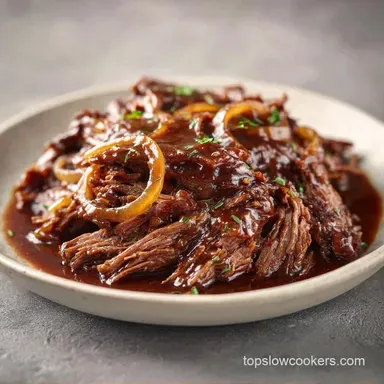
Melt-In-Your-Mouth Pot Roast

- Prep25 Mins
- Cook8 Hrs
- Servings8
- Time: 25 min active + 8 hours cooking + 15 min rest
- Flavor & Texture: Hearty and tender with a savory gravy
- Perfect for: Slow Sunday dinners or meal prep for the week
Hearty and Tender Pot Roast
You don't need a fancy, expensive cut of beef to get a melt-in-your-mouth result, because the magic happens through time and moisture. A tough, collagen-rich piece of meat is actually better than a lean one for this method. The long, slow heat breaks down those tough fibers into something tender.
This classic Pot roast relies on a deep sear and a slow simmer. You'll end up with beef that shreds with a fork and vegetables that soak up all the savory juices.
Expect a house that smells like garlic and thyme for most of the day. It is a simple process that does the heavy lifting for you while you do other things.
How It Comes Together
- Low Heat: A slow cooker Pot roast needs hours to convert tough connective tissue into gelatin, which gives the meat its tender feel.
- The Brown Crust: Searing the beef at high heat creates a savory crust that adds a deep, meaty flavor to the gravy.
- Balanced Acid: Using lemon juice in the broth cuts through the richness of the beef fat, keeping the flavor bright.
| Method | Time | Texture | Best For |
|---|---|---|---|
| Slow Cooker | 8-10 hours | Shreddy and tender | Set-it and forget-it days |
| Pressure Cooker | 90 minutes | Uniformly soft | Last-minute guests |
The Recipe Specs
This meal is designed to be a complete one-pot feast. It feeds a crowd and yields plenty of gravy for mashed potatoes or crusty bread.
The Building Blocks
The beef chuck roast is the star here. It has the right amount of fat and connective tissue to stay moist over eight hours. If you use a leaner cut, it often turns out dry.
Beef broth with lemon juice acts as the braising liquid. The acidity helps tenderize the meat and balances the heavy salt and pepper. Tomato paste adds a subtle sweetness and thickens the sauce slightly.
Fresh thyme and bay leaves provide a woody, herbal base. Carrots and baby potatoes are sturdy enough to withstand the long cook without turning into mush.
Equipment Needed
- Large skillet (cast iron works best for the sear)
- Slow cooker
- Meat thermometer
- Tongs
- Paper towels
Ingredients & Substitutes
- 3 lb beef chuck roast Why this? High collagen content ensures the meat stays tender
- 2 tbsp olive oil
- 2 tsp kosher salt
- 1 tsp black pepper
- 1 tsp garlic powder
- 2 cups beef broth with lemon juice Why this? The acid helps tenderize tough fibers
- 2 tbsp tomato paste
- 3 cloves garlic, minced
- 2 bay leaves
- 3 sprigs fresh thyme
- 1 lb carrots, sliced into 2-inch pieces
- 1½ lb baby potatoes, halved
- 1 large yellow onion, quartered
| Original Ingredient | Substitute | Why It Works |
|---|---|---|
| Chuck Roast | Bottom Round | A leaner cut. Note: May be slightly tougher |
| Beef Broth | Vegetable Broth | Similar salt levels. Note: Lighter, less beefy flavor |
| Carrots | Parsnips | Comparable texture. Note: Adds a peppery, earthy sweetness |
Step-by-step Instructions
- Pat the beef dry with paper towels. Note: Dry meat browns better Season all sides of the roast evenly with kosher salt, black pepper, and garlic powder.
- Get olive oil shimmering in a pan over medium-high heat. Brown the meat for 5–7 minutes on each side until it develops a rich, dark crust. Place the beef into the slow cooker.

- Using that same pan, sauté the quartered yellow onion for 3 minutes until tender.
- Mix in the minced garlic and tomato paste, cooking for 1 minute until aromatic.

- Add the beef broth combined with lemon juice, scraping up the browned bits from the bottom of the pan, then pour this liquid over the roast in the slow cooker.
- Place the thyme sprigs and bay leaves around the beef, then layer the baby potatoes and carrots on and around the meat.
- Secure the lid and cook on the Low setting for 8 to 10 hours, or until the roast is fork-tender and hits an internal temperature of 190°F (88°C) for easy shredding.

- Move the beef and vegetables to a serving platter and cover loosely with foil. Let the roast rest for 15 minutes to lock in the juices before serving.
Avoiding Common Pitfalls
If your beef feels tough or rubbery, it usually means it hasn't reached the target temperature. Beef needs to hit that high internal temp of 190°F to let the collagen melt. If you pull it out at 145°F, it will be safe to eat but very difficult to chew.
Another common issue is thin gravy. If the liquid is too watery, you can simmer it in a pan on the stove after cooking to reduce it, or stir in a small slurry of cornstarch and water.
Meat is Tough
This happens when the internal temperature hasn't climbed high enough to break down the connective tissues. Give it another hour.
Liquid is Watery
Too much moisture or not enough reduction. Use a stovetop pan to boil the liquid down for 10 minutes before serving.
Vegetables are Mushy
If the carrots disintegrate, they were likely too small. Stick to 2-inch chunks for long cooks.
| Problem | Root Cause | Solution |
|---|---|---|
| Tough Beef | Undercooked | Increase cook time until 190°F |
| Watery Sauce | Excess broth | Reduce on stovetop |
| Mushy Carrots | Pieces too small | Use 2-inch chunks |
Myths

Searing doesn't actually trap juices inside the meat; in fact, more moisture is lost during the process. We do it for the taste, as the browned crust develops a richness and depth that simmering alone can't provide.
Storage and Reheating
Place any leftover Pot roast in a sealed container and keep it refrigerated for 4 days. As it cools, the gravy will naturally thicken.
This dish is freezer-friendly. Pack the beef and vegetables into a freezer-safe bag for up to 3 months.
To keep the meat tender, reheat in a covered pot on low heat or in the oven at 300°F (150°C). Verify that the beef reaches a USDA safe reheating temperature of 165°F (74°C) before serving. When reheating cooked leftovers, check with a food thermometer that the center reaches 165°F (74°C); the appliance temperature and time alone do not confirm this.
Flavor Variations
If you want a different vibe than a traditional Pot roast, try these swaps:
Herbed Garlic Twist: Add two cloves of crushed garlic and a tablespoon of chopped rosemary during the searing phase. This makes the gravy more aromatic.
Root Vegetable Feast: Swap the carrots for a mix of parsnips and rutabaga. These root vegetables hold up well during the 8-hour simmer and add a more complex sweetness.
Balsamic Depth: For a tangier sauce, stir a tablespoon of balsamic vinegar into the beef broth. If you like this style, you might enjoy a Balsamic Pot roast recipe for your next meal.
Questions Readers Ask
What makes a pot roast a pot roast?
The process of slow-braising a tough cut of meat. This technique transforms beef chuck into a tender meal with a rich gravy by breaking down connective tissues over several hours.
Should I cook pot roast at 325 or 350?
Use a slow cooker on Low for the best results. This method avoids high oven heat to ensure the beef stays moist during the 8 to 10 hour cook time.
Why is pot roast tough?
The internal temperature has likely not reached 190°F. Beef chuck requires this specific heat to break down collagen into gelatin for a shreddable texture.
Does a 2 pound roast need less time?
Yes, but it still requires a long braise. Keep the meat on Low until it yields effortlessly to a fork, regardless of the size difference.
Can I use different herbs?
Yes, you can customize the aromatics. For a more pungent profile, try our garlic herb version.
How to store leftovers?
Place leftovers in a sealed container in the refrigerator. The meat and vegetables stay fresh for 4 days.
Slow-Cooked Tender Pot Roast