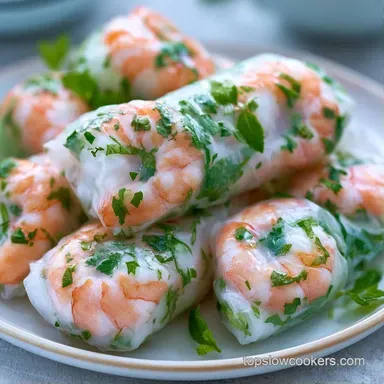
Vietnamese Rice Paper Rolls with Shrimp
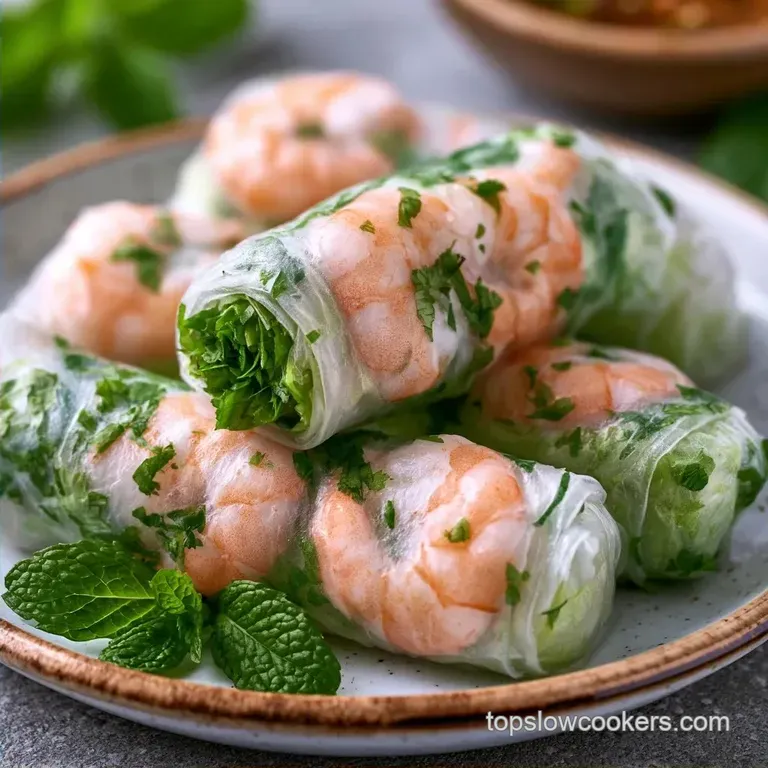
- Time: 20 min active + 10 min cook
- Flavor/Texture Hook: Crunchy, herbal, and tangy
- Perfect for: Fresh lunches or party appetizers
- Fresh Vietnamese Rice Paper Rolls
- Why These Rolls Work
- Roll Style Comparison
- Ingredient Roles and Swaps
- The Full Ingredient List
- Essential Kitchen Tools
- The Rolling Process
- Fixing Rolling Problems
- Troubleshooting Common Issues
- Customizing Your Fillings
- Scaling the Recipe
- Common Misconceptions
- Storage and Scraps
- Best Side Pairings
- Recipe FAQs
- 📝 Recipe Card
The smell of fresh mint and cilantro hitting a damp cutting board always takes me back to the first time I tried these in a small shop in Saigon. I used to think these were only for professional kitchens because the wrappers seemed so temperamental.
I spent a few weekends fighting with sticky sheets and ripped edges before I realized the mistake was my water temperature.
Forget the idea that you need a professional hand to keep these from falling apart. The real trick isn't in some hidden technique, but in how you handle the moisture. Once you get the timing of the dip right, the whole process becomes a rhythmic, almost meditative assembly line.
You can expect a dish that balances the cold, crisp bite of raw vegetables with a rich, savory dipping sauce. These Vietnamese Rice Paper Rolls are about contrast, mixing the chew of the rice paper with the snap of julienned carrots.
Fresh Vietnamese Rice Paper Rolls
The beauty of this recipe is how the flavor builds. You start with the clean, oceanic taste of shrimp, then layer in the brightness of mint and the earthy crunch of cucumber. It's not about one dominant taste, but a collection of fresh elements held together by a thin, translucent skin.
If you're looking for something similar but a different texture, you might like these shrimp rice paper rolls for a variation on the theme. The key here is keeping everything chilled, which keeps the vegetables from wilting inside the wrap.
Right then, let's look at why this specific method keeps your rolls from becoming a soggy mess.
Why These Rolls Work
These rolls rely on a few specific physics points to stay intact and taste fresh.
- Ice Bath: Plunging shrimp into ice water immediately stops the cooking process. This prevents them from getting rubbery and ensures a firm, snappy texture.
- Dry Surface: Using a damp but not soaked cutting board prevents the rice paper from sticking to the table and tearing when you lift the roll.
- Tight Tension: Rolling with firm pressure pushes out air pockets, which keeps the filling compressed and the wrapper tight against the ingredients.
Decision Shortcut:
- If you want more crunch, double the cucumber and carrots.
- If you want more punch, add an extra handful of mint.
- If the wrapper feels too stiff, dip it for one second longer.
Roll Style Comparison
Since you can use rice paper in different ways, it's helpful to know which version fits your mood.
| Method | Time | Texture | Best For |
|---|---|---|---|
| Fresh (Raw) | 30 mins | Chewy and Crisp | Healthy lunch |
| Fried | 45 mins | Crispy and Greasy | Party appetizers |
| Grilled | 40 mins | Charred and Chewy | Bold flavor |
And that's the main difference. The fresh version we're making here is all about the raw, aromatic profile of the herbs.
Ingredient Roles and Swaps
Every part of these Vietnamese Rice Paper Rolls serves a purpose, from the structural lettuce to the flavor heavy hoisin.
| Ingredient | What It Does | Best Swap |
|---|---|---|
| Rice Paper | Structural wrap | Flour wraps (Note: denser and heavier) |
| Shrimp | Primary protein | Tofu strips (Note: less oceanic flavor) |
| Butter Lettuce | Moisture barrier | Romaine (Note: crunchier but less flexible) |
| Hoisin Sauce | Savory base | Soy maple glaze (Note: sweeter and thinner) |
The Full Ingredient List
Get everything prepped and laid out before you start dipping the paper. This avoids the panic of a wrapper drying out while you search for the carrots.
- 454g medium shrimp, peeled and deveined Why this? Balanced size for easy rolling
- 14 sheets rice paper wrappers Why this? Standard thickness for durability
- 113g dried thin rice noodles Why this? Absorbs flavors without adding bulk
- 1 head butter lettuce Why this? Soft leaves that wrap easily
- 120ml picked fresh mint leaves Why this? Essential aromatic brightness
- 120ml picked fresh cilantro leaves Why this? Adds a citrusy, herbal note
- 1 medium cucumber, julienned Why this? Freshness and hydration
- 2 medium carrots, julienned Why this? Earthy sweetness and color
- 120ml hoisin sauce Why this? Deep, salty sweet base
- 30ml creamy peanut butter Why this? Adds richness and thickness
- 30ml water Why this? Thins the sauce for dipping
- 5ml lime juice Why this? Cuts through the peanut richness
- 15g crushed peanuts Why this? Final textural contrast
Essential Kitchen Tools
You don't need much, but a few specific items make the process smoother.
- Large pot: For boiling the shrimp and noodles.
- Large bowl: Filled with lukewarm water for the rice paper.
- Cutting board: Plastic or non porous is best, as wood can soak up the water.
- Sharp knife: For those precise matchstick carrots.
- Ice bath bowl: A bowl of ice and water to shock the shrimp.
The Rolling Process
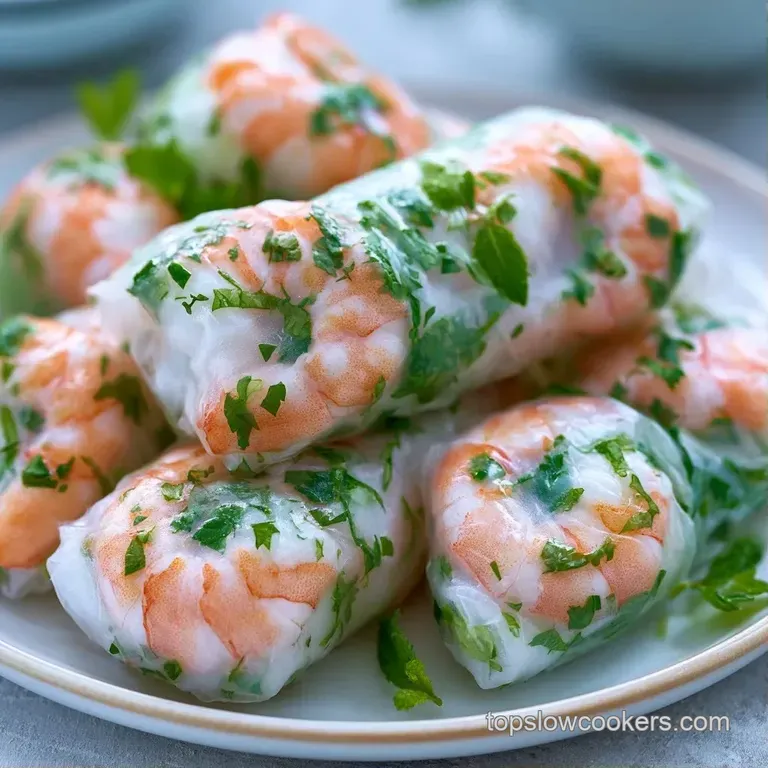
Let's crack on with the assembly. The timing here is everything, so keep your water bowl close.
Phase 1: Preparing the Components
- Bring a pot of water to a boil. Add shrimp and cook for 2-3 minutes until pink and opaque. Immediately plunge into an ice bath to stop the cooking, then pat dry and halve them lengthwise.
- Soak rice vermicelli in hot water for 3-5 minutes until tender. Drain thoroughly and set aside.
- Julienne the cucumber and carrots into matchsticks. Wash and thoroughly dry the lettuce and herbs to prevent the rice paper from ripping.
Phase 2: The "Dip and Fill" Method
- Fill a shallow bowl with lukewarm water. Dip one sheet of rice paper for 2-3 seconds and lay it flat on a clean, slightly damp cutting board. Note: Don't over soak or it becomes too gummy.
- Place a small bundle of vermicelli and a piece of lettuce in the center of the wrapper, then place the shrimp on top.
- Add mint, cilantro, cucumber, and carrots. Fold in the sides and roll tightly, applying tension to eliminate air pockets.
Phase 3: The Finishing Touch
- Whisk together hoisin sauce, peanut butter, lime juice, and water until the texture is silky and smooth.
- Serve the rolls with the dipping sauce and garnish with crushed peanuts.
Fixing Rolling Problems
Even the most experienced cooks deal with a rogue wrapper now and then. Most issues with Vietnamese Rice Paper Rolls come down to water management.
Troubleshooting Common Issues
| Issue | Solution |
|---|---|
| Why Your Wrapper Rips | If you dip the paper for too long, the structure breaks down. It becomes too soft to hold the weight of the shrimp and noodles, leading to a tear during the final fold. |
| Why Your Rolls Stick | Using a completely dry board can actually cause the paper to suction onto the surface. A slightly damp board allows the roll to glide as you tighten it. |
| Why the Sauce Separates | If your peanut butter is too cold, it might not emulsify with the hoisin. A quick stir or a few seconds in the microwave usually fixes the consistency. |
Customizing Your Fillings
You can easily shift the flavor profile of these Vietnamese Rice Paper Rolls depending on what's in your fridge. If you want a different approach to rice paper, you could try making rice paper dumplings for a cooked version.
For a Vegetarian Twist
Swap the shrimp for fried tofu puffs or avocado slices. Avocado adds a creamy element that replaces the richness of the shrimp.
For a Heartier Meal
Add sliced pork belly or grilled chicken breast. If you use cooked meat, make sure it's chilled before rolling so it doesn't soften the paper.
For a gluten-free Option
Check your hoisin sauce label, as some contain wheat. Use a certified GF hoisin or a mix of tamari and maple syrup.
Scaling the Recipe
Adjusting the quantity is straightforward, but the logistics change as you make more.
Scaling Down (Half Batch) Use 7 sheets of paper and 225g of shrimp. Since you're working with fewer ingredients, you can prep everything in a single small bowl. Reduce your noodle soaking time by about 30 seconds since a smaller mass heats through faster.
Scaling Up (Double or Triple Batch) When making 28 or more rolls, work in batches. Only dip the paper when you are ready to fill it. If you prep too many wrappers at once, they will stick together and become a giant, unusable mass.
I recommend using two separate cutting boards so one person can dip while another rolls.
Common Misconceptions
There are a few things people get wrong about Vietnamese Rice Paper Rolls that make the process harder than it needs to be.
First, many think you need boiling water to soften the wrappers. In reality, lukewarm water is much better. Boiling water makes the paper too slippery and prone to tearing, while lukewarm water gives you more control over the texture.
Second, there's a belief that more filling equals a better roll. Overfilling is the number one cause of ripped wrappers. It's better to make more, smaller rolls than a few oversized ones that burst open the moment you touch them.
Storage and Scraps
These rolls are best eaten immediately, but you can store them if you're prepping for a party.
Storage Guidelines Keep the rolls in an airtight container lined with a damp paper towel. This prevents the rice paper from drying out and becoming hard. They stay fresh in the fridge for about 2 days.
Do not freeze them, as the vegetables will lose their snap and the wrapper will disintegrate upon thawing.
Zero Waste Tips Don't toss the carrot tops or cucumber ends. I usually blend the carrot greens with some garlic, oil, and lemon to make a quick pesto. The cucumber ends can be sliced into rounds and pickled in a bit of vinegar and sugar to use as a side garnish for the rolls.
Best Side Pairings
To make a full meal out of these Vietnamese Rice Paper Rolls, you need a few complementary textures.
A bowl of steaming Pho is the classic companion, providing a hot contrast to the cold rolls. If you want something lighter, a side of pickled daikon and carrots (Do Chua) adds a fermented tang that cuts through the richness of the peanut sauce.
For a drink, a cold Vietnamese iced coffee with condensed milk provides a sweet, bold finish that balances the herbal notes of the mint and cilantro. Trust me, the combination of the aromatic rolls and the bitter sweet coffee is a winner every time.
Recipe FAQs
How to make vietnamese rolls with rice paper?
Dip the rice paper for 2-3 seconds in lukewarm water. Lay it on a damp board, fill with vermicelli, lettuce, shrimp, herbs, and julienned vegetables, then roll tightly to eliminate air pockets.
What is the trick to rice paper rolls?
Use a slightly damp cutting board. This prevents the rice paper from suctioning to the surface, allowing the roll to glide easily as you tighten it.
What are common mistakes when making rice paper rolls?
Over soaking the wrappers. Dipping the paper for too long breaks down the structure, making the wrapper too soft to hold the shrimp and noodles without ripping.
What should I serve with rice paper rolls?
Pair them with a savory peanut dipping sauce. If you want a protein heavy side, these fresh rolls complement a savory dish like garlic butter shrimp.
What is the best sauce for spring rolls?
A blend of hoisin sauce and creamy peanut butter. Whisk these together with lime juice and water until smooth, then garnish with crushed peanuts for added texture.
What are Vietnamese rice paper spring roll wrappers?
Dried sheets made from rice flour and water. They are translucent when dry and become pliable and sticky after a quick soak in warm water.
Can a diabetic eat rice paper?
Yes, but in moderation. Since rice paper is primarily made of white rice, it can impact blood sugar; pairing it with the fiber rich carrots and cucumber helps balance the meal.
Vietnamese Rice Paper Rolls with Shrimp