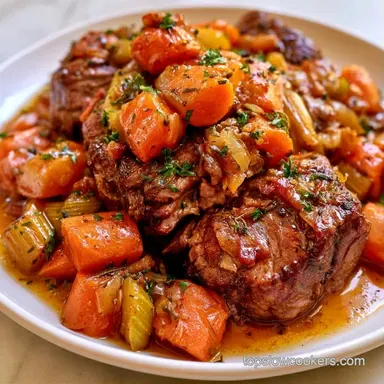
Rosemary Thyme Pot Roast with Beef Chuck

- Time: 20 min active + 4 hours cooking + 15 min resting
- Flavor & Texture: Savory, tender, and herb forward
- Perfect for: Sunday family dinner or meal prep
Rosemary Thyme Pot Roast
The sound of the beef hitting the hot oil and that instant, deep sizzle is where the flavor starts. When the meat browns, it develops a dark, savory crust that anchors the whole dish.
You can expect a roast that pulls apart with a fork and vegetables that have soaked up all the beefy juices. It's a simple process, but the slow heat does all the heavy lifting.
This rosemary thyme Pot roast is a reliable way to feed a crowd without spending the whole day hovering over the stove. Once it's in the oven, you just let it ride.
Why the Meat Stays Tender
- Low and Slow Heat: Cooking the beef at a low temperature melts the tough connective tissues into gelatin. This is what gives the meat a lush mouthfeel.
- The Hard Sear: Browning the meat at high heat creates deep flavor compounds. Those brown bits stuck to the pan make the sauce taste rich.
- Acid Balance: A splash of vinegar cuts through the heavy fat of the chuck roast. It keeps the flavor bright instead of just salty.
| Method | Time | Texture | Best For |
|---|---|---|---|
| Oven | 4 hours | Rich, concentrated sauce | Traditional Sunday dinner |
| Slow Cooker | 8 hours | Very soft, fall apart | Set it and forget it days |
Essential Tools
You only need a few things here. A heavy Dutch oven is a must for the oven method because it holds heat evenly. If you're using a slow cooker, you'll still want a skillet to sear the meat first. A set of kitchen twine helps keep your herbs together so you aren't fishing for stems later.
What Each Ingredient Does
| Ingredient | Role | If You Don't Have It |
|---|---|---|
| Beef Chuck Roast | Main protein and collagen source | Bottom round (will be leaner/tougher) |
| Fresh Rosemary/Thyme | Earthy, woody aroma | Dried herbs (use 1 tsp dried per tbsp fresh) |
| Balsamic Vinegar | Adds acidity to balance fat | Apple cider vinegar (slightly fruitier) |
| Yukon Gold Potatoes | Holds shape during long cook | Russets (will break down more) |
The Grocery List
- 3½ lb beef chuck roast, trimmed of outer fat
- 1 tsp salt, kosher
- 1 tsp black pepper, coarsely ground
- 1 tbsp olive oil
- 1 large yellow onion, chopped coarsely
- 4 garlic cloves, crushed
- 3 large carrots, cut into 2-inch pieces
- 2 stalks of celery, cut into 2-inch pieces
- 1 lb Yukon Gold potatoes, halved
- 4 sprigs of fresh rosemary
- 6 sprigs of fresh thyme
- 2 bay leaves, dried
- 2 cups beef broth, low-sodium
- 1 tbsp balsamic vinegar
- 1 tsp Worcestershire sauce, alcohol-free
| Original Ingredient | Substitute | Why It Works |
|---|---|---|
| Beef Broth (2 cups) | Water + Beef Base | Comparable salt and flavor. Note: Adjust salt carefully |
| Balsamic Vinegar (1 tbsp) | Red Wine Vinegar | Similar acid profile. Note: Lacks the sweetness of balsamic |
| Yukon Gold Potatoes | Parsnips | Comparable texture. Note: Provides a peppery, sweeter flavor |
Step-by-step Instructions

1. The High heat Sear
Use paper towels to thoroughly pat the beef chuck roast dry. Note: Moisture-free meat achieves a better, faster sear. Season all sides liberally with 1 tsp of cracked black pepper and 1 tsp of kosher salt. In a large Dutch oven, warm 1 tbsp olive oil over medium-high heat.
Brown the beef for 5-7 minutes on each side until a rich, dark brown crust has developed. Transfer the roast to a plate.
2. Building the Flavor Base
Lower the temperature to medium. Toss in the halved Yukon Gold potatoes, celery, carrots, and chopped yellow onion. Stir often, scraping the bottom of the pot to release the flavorful brown bits (fond). Add the smashed garlic and sauté for 2 minutes until it becomes aromatic.
3. The Slow Braise
Place the browned beef back into the Dutch oven. Pour in 2 cups low-sodium beef broth, 1 tsp alcohol-free Worcestershire sauce, and 1 tbsp balsamic vinegar. Use kitchen twine to bind 2 dried bay leaves, 6 sprigs fresh thyme, and 4 sprigs fresh rosemary together, then tuck the herb bundle next to the roast.
For oven cooking, secure the lid and bake at 325°F (160°C) for 3.5 to 4 hours. Alternatively, move everything to a slow cooker and set to Low for 8 hours.
4. The Final Rest
Continue cooking until the roast reaches an internal temperature of 200°F (93°C) and is fork-tender. Lift the meat and herb bundle out of the pot. Allow the beef to rest on a cutting board for 15 minutes before shredding or slicing so the juices can redistribute.
What Can Go Wrong
Meat Feels Dry
If the beef is stringy or dry despite being in liquid, it usually means it cooked too long and the muscle fibers tightened. To fix this, shred the meat and toss it back into the braising liquid for 10 minutes before serving. This helps it reabsorb the sauce.
Sauce is Too Thin
If the liquid looks more like soup than gravy, you can simmer it. Remove the meat and vegetables, then boil the liquid on the stove for 5-10 minutes to reduce and thicken it.
Vegetables Turned to Mush
Cutting carrots and potatoes into large, 2 inch chunks prevents them from dissolving. If they are too soft, you can scoop them out early next time, or just mash them into the sauce for a thicker consistency.
Searing Truths
You might hear that searing "seals in the juices." That isn't true. Meat loses moisture during the cook regardless of the sear. The reason we do it is for the flavor. That brown crust is a chemical reaction that adds a savory depth you can't get from boiling or steaming.
Saving and Reheating Leftovers
Keep remaining portions in an airtight dish in the fridge for 4 days. I personally love the flavor on the second day, as the beef has fully absorbed the herbs.
This roast freezes quite well. Store the meat and a generous helping of gravy in a freezer-safe pouch for 3 months. When reheating, use a pan over low heat, stir in a bit of beef broth to prevent drying, and heat until the meat reaches 165°F (74°C) inside.
When reheating cooked leftovers, check with a food thermometer that the centre reaches 165°F (74°C); the appliance temperature and time alone do not confirm this.
Changing Up the Roast
If you want a different flavor profile, you can try a garlic herb roast which leans more heavily on the garlic. For a sweeter version, you could swap the balsamic vinegar for a bit of honey or brown sugar.
For a lower-carb option, replace the potatoes and carrots with cauliflower florets and radishes. Radishes lose their bite and become tender like potatoes when braised for several hours.
Best Sides for Beef
Because the meal already includes potatoes and carrots, it's best to choose lighter side dishes. A fresh mixed-leaf salad with a zesty citrus dressing helps balance the richness. Roasted asparagus or steamed green beans are also excellent pairings.
For those seeking something heartier, try buttery mashed cauliflower or a slice of crusty sourdough bread to mop up every bit of gravy.
Frequently Asked Questions
What other herbs can I mix with rosemary?
Pair it with fresh thyme and bay leaves for a classic aromatic base.
Tip: Bundle them with kitchen twine for easy removal before serving.
Should I use rosemary or thyme on steak?
Both work well, though rosemary provides a stronger piney flavor while thyme is more subtle.
Tip: Use both together to get a more balanced herbal profile.
How much rosemary to put in a pot roast?
Use four fresh sprigs for a 3½ lb chuck roast.
Tip: Ensure the sprigs are fresh rather than dried for the best aroma.
How long does a 3 lb roast take to cook?
Bake it for 3.5 to 4 hours at 160°C (325°F) or cook on Low in a slow cooker for 8 hours.
Tip: Use a meat thermometer to confirm the center reaches 93°C (200°F).
Can this be made in a slow cooker?
Yes, transfer all ingredients to the slow cooker and cook on Low for 8 hours.
Tip: If you enjoy this slow-cooking method, see how it works in our chuck roast with brown gravy.
How to store leftovers safely?
Refrigerate the cooked meat and vegetables.
Tip: Use an airtight container to maintain moisture.
Why sear the meat first?
Searing creates a deep mahogany crust that adds complex flavor to the final dish.
Tip: Pat the beef completely dry before searing to ensure a better crust.
Is the roast ready when it reaches 200°F?
Yes, an internal temperature of 93°C (200°F) indicates the beef is fork-tender.
Tip: Let the meat rest for 15 minutes before slicing to keep it juicy.
Rosemary Thyme Pot Roast Slow Cooked